In a rapidly changing climate, real-time, high-resolution data is essential to understanding key oceanic processes—from heat transport and carbon uptake to sustaining fisheries and supporting renewable energy systems.
Bridging these gaps will sharpen our understanding. With more vehicles operating in and on the ocean, opportunities are emerging to collect data from remote or previously inaccessible locations. Teledyne Valeport’s sensor technologies enable high-precision data collection over extended missions lasting weeks or months, expanding spatial and temporal coverage. Longer deployments allow for repeated surveys, offering a more efficient and cost-effective approach to sustained monitoring.
pH & Hyperion Range
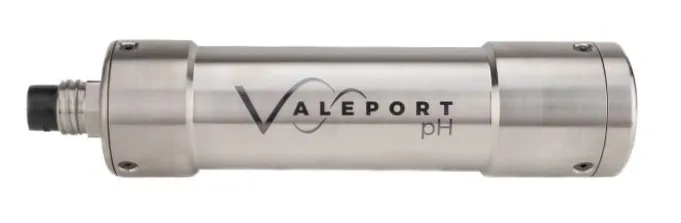
The Teledyne Valeport pH sensor, developed with ANB Sensors, offers a self-calibrating solution for robust, reliable pH measurements in ocean monitoring. Rated to 1,250 m at ±0.1 pH accuracy, its titanium housing, low power consumption, in-built biofoul mitigation, and self-referencing capabilities ensure durable, long-term ocean deployments across fixed platforms, buoys, ROVs, AUVs, and ASVs in harsh marine environments.
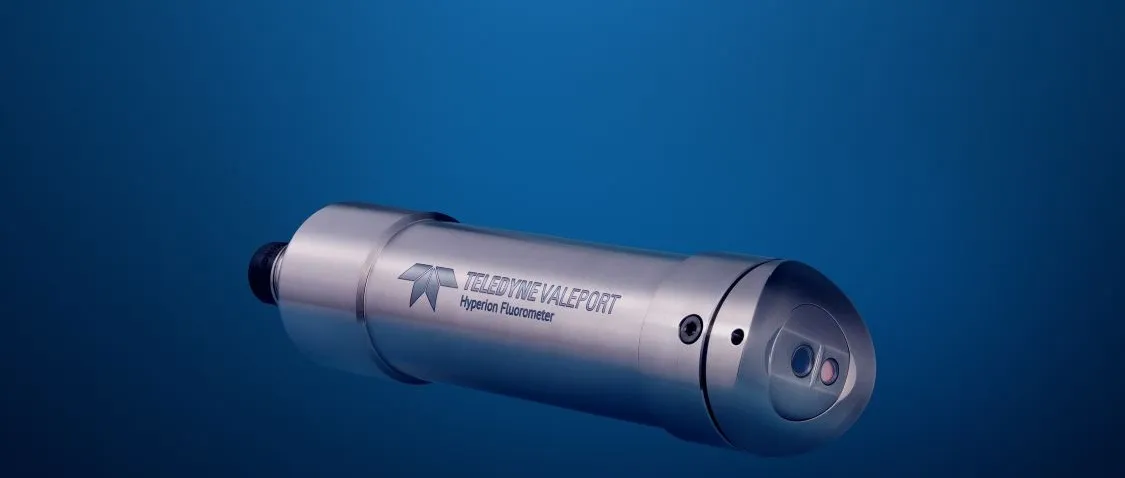
Teledyne Valeport’s Hyperion range is available as standard rated to 6,000 m—ideal for deep water operations—or as the Hyperion32, which has been optimized for shallow waters.
Trusted worldwide, Teledyne Valeport’s sensors are used for various applications, such as marine biology and pollution monitoring, and are available in multiple parameters, including Chlorophyll a, Phycocyanin, Crude oil, Turbidity, and a selection of dye tracers. The Hyperion range suits remotely operated and autonomous vehicles, as well as fixed monitoring solutions, as part of a larger monitoring system.
Offshore Wind & Aquaculture
Offshore wind platforms and turbine foundations offer ideal fixed stations for long-term pH and multi-parameter monitoring in areas lacking historical data. Deploying sensors on and around these structures can also serve industrial purposes, such as early detection of structural issues like grout displacement or pollution events.
In aquaculture, real-time measurements of chlorophyll, phycocyanin, and pH enable early warning of harmful algal blooms and hypoxia, empowering farmers to adjust feeding, aeration, or harvest schedules.
Autonomous Monitoring
Subsea monitoring is shifting toward fully autonomous, AI-driven networks capable of operating for months without surface support. Many underwater vehicles can recharge and offload data subsurface, transmitting summaries and alerts via advanced communication systems. These platforms offer continuous, high-quality insights—enabling timely, data-informed responses to evolving underwater conditions.
As these systems grow in complexity, their effectiveness hinges on the reliability and precision of the sensors they carry. Teledyne Valeport’s commitment to robust, low-power, high-accuracy instrumentation positions its sensors as key enablers of this next generation of autonomous ocean monitoring.
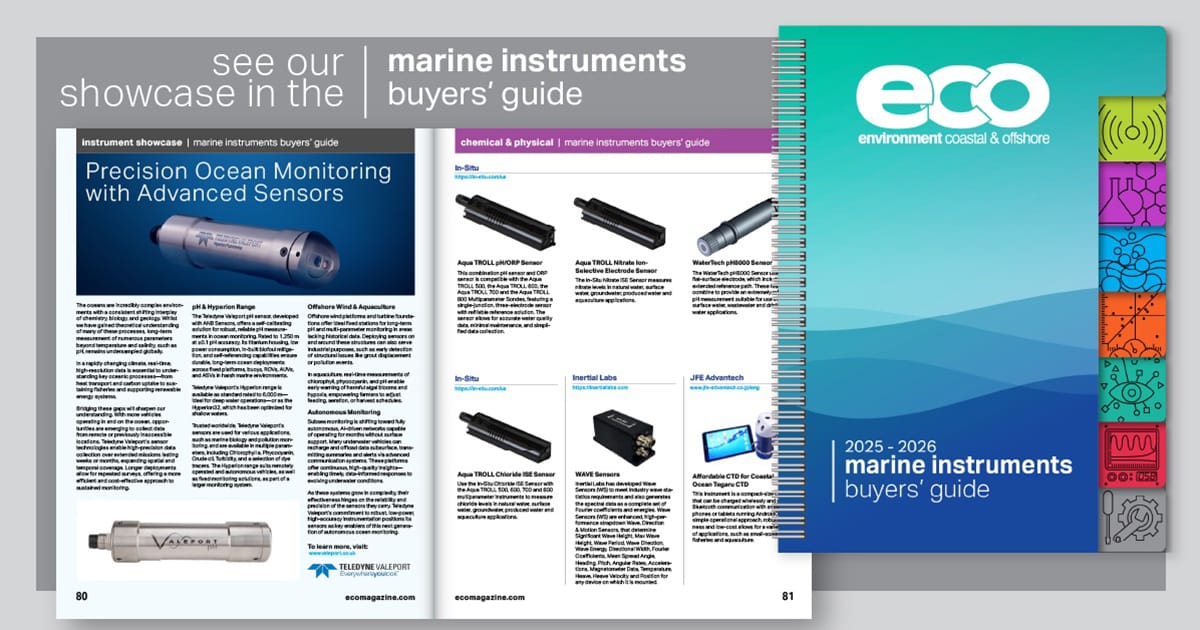
This spotlight was featured in the 2025-2026 Marine Instruments Buyers’ Guide, read more here.