
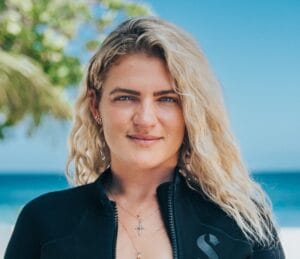
Dr. Shelby Thomas, Founder and CEO of Ocean Rescue Alliance International (ORAI), joined eco magazine for an exclusive “topside talks” interview where she shared more about how the nonprofit is tackling marine ecosystem restoration, ocean stewardship, and coastal resilience through the integration of science, technology, art, and community engagement.
Dr. Thomas identified an urgent need for applied, solutions-driven restoration, not just studying reef decline, but actively rebuilding ecosystems while testing new tools and approaches in real-world conditions.
Sharing more about her motivations, Dr. Thomas said, “Diving the same reef tracks year after year and watching them decline made it clear that traditional approaches alone were not moving fast enough. I felt a strong responsibility to apply today’s technologies with intention, to make adaptive, more efficient decisions for both nature and people, and to bridge the gap between science, implementation, and community impact.
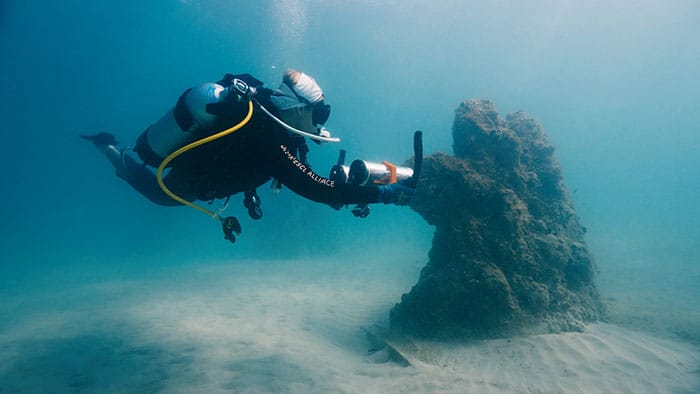
“I wanted to create an organization that could serve as a living laboratory: deploying restoration projects, piloting emerging technologies, and generating data that informs better marine management decisions at scale.”
Since its creation, ORAI has grown from a concept into an organization implementing multi-site artificial reef and restoration projects across Florida and beyond. Some of the key milestones of the non-profit include the deployment of nearshore and offshore snorkel-friendly reef systems; the integration of coral and octocoral restoration into engineered reef designs; the development of art-science reef installations that drive public engagement; the establishment of long-term monitoring and applied research programs; and the building of strong partnerships with municipalities, universities, and industry.
Touching on one of those partnerships, Dr. Thomas shared that the University of Florida (UF) has been foundational throughout ORAI’s journey. UF has served as both a trusted research partner and an innovation engine, helping us test new designs, technologies, and monitoring approaches in the field while maintaining scientific rigor.
“The ORAI-UF partnership is working to solve several interconnected challenges: declining reef health and habitat loss; inefficiencies in traditional marine monitoring and restoration methods; gaps between research, implementation, and management decision-making; and the need for scalable, data-driven restoration solutions. Partnering with Dr. Jahid Islam at UF’s RoboPI Laboratory transformed a high-tech discipline into effective ocean action through interdisciplinary collaboration,” Dr. Thomas expanded.
By testing technologies directly at ORAI project sites, the partners can evaluate what actually works in dynamic marine environments, analyze details, and accelerate innovation that benefits restoration practitioners, researchers, and resource managers alike
Some of the technologies Dr. Thomas and her team are leveraging include robotics and autonomous systems for monitoring and surveying; advanced sensors for water quality and habitat assessment; imaging, photogrammetry, and AI-assisted analysis; novel reef designs and materials tested in real conditions; and data integration platforms that support adaptive management.
In-the-Field Deployments
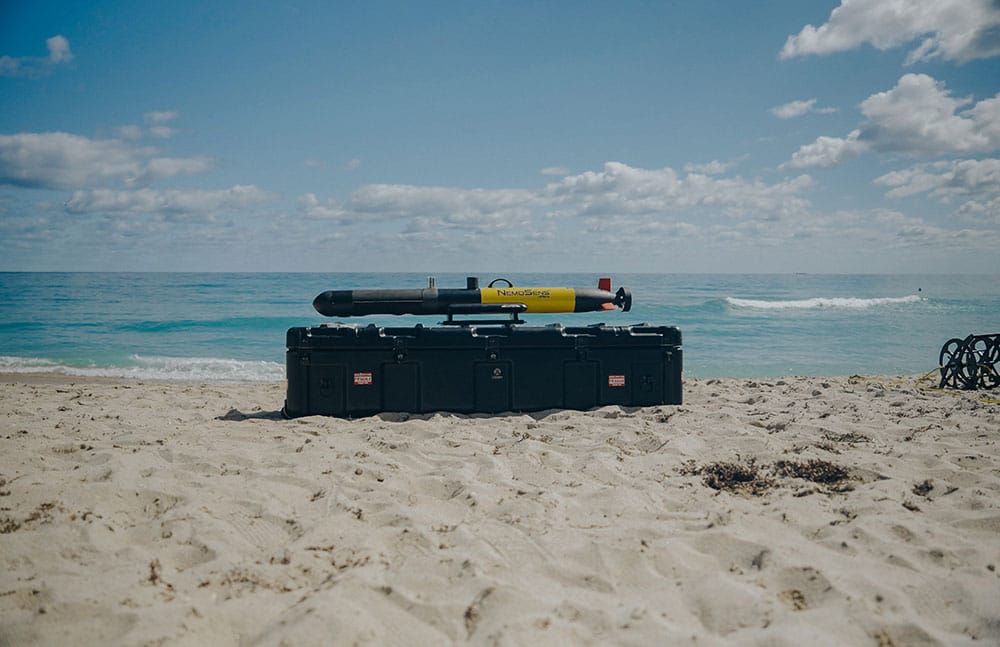
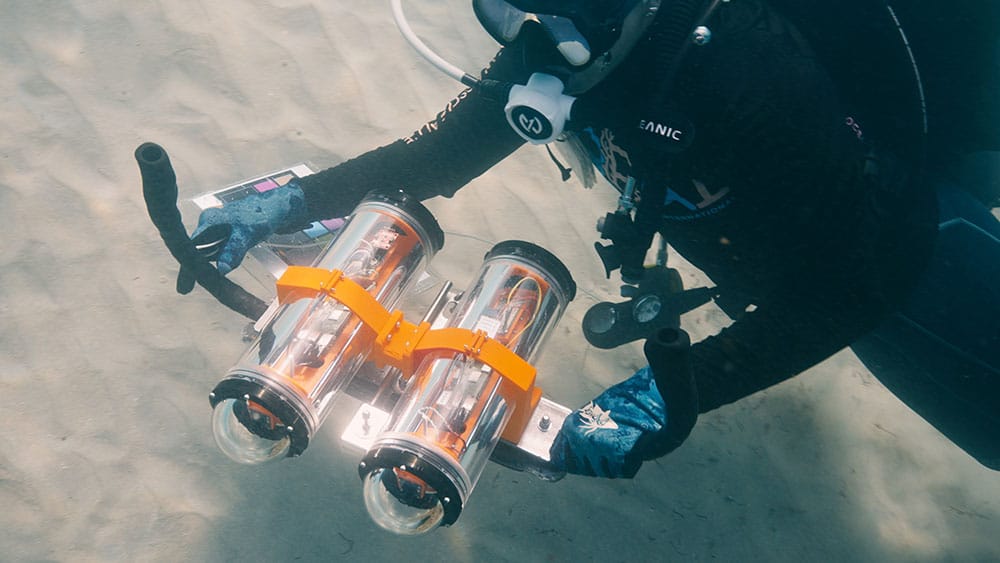
Earlier this year, in February, ORAI and UF deployed a remotely operated vehicle (ROV) at ORAI’s Keating Park reef site, part of the Guardians of the Reef nearshore installation. The shallow-water location allowed for shore-based operations while providing an ideal testing ground for robotic platforms and sensor systems. UF’s RoboPI Lab team tested ROVs, autonomous systems, and photogrammetry techniques designed to improve how scientists observe and document underwater.
The technologies allow researchers to collect high-resolution imagery and data efficiently, supporting long-term reef monitoring and conservation planning. Dr. Thomas expressed that underwater robotic systems have been transformational for the field of applied marine science.
“These robotic systems allow us to collect higher-resolution data more efficiently, more safely, and more frequently than traditional diver-based methods alone. Autonomous and operated systems expand spatial and temporal coverage, reduce costs, and enable continuous monitoring, which is critical for adaptive restoration and climate-impacted ecosystems.
“Most importantly, robotic solutions shift marine science from reactive to proactive. We can detect changes earlier, test interventions faster, and make informed decisions in near real time.”
An Evolving Relationship
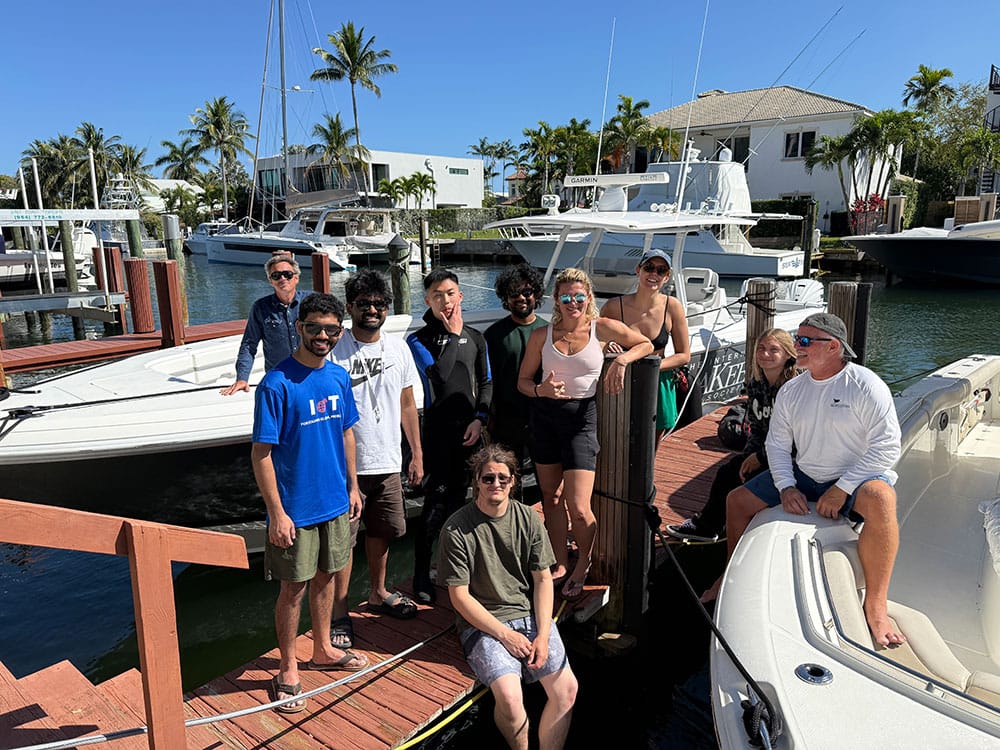
Speaking on the future of the ORAI-UF partnership, Dr. Thomas shared, “The partnership will continue to evolve as a model for applied marine innovation. Moving forward, I envision an expanded co-development and testing of emerging technologies; increased student and early-career researcher involvement in field projects; scaling pilot technologies into broader restoration and management programs; and informing policy and best practices through shared data and outcomes.
“Together, we can help set a new standard for how science, technology, and implementation work hand-in-hand to restore marine ecosystems.”
This feature appeared in environment coastal & offshore (eco) magazine’s 2026 issue II. Read in the magazine here.