Though necessary for safeguarding our oceans and the industries that rely on them, the ability to track and monitor biodiversity targets is especially arduous for field technicians who only have access to archaic, expensive, unreliable, or altogether nonexistent measuring and monitoring tools.
Thanks to its versatility, simplicity, and affordability, environmental DNA (eDNA) has quickly gained popularity as a scalable solution in the marine sector, but the sample collection process has remained a major barrier to implementing the method in practice. With versatile sampling technologies now readily available, marine industries are finally able to implement eDNA to easily conduct environmental impact assessments while reducing overall costs.
Marine Applications
Environmental DNA is a method of detecting different species and pathogens in any given environment by detecting small traces of DNA left behind by the organism. By collecting a discrete, filtered water sample, eDNA provides a comprehensive snapshot of an ecosystem’s biodiversity by sequencing the shed DNA and RNA.
It essentially provides the fingerprint of a whole ecosystem, and it has many marine applications: For shipping industries, it can measure biodiversity baselines in shipping lanes and provide ongoing monitoring of invasive species in harbors to assess the effectiveness of anti-biofouling technologies; in aquaculture, it can provide early detection of parasites; fisheries can apply it to identify cryptic fish species and track migratory patterns of commercially important fish stocks; and tourism companies can use it to determine whether cryptic species are present in protected areas and even engage community scientists and visitors in the process.
Unlike other methods like visual surveys, net trawls, and tissue sampling, eDNA is not labor-intensive, time-consuming, or destructive. Compared to traditional water sampling methods using large Niskin rosettes, eDNA sampling with new compact autosamplers has been proven to save time and reduce sample contamination to provide consistent, reliable results.
While new automated sampling instruments have been developed over the last several years to standardize and simplify field sampling efforts, the last year alone has seen significant strides in validating these technologies in real-world environments and introducing them to various marine sectors. Exciting technology from Ocean Diagnostics in Canada is among the fleet of instruments now available in the market.
Automated eDNA Depth Robots
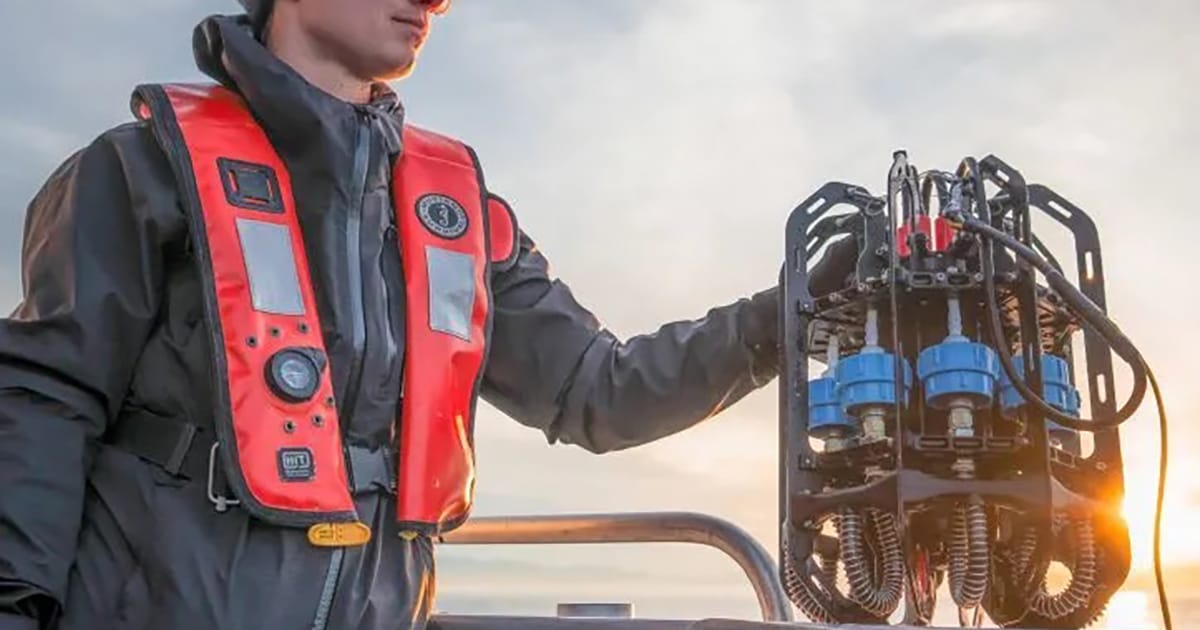
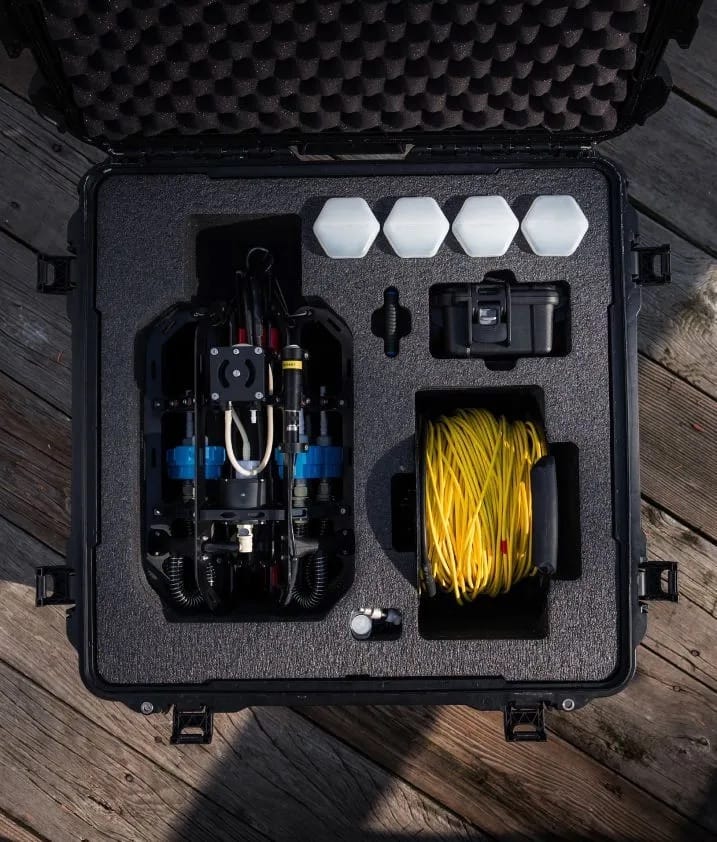
Ascension is an automated depth sampler that collects filtered eDNA samples at depth in coastal and offshore environments. Small and portable, this ocean robot can collect up to seven separate samples in a matter of minutes to save time and greatly reduce manual labor.
With an integrated flow meter and CTD sensor, users can access real-time quantitative volumetric data and water quality data like conductivity, temperature, and salinity to overlay with the collected eDNA data.
An intuitive user interface and standard operating procedures make it easy for anyone, from an undergraduate student researcher to a national park ranger, to operate the device. The sampling can even be done from a small tender instead of a large research vessel, allowing users to collect eDNA samples and monitor areas that have otherwise been inaccessible or hard to routinely sample with larger ships.
A pre-programming option enables users to collect samples at various times from fixed installations like buoys, docks, and ROVs. The rechargeable battery ensures more sampling time and provides flexibility for users to retrieve the instrument after the sampler has completed its mission. When used manually, users can generally collect multiple samples in a single deployment in less than an hour at the station.
Existing use cases in the marine industry have shown that Ascension can easily be integrated into routine, ongoing biodiversity monitoring to provide a vast amount of information at a speed and scale that has not been possible with other sampling methods.
Surface Sampling Instruments
Another exciting tool is a portable and hand-held surface sampler featuring a self-priming pump system that filters water in situ instead of requiring manual filtration using a standard syringe, enabling users to collect more field data on the go with less manual effort.
While originally designed for community scientists and field technicians, the hand pump is now applicable for ferries and large vessels with research laboratories that can bring surface water aboard the vessel by hand, using Niskin style collection devices, or through onboard flow-through systems. Like the depth sampler, this small pump does not require any manual filtration and offers ongoing sampling capabilities with minimal consumables.
Powered by a removable rechargeable battery to maximize field sampling time, the instrument draws water through a filter to effectively capture eDNA for further analysis. It is easy to ship, carry, and store, providing users with the flexibility to determine where, when, and how often they sample.
Capable of serving a plethora of marine applications, eDNA provides a simple and costeffective method to measure and monitor marine biodiversity. With these versatile, affordable, and scalable eDNA surface and depth sampling tools, marine industries can overcome the unprecedented challenges of meeting existing environmental impact assessment needs and upcoming biodiversity regulatory requirements. By bridging ocean conservation with industry needs, these tools simplify and accelerate otherwise daunting processes to protect the ocean environment and the blue economy.
This feature appeared in environment coastal & offshore (eco) magazine’s 2025 autumn edition Multidisciplinary Sampling & Monitoring, to read more access the magazine here.