Utilizing FlowCam
Dr. Cohen’s lab researches the environmental conditions leading to HAB events and how they affect the ecosystem. FlowCam is part of a suite of analytical techniques they use to study the ecology, physiology, and diversity of marine microbes.
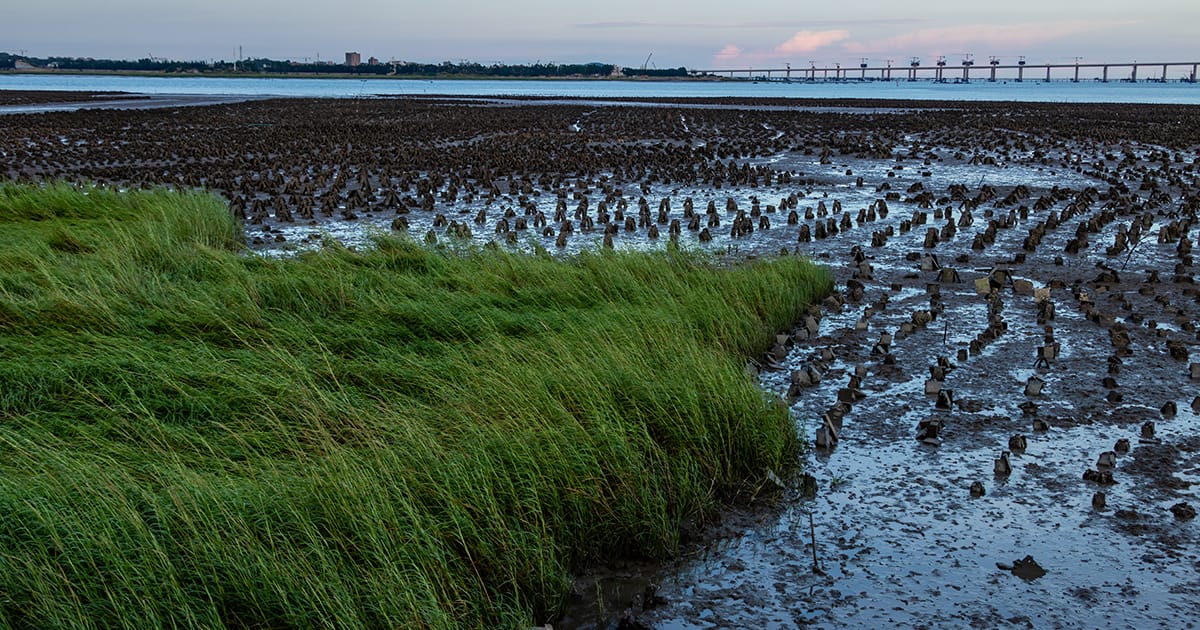
Mallory Mintz, a Ph.D. student in Dr. Cohen’s lab, monitors harmful algal blooms in the Skidaway River Estuary. The goal of this work is to better understand the environmental cues and biological responses that promote bloom formation. “Our lab is focused on understanding the dynamics of organisms like Akashiwo that precede a mortality event…in order to predict them more accurately.”
“When Akashiwo are abundant, oysters sometimes do poorly, and we’ve seen that repeatedly. This is a prime example of the importance of early detection, which depends on routine monitoring,” says Mintz.
Routine HAB monitoring with FlowCam is not only important for answering critical ecological questions, but also for informing decision-making in shellfish hatcheries. For example, when Skidaway detects an increase in Akashiwo, the Shellfish Research Lab may decide to postpone drawing water from the estuary, or, if necessary, hold water longer to avoid bringing contaminated water into the hatchery and potentially risking larval mortality.
Without data to inform mitigation strategies, hatcheries risk significant economic impact— especially during periods of peak production.
Multidisciplinary Methods
Routine HAB monitoring is just one example of the work happening in the Cohen Lab, which specializes in how microorganisms in the ocean interact with their chemical environment. These interactions are essential to elucidate how microorganisms contribute to biogeochemistry, carbon cycling, and the transfer of energy between the surface and the deep ocean.
To investigate these types of questions, Dr. Cohen and her students combine techniques—like flow imaging microscopy, flow cytometry, and metatranscriptomics—that complement one another to provide a more holistic view.
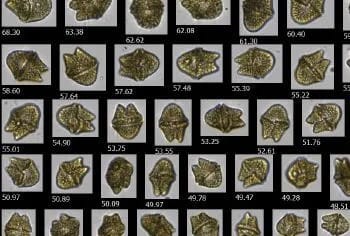
“Some tools overlap in their utility, but they have different strengths,” said Dr. Cohen. For example, FlowCam provides concentration and size data that helps ground truth metatranscriptomics techniques, which allow researchers to investigate gene expression but are limited by database representation. Flow cytometry helps target picoplankton, but may be more challenging for environmental samples for which FlowCam is more practical.
The unique strengths FlowCam provides are the ability to produce quantitative cell concentrations and sizes from field samples so quickly through imaging.
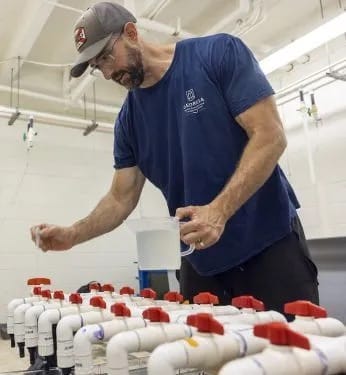
“FlowCam is a powerful tool because of its speed. We have microscopes, of course, but you can ask my undergraduate students: they do not prefer microscopy. It takes too long. They much prefer to have the images from FlowCam.”
As a student herself, Mintz concurred: “FlowCam punches above its weight in its ability to sample. It’s absolutely the tool for the job.”
This feature appeared in environment coastal & offshore (eco) magazine’s 2025 autumn edition Multidisciplinary Sampling & Monitoring, to read more access the magazine here.