
Now, a University of New South Wales (UNSW) Sydney-initiated research program is helping Pacific nations adapt by turning commercial fishing vessels into ocean observing platforms.
The Integrated Marine Observing System (IMOS) Fishing Vessels as Ships of Opportunity sub-facility (FishSOOP), led by UNSW Sydney, works with the commercial fishing industry to gather invaluable ocean observations.
Following the program’s success in Australian waters, FishSOOP is expanding its reach to work with fishing vessels in the Pacific through a partnership with the Pacific Community (SPC), recognizing the critical importance of tuna fisheries to Pacific Island nations.
“Tuna fisheries are critical to the region’s economy, food security, and livelihoods.
However, tuna stocks are increasingly under threat from climate change, which is expected to alter their distribution and abundance, creating uncertainty for communities that depend on them,” said Professor Moninya Roughan of UNSW Sydney.
“Because tuna is such a priority across the Pacific, SPC immediately realized the potential for this program to make a real difference.
“By partnering with the Pacific tuna fleet to collect ocean observations, including temperature data, the program will improve understanding of changing ocean conditions, support better fisheries management, strengthen climate forecasting such as El Niño and extreme weather events, and ultimately help protect the livelihoods of people across the Pacific.”
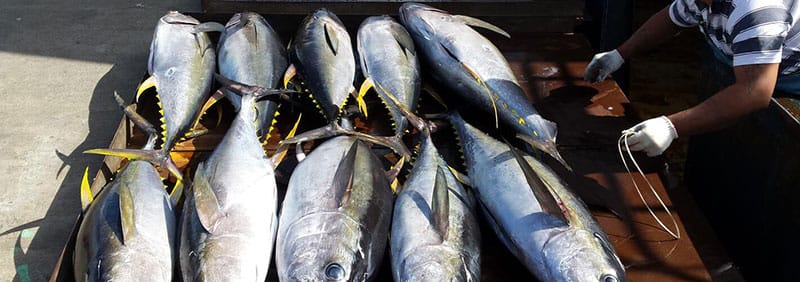
Commercial tuna fishing vessels are equipped with Moana temperature sensors attached directly to nets and lines, which automatically measure subsurface ocean temperatures as the gear is used during normal fishing operations.
Looking Beneath the Surface
Although the ocean covers more than 70% of Earth’s surface, it remains remarkably under-observed.
Professor Roughan said that while satellites provide invaluable information, they only measure temperatures in the ocean’s top centimeter, while commercially important fish such as tuna live hundreds of meters below the surface.
“Satellites tell us what’s happening at the surface, but that’s not necessarily what’s happening where the fish actually are.”
Although the global Argo network of autonomous profiling floats has transformed our understanding of ocean warming, the floats are too widely spaced to capture the fine-scale ocean features that influence fisheries. They also cannot operate in many shallow continental shelf regions where productive fisheries occur.
“Commercial fishing vessels, however, travel these waters every day and, if appropriately instrumented, can fill these gaps. Unlike traditional research vessels, which are expensive and can only survey limited areas for short periods, fishing vessels can routinely collect observations across vast areas while carrying out their normal operations,” explained Professor Roughan.
The sensors record temperature, pressure, location and time as fishing gear moves through the water. Within minutes, the information is transmitted via satellite, processed automatically and returned to participating fishers. This can inform the operations of the fishing vessel while also making information available to improve fisheries management and understanding of changing ocean conditions.
Better Forecasts, Safer Communities
The benefits extend well beyond fisheries. Ocean observations collected by FishSOOP are shared in real time through the World Meteorological Organization’s Global Telecommunication System, making them immediately available to modeling and forecasting agencies around the world.
Those observations improve estimates of subsurface ocean heat, a critical factor in predicting tropical cyclones, marine heatwaves, ocean circulation and climate variability.
“Getting better information about ocean heat content improves our ocean and atmospheric models,” said Professor Roughan.
FishSOOP is expanding its ocean observing network aboard commercial tuna fishing vessels to improve fisheries management and climate forecasting across the region.
“That ultimately improves forecasts of tropical cyclones, storms and drought, helping communities prepare for extreme weather.”
The data also help researchers better understand marine heatwaves and coastal ocean processes, while fisheries managers can combine ocean observations with catch information, where fishers choose to share it, to better understand how changing ocean conditions affect fish stocks.
Built on Trust
One of the project’s greatest successes has been the relationship between scientists and fishers.
Rather than simply collecting data from industry, the program was designed so participating fishers receive the information first, allowing them to better understand the ocean conditions influencing their catches.
Prof. Roughan said the approach has created genuine trust. During a visit to Papua New Guinea, she found herself aboard a fishing vessel with a Filipino captain, a Korean fishing master, Papua New Guinean fisheries staff and observers, and colleagues from SPC based in the Solomon Islands and New Caledonia.
One Filipino captain pulled out a folder containing printed ocean temperature reports generated by the program and showed them to another fisher.
“I couldn’t understand what they were saying,” said Professor Roughan. “But when they’d finished talking, the other captain gratefully took the equipment and installed it on his own vessel.
“It was a powerful reminder that the program’s greatest advocates had become the fishers themselves. They’re using the data. They expect the data. If they don’t receive it, they contact us.
“They really care about the ocean because their livelihoods depend on it. They also have an extraordinary depth of knowledge about the relationship between ocean conditions and their catch. Bringing that knowledge together with science makes both stronger.”
From Curiosity to Global Impact
Prof. Roughan admits the project began with a simple research problem. “I actually started this work because I needed more observations for my own ocean research.”
Today, the program supports commercial fishers, fisheries managers, weather agencies and scientists, while contributing to improved climate and ocean forecasting across the Pacific.
Since launching in 2017, the international network has grown from a handful of vessels in Australia and New Zealand to around 500–600 commercial fishing vessels operating across the Western and Central Pacific, the Indian and Southern Oceans, Brazil, and Canada. We also have collaborators in Europe, the US, the Caribbean, and Africa doing similar work as part of the Fishing Vessel Observation Network.
Professor Roughan believes this is only the beginning: “The vision is a truly global network of 10,000 commercial fishing vessels helping us better understand the ocean, and ultimately, helping communities everywhere that depend on it.”
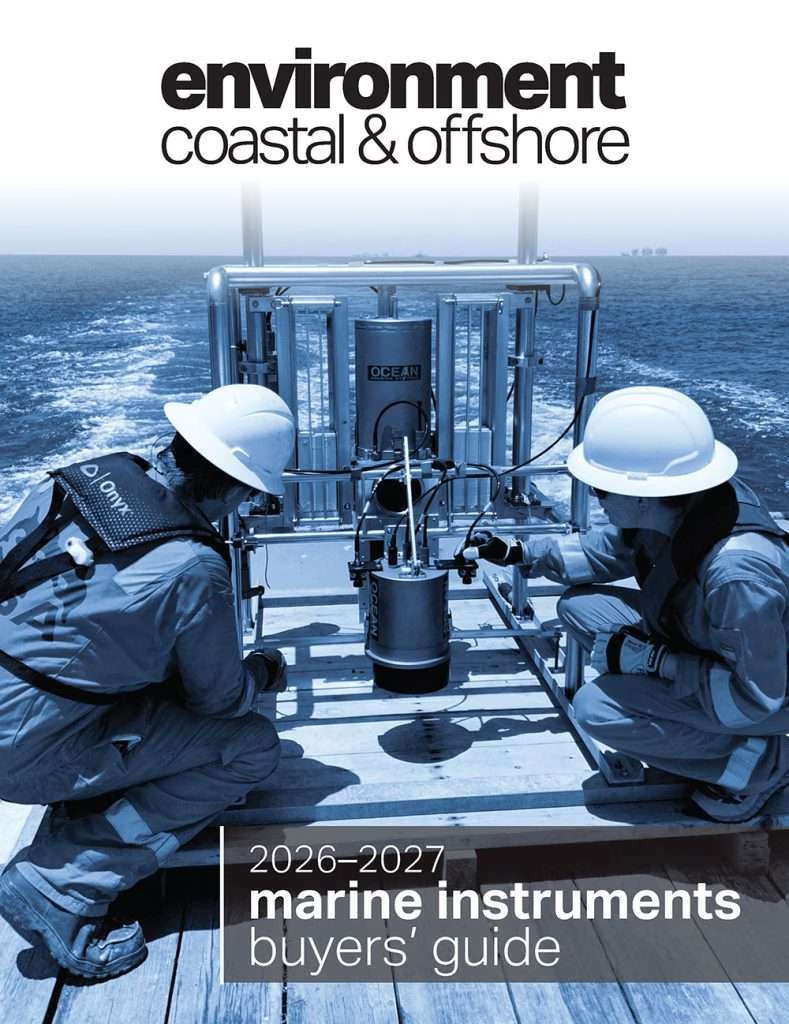
This feature appeared in environment coastal & offshore (eco) magazine’s 2026 issue III. Read in the magazine here.