Reducing greenhouse gas emissions has remained at the center of priorities to mitigate climate impacts. However, emission reductions alone are no longer enough to fix the problem.
Scientists from the Intergovernmental Panel on Climate Change (IPCC) have repeatedly emphasized the need for carbon dioxide removal (CDR) to meet global climate targets. CDR encompasses
a range of natural and engineered approaches designed to remove CO2 from the atmosphere and durably sequester it, playing a critical role in achieving net-zero emissions and mitigating climate change.
Introducing mCDR
Among the various CDR approaches, marine carbon dioxide removal (mCDR) offers significant potential. The opportunity for enhancing the power of the ocean to sequester and safely store carbon dioxide is considerable. The ocean already holds more carbon than any other part of Earth’s biosphere and its sheer scale means that any mCDR solutions proven to be viable and safe have the potential to be scaled.
Ocean alkalinity enhancement, macroalgae and microalgae cultivation, blue carbon restoration, electrochemical CDR, artificial upwelling and downwelling, and deep-sea carbon storage are all among the suite of mCDR approaches. Any or all of these strategies could potentially play a role in stabilizing the climate, but first, they must be researched responsibly.
Ocean Visions, a science-based, not-for-profit conservation organization, is at the forefront of advancing mCDR research. We collaborate with scientists, innovators, policymakers, and communities to ensure that research happens in a rigorous, transparent, and equitable way.
Accelerating Understanding
In collaboration with experts around the globe, Ocean Visions developed and maintains strategic road maps to accelerate our understanding of mCDR approaches. These road maps lay out the scientific, technical, and policy priorities needed to move from theory to field trials and, ultimately—if proven safe and effective—to potential deployment. Each road map is a living tool, updated as new insights emerge in science, governance, and technology.
While our understanding of mCDR pathways is steadily increasing, and a number of field trials are underway, very real uncertainties remain about ecological and social impacts and our ability to ensure the durability of carbon sequestration.
A Pathway Forward
To help expedite our understanding in the face of growing climate realities, Ocean Visions has outlined a comprehensive program to advance the science, governance, and technology priorities needed to rigorously evaluate mCDR by 2030. We also provide a large collection of mCDR tools and resources for the ocean-climate community—including our new mCDR Ecosystem Database, which captures the breadth of actors, activities, and relationships across this diverse and evolving field in order to facilitate collaboration.
A disrupted climate is no longer a looming threat—it is here and now. The longer we delay the development of additional tools to confront this reality, the more we risk crossing ecological thresholds. MCDR has the potential, along with other tools, to help us avoid that future, but to do that, we need to scale up our exploration of it now.
To learn more, visit: https://oceanvisions.org
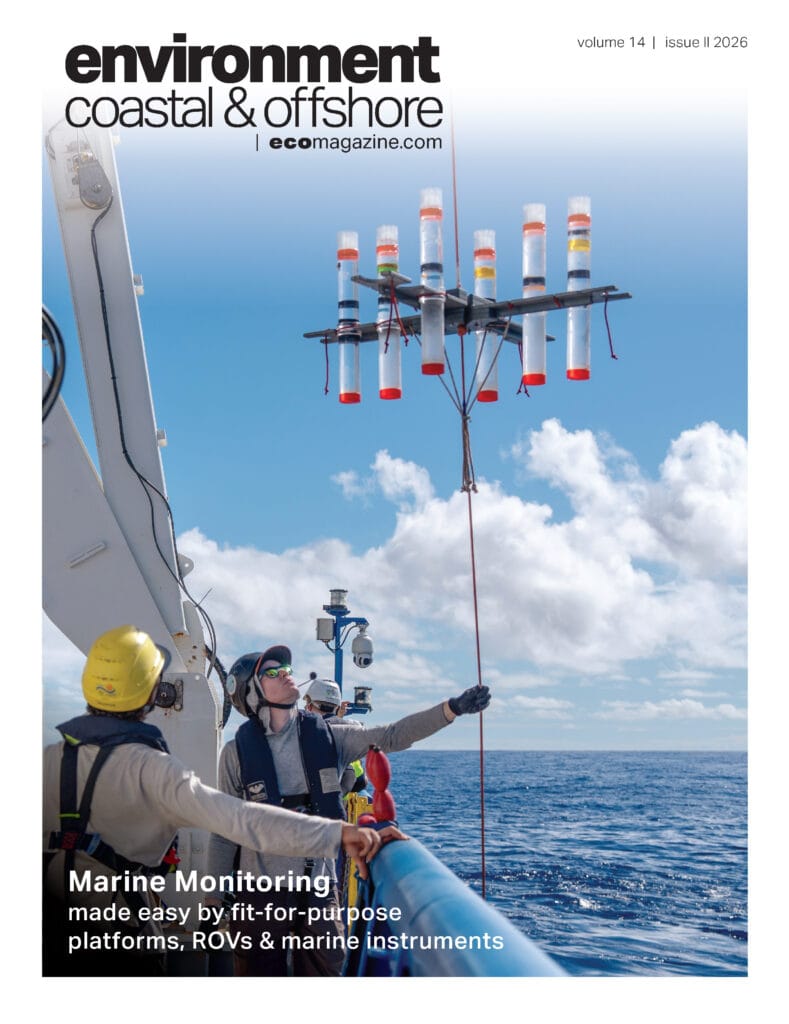
This opinion appeared in environment coastal & offshore (eco) magazine’s 2025 summer edition Rethinking Offshore Operations, to read more access the magazine here.