Since 2020, Sequoia has been developing several new sensors in collaboration with academic partners to support observations in emerging areas of oceanographic research. These sensors focus on observing particle flux and in-situ settling velocity. They provide critical observations in research areas where the fate of particles is either unknown, poorly constrained, or predicted based on models that require in-situ data for validation. Measurements from these sensors can, for example, help constrain the ocean carbon cycle, monitor the environmental impacts of deep-sea mining activities, and assess the efficacy of marine carbon dioxide removal (mCDR) strategies.
In-Situ Sensors
The LISST-OST (Optical Sediment Trap) is a modified transmissometer with an off-axis optical geometry designed for collecting and measuring sinking particles. It has a large sapphire window to collect sinking particles, and a housing designed to reduce obstruction of the natural settling pathways of particles. The diverging source beam results in a large optical cross-section at the window to increase the sample area compared to other optical sensors, such as a traditional beam transmissometer. As particles settle and accumulate on the window over time, the amount of light transmitted through the window to the detector decreases over time. Changes in the attenuance of the source beam can then be correlated with particle flux. The LISST-OST was developed in collaboration with Dr. Margaret Estapa at the University of Maine through a Small Business Technology Transfer award from the National Science Foundation (award #2136735).
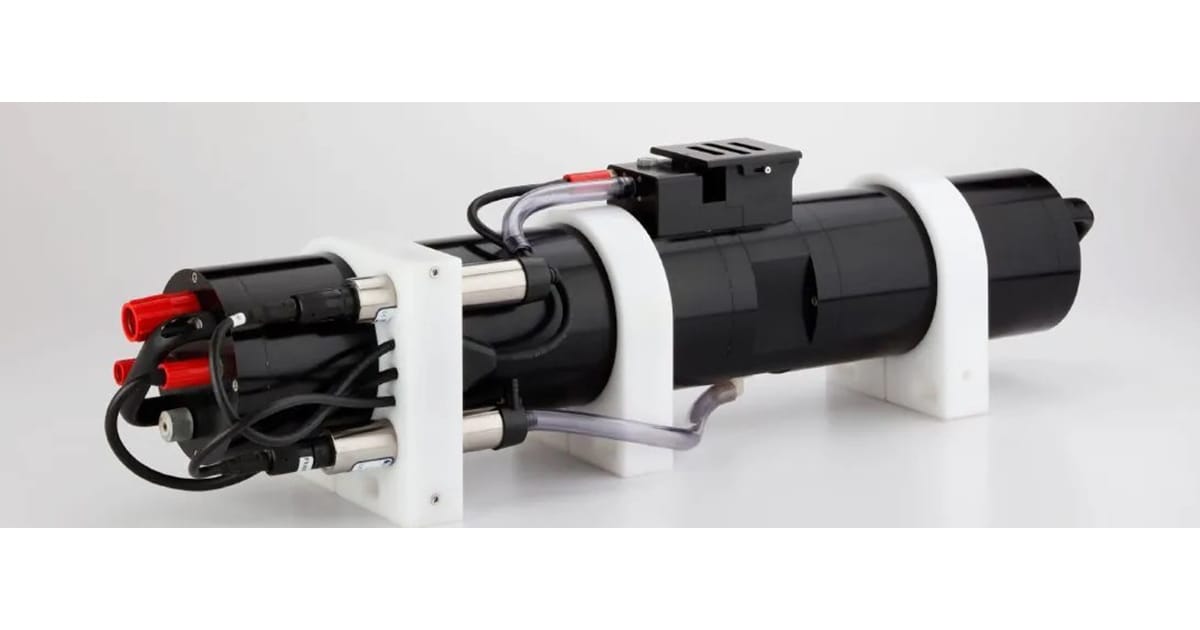
The LISST-RTSSV (Real-Time Size and Settling Velocity) measures particle size, concentration, and settling velocity using a built-in settling column and a two-camera imaging system. The cameras count, size, and track particles in the settling column, capturing images at up to 10 image pairs per second. Different magnifications between the cameras enable the measurement of a wide particle size range, from approximately 3.6 microns to 4,200 microns. The LISST-RTSSV was developed in collaboration with Professor Tom Peacock at the Massachusetts Institute of Technology under a Department of Energy grant (award #DE-AR0001232).
Ocean Carbon Cycles
Sinking oceanic particles, such as “marine snow,” are a critical component of the ocean’s biological carbon pump (BCP) governing carbon cycling between the atmosphere, land, and ocean. Measurements of these particles typically rely on sampling via sediment traps and subsequent laboratory analysis for quantification of particulate organic carbon (POC) and estimating flux to the deep ocean. Due to the cost and complexity of sampling, measurements of POC flux are limited in resolution (space and time), making it hard to quantify ocean carbon flux on a global scale.
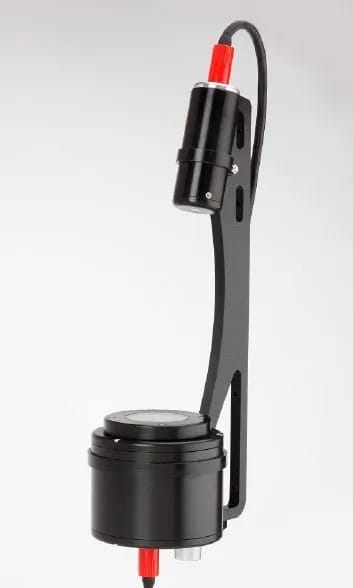
In-situ and distributable sensors that can measure particle flux at high frequency can provide the data necessary to better understand the BCP and quantify carbon flux. The LISST-OST was developed with this in mind; the sensor was originally conceptualized for deployment on autonomous Lagrangian profiling floats, such as Biogeochemical-Argo, to measure particle accumulation when the float is drifting at 2,000 meters, as particle accumulation rates have been shown to be a useful proxy for POC flux. Successful field tests in 2024 of a LISST-OST prototype on a profiling platform in shallow waters demonstrated the sensor’s ability to collect particles and monitor particle accumulation.
Deep-Sea Mining Plumes
The deep-sea mining industry has been rapidly advancing over the past decade due to increased demand for critical minerals such as cobalt, nickel, and manganese to meet the needs of clean energy industries. Deep-sea mining operations can create large sediment plumes, both through seabed disruption during the extraction process and through the discharging of tailings back into the water after transporting mined material to the surface.
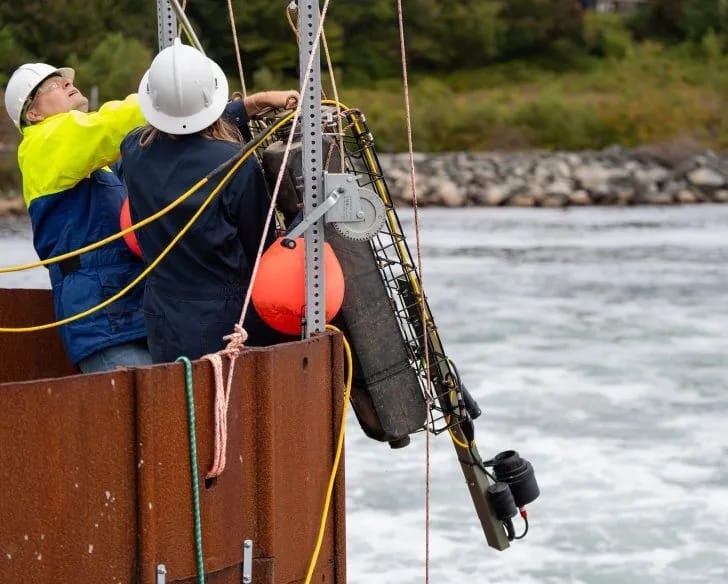
The LISST-RTSSV can provide the in-situ particle measurements necessary to establish regulatory baselines and monitor plume dynamics during mining. Particle size, concentration, and settling velocity can be used to monitor the plume in real-time and predict spatiotemporal plume dynamics, from generation to dissipation, to assess its impact. A pre-prototype LISST-RTSSV was deployed on a deep-sea mining vehicle (Patania II from Global Sea Mineral Resources) in 2021, collecting in-situ particle measurements at 4,500 meters depth. The deployment demonstrated a critical step forward in research on the dynamics and impacts of sediment plumes from deep-sea mining.
mCDR Research
mCDR is a research area focused on investigating ocean-based methodologies to capture and store carbon dioxide from the atmosphere. The emerging business of carbon credit trading and carbon removal verification means it also has a large potential commercial aspect. Several knowledge gaps still exist related to the environmental impact of interventions and the efficacy of these strategies, however. As more mCDR research transitions from laboratory and mesocosm studies to field trials, closing these knowledge gaps is critical to understanding the safety and effectiveness of these techniques before their potential deployment as large-scale climate change mitigation strategies.
The LISST-OST and other Sequoia sensors have already been used in the field to support mCDR research. For example, in ocean alkalinity enhancement (OAE) studies, Sequoia’s instruments have been used to measure particle size, concentration, and settling, assisting scientists in evaluating what happens to alkaline material when added to seawater. These measurements, which can help evaluate the in-situ dissolution rate of alkaline material for comparison with modeled rates or monitor particle aggregation, precipitation, and sinking to assess environmental impacts, are critical to answering open questions in mCDR research.
This feature appeared in environment coastal & offshore (eco) magazine’s 2025 autumn edition Multidisciplinary Sampling & Monitoring, to read more access the magazine here.