
Born from 15 years of research and development at the National Oceanography Centre (NOC) and the University of Southampton, ClearWater Sensors’ Lab-on-Chip technology combines microfluidics with sensitive wet-chemistry techniques to provide automated, high-quality nutrient measurements in situ. Designed for long-term field deployment, the sensors automatically correct drift using onboard calibration standards, while low power enables operation without mains connection or permanent infrastructure.
The current range includes nitrate and phosphate sensors capable of operating in both freshwater and seawater. This flexibility makes them suitable for a wide range of applications, from river catchments and estuaries to coastal and marine environments. While equally at home monitoring surface waters, the sensors’ pressure-compensated housings are rated for deployment to depths of 6,000 meters, allowing the same technology to operate from rivers and coastal waters to the deep ocean. The sensors are self-calibrating and designed to measure low nutrient concentrations, including those found in relatively pristine waters.
Real-World Monitoring
The technology is already being used as part of an ongoing monitoring program across the River Teifi catchment and Ceredigion coast. Nitrate and phosphate sensors were first installed in the Teifi catchment in 2024 alongside multiparameter sondes. The program has since expanded to coastal locations at Aberystwyth and New Quay, extending monitoring from freshwater environments through to the coast.
The project combines sensor data with other environmental information, including rainfall, river discharge, regulatory spot sampling and citizen-science data.
High-frequency measurements have highlighted the value of continuous monitoring. During storm events, phosphate concentrations can change rapidly as phosphorus is mobilized into streams. Monitoring has also shown higher phosphate concentrations in some tributaries than in the main river, while riverbed sediments can act as a source of legacy phosphorus when resuspended during high flows.
These results demonstrate how autonomous monitoring can reveal changes that may be difficult to capture through periodic spot sampling alone.
Expanding the Sensor Range
ClearWater Sensors is now building on its existing Lab-on-Chip platform to broaden the range of chemical parameters that can be measured autonomously.
An ammonia sensor, currently undergoing field testing and due to join the commercial range in 2027, is among the next additions. Designed for operation in both freshwater and seawater, the sensor uses a similar microfluidic wet-chemistry approach to provide sensitive measurements at very low concentrations. It is also being developed to avoid the frequent recalibration required by many existing ammonia sensors, which may need recalibration every two to six weeks.
The ammonia sensor development is funded under both the prestigious Innovate UK “SMART” supported project “LAST-WEED” (targeting continuous monitoring for section 82 of the Environment Act 2021) and the internationally leading Horizon Europe Project “AQUAMON” (which targets holistic monitoring systems for urban waters across Europe and also develops sensors for metals and forever chemicals). This demonstrates ClearWater Sensors’ status as a global leader in water chemistry technology innovation.
By expanding the range of parameters available on the platform, ClearWater Sensors aims to make continuous chemical monitoring practical across more environments and applications. From river catchments to coastal waters, the goal is to give researchers, monitoring organizations, and water managers access to reliable, high-frequency data wherever it is needed.
For more info, visit: https://clearwatersensors.com/
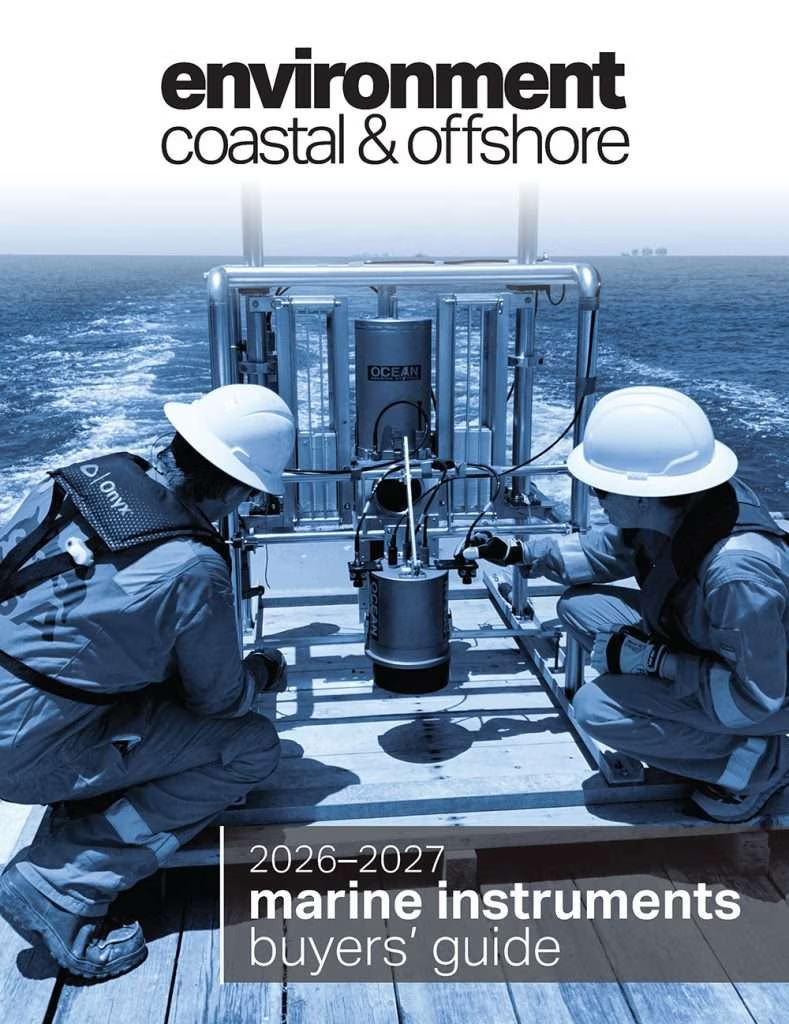
This spotlight was featured in the 2026-2027 Marine Instruments Buyers’ Guide. To read more, visit: https://digital.ecomagazine.com/eco-mibg-2026-2027/page-91