Because few research ships reach this vast and hostile region, much about it has remained a mystery. But recently, an unlikely group of “field assistants” has begun helping scientists close this gap: southern elephant seals.
A New Type of Oceanographer
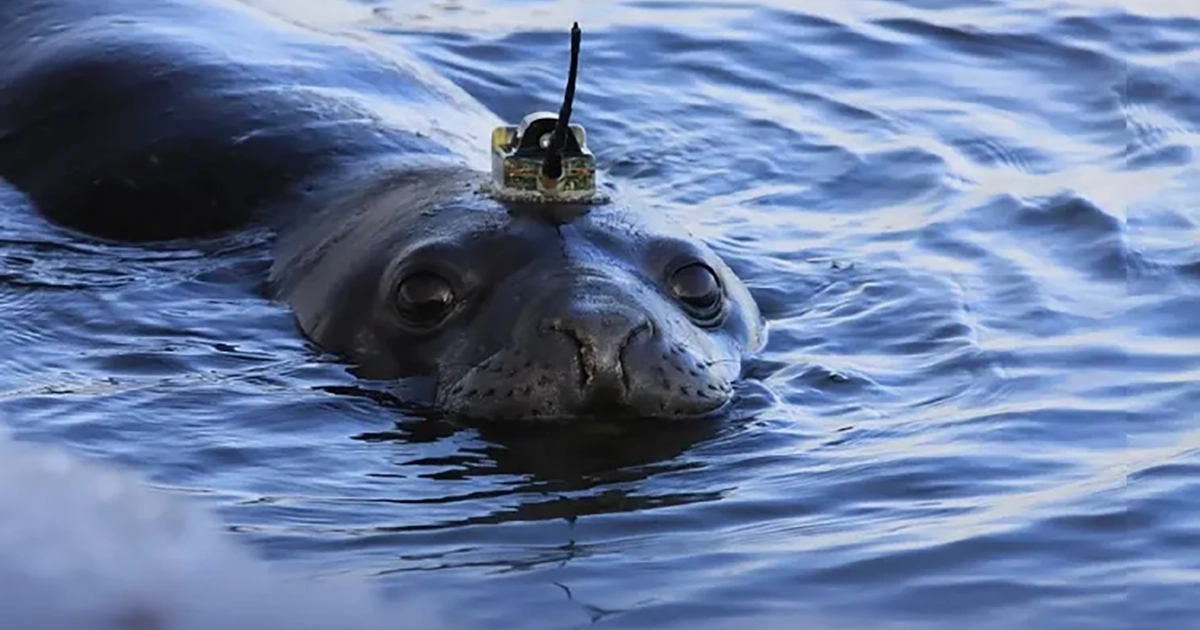
These impressive mammals live up to their name. A full-grown male can weigh up to 4,000 kilograms—as much as an elephant—and reach over 5 meters in length—about the size of a large delivery van. They can reach locations inaccessible to humans, and dive as deep as two kilometers in search of fish and squid. On these journeys, some carry tiny, state-of-the-art scientific instruments on their heads, transforming them into “sealoceanographers” that now contribute to the global ocean observing efforts coordinated by the Global Ocean Observing System (GOOS), a program led by the Intergovernmental Oceanographic Commission (IOC) of UNESCO.
Through the Animal-Borne Ocean Sensors (AniBOS) network, which forms part of GOOS, these elephant seals now provide first-of-its-kind, near-real-time marine mammal data. These data deepen understanding of the seals’ biology, provide essential observations of the Southern Ocean below the surface, and help shape conservation and marine spatial planning efforts.
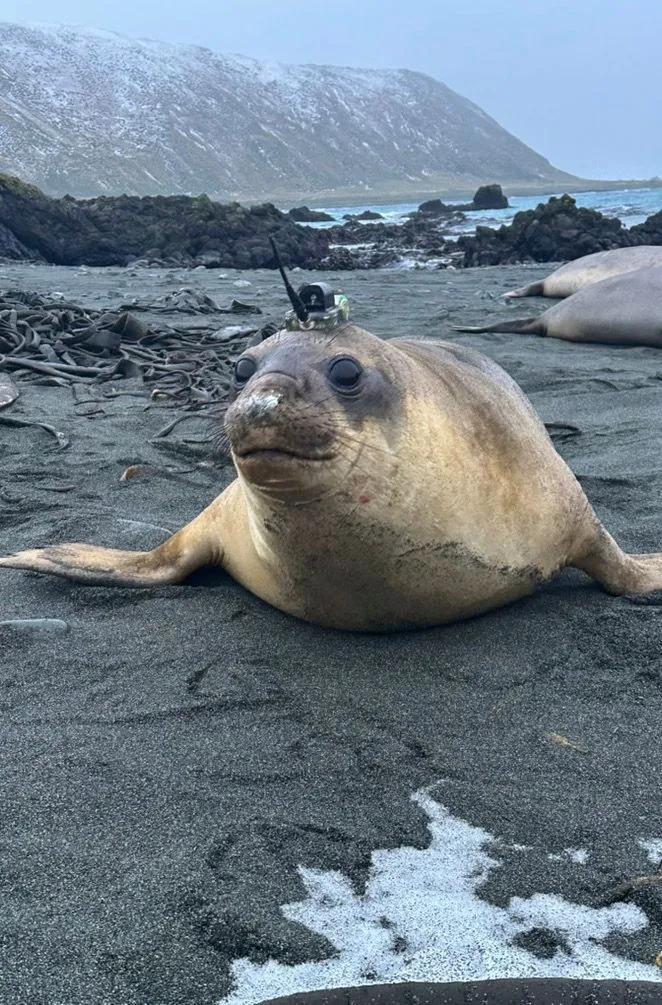
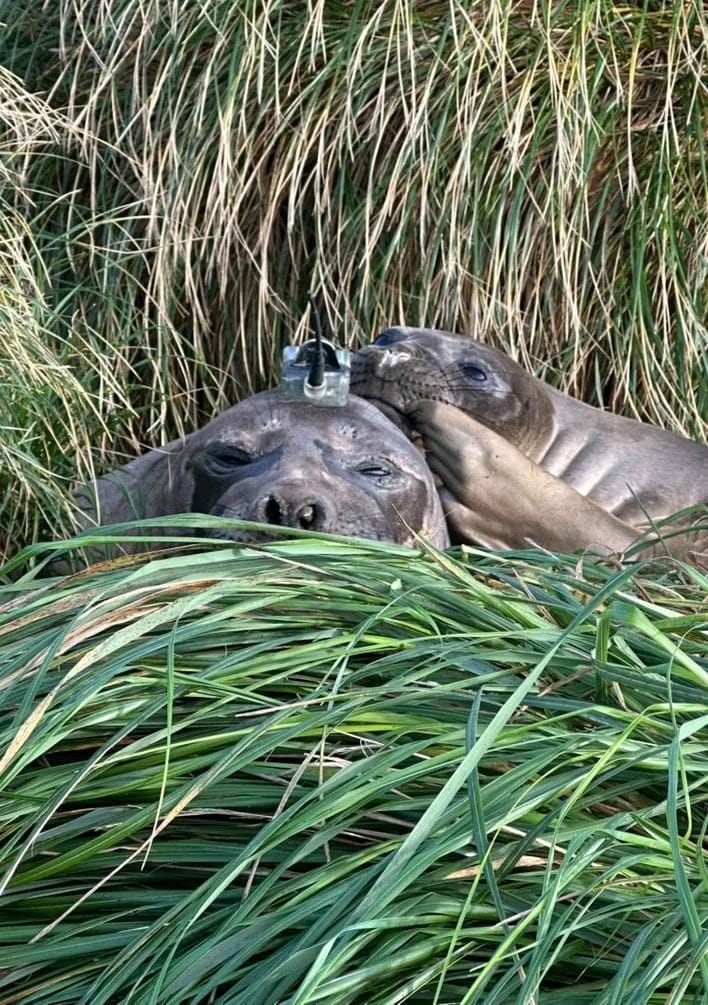
The small, non-invasive sensors are carefully attached to the seals’ heads while the animals are briefly sedated, following strict ethical protocols. These devices naturally detach during the seal’s annual molt. While in place, the sensors track each animal’s movements, including dive depths, times, and changes in body condition—revealing which areas seals use for feeding and offering clues about ocean productivity.
The sensors also record sub-surface temperature and salinity profiles, allowing scientists to link changes in ocean physics to ecosystem health.
This information will help marine spatial planners understand how ocean conditions shape species distribution and productivity, enabling ocean management that is based on real ecological needs rather than assumptions.
“We get some excellent information on what the ocean physics looks like and how that affects productivity, which we measure by looking at the condition of the animals. This real-time data allows us to monitor ocean health—and also implement better management,” said Dr. Clive McMahon, seal biologist and co-chair of the AniBOS network and the GOOS Biology and Ecosystems Expert Panel.
Charting a Course
The next step for AniBOS is to ensure this pioneering dataset is quality-checked and integrated into global databases in real-time through the IOC Ocean Biodiversity Information System (OBIS), allowing for quick data mobilization and uptake to support decision-making.
Moreover, while southern elephant seals are leading the way in this real-time biological and physical data provision, other marine species (such as sea turtles in Northern Australia) are also being explored for this role. Together with AniBOS, leading this work are Australia’s Integrated Marine Observing System, the Sydney Institute of Marine Science, the Australian Institute of Marine Science, and other research groups.
Canada is also contributing to AniBOS through the Ocean Tracking Network, a thematic OBIS node focused on electronically tracked animal movement. There, researchers are building on the elephant seal example by developing open-source data pipelines that standardize and streamline the real-time submission of animal-borne sensor data to OBIS.
Once fully operational, these data pipelines will allow for seamless integration into OBIS for any species and any type of data from the AniBOS network. “We’re charting a new course here by making this data available and freely accessible to everyone. The next step is to integrate them into a truly global system. That’s when the value multiplies, and we can answer pressing societal questions,” said Dr. McMahon.
This feature appeared in environment coastal & offshore (eco) magazine’s 2026 issue I, to read more access the magazine here.