
Fisheries management is the science and practice of sustaining fish populations and the ecosystems that support them, while balancing the economic and social needs of the communities that depend on aquatic resources. At its core, it seeks to ensure that fisheries are productive, equitable, and ecologically sound through evidence-based strategies such as stock assessment, habitat conservation, catch limits, and ecosystem-based approaches.
While shark depredation in commercial fisheries has been investigated, little research has been conducted on interactions among recreational fisheries.
Dr. Ajemian’s work is centered around providing robust, science-based insights into fisheries ecology that inform management and/or conservation planning. One of the main goals of the FEC Lab has been to bridge data gaps that impair effective management, whether that’s understanding general fish ecology, predator-prey interactions, or human-wildlife conflicts.
When asked about why shark depredation in recreational fisheries was a complex topic to study, Dr. Ajemian explained, “There are many challenges. For one, working with recreational fisheries presents a major data collection constraint because these interactions often go unreported and unmonitored.
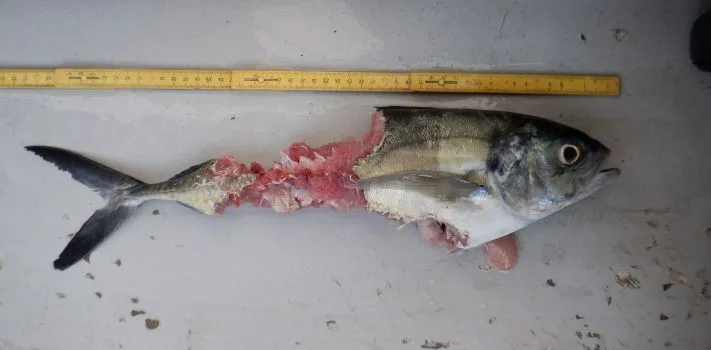
“In the case of shark depredation, species identification is incredibly difficult since most events happen underwater and out of sight and often leave little to no physical evidence. As such, we’ve also had to develop novel tools that can help us get clarity with this challenge. In addition, building trust with stakeholders like anglers takes time and effort.”
Fin-tastic Innovation
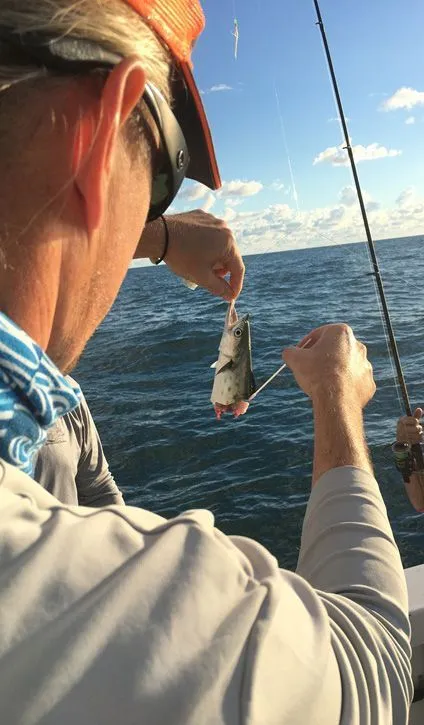
To improve species identification, Dr. Ajemian and his colleagues have pioneered the method of swabbing fishing lines for shark DNA. The research team also installed in-line cameras to capture interactions that may be happening at depth.
“Using DNA swabs on both bite wounds and on fishing line has been a game-changer. It allowed us to identify shark species involved in depredation events even when no carcass was recovered, which is what happens most of the time. This is the first time such forensic approaches have been applied to recreational fisheries, and it’s opened up new pathways for identifying and understanding depredator behavior,” Dr. Ajemain expounded.
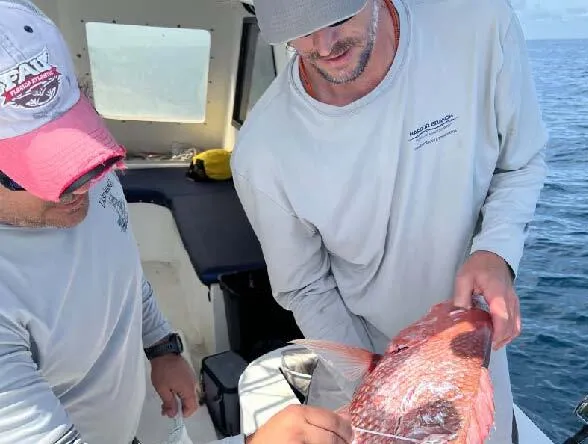
One of Dr. Ajemian’s key findings was just how widespread shark depredation is; About 43% of surveyed anglers in Florida experienced it, with probabilities ranging from 10% to 60%, depending on the region and season. Snappergrouper species, like mutton and red snapper, are among the most reported to be damaged by sharks, and commercial/charter-for-hire fishermen are the most adversely affected. They also found that bull sharks and sandbar sharks are the primary culprits. Importantly, depredation can be seasonal in certain places, reflecting open seasons for certain fisheries (e.g., red snapper).
Policy and Mitigation
As more anglers experience shark depredation, the demand for effective mitigation strategies is increasing. This year alone, at least two pieces of legislation have been introduced to address shark depredation: the Florida Safe Seas Act of 2025—which would prohibit shark feeding in the exclusive economic zone off the State of Florida, and the SHARKED Act—which would establish a task force to work with fisheries management groups to address the problems posed by increased shark depredation.
“With growing recreational fishing pressure and shark conservation success stories, these human-wildlife conflicts will only become more frequent. Active mitigation— whether it’s modifying gear, using deterrents, or changing fishing techniques—will be essential,” Dr. Ajemian emphasized.
At the end of the day, providing sound solutions for shark depredation is no easy task. Unlike the terrestrial management of animal populations (e.g., deer), managing populations in the ocean is much more complex.
There are many different groups involved, such as commercial fishers, recreational anglers, and conservationists—who don’t always agree completely. Decisions like when to open or close a fishery, or how many fish we can catch, can have big impacts on people’s jobs and communities. One major challenge is that it takes time to turn science into action.
“Any decisions must be based on strong science and consider input from the people who are directly affected, like anglers.”
Adding to that sentiment, Dr. Ajemian added that citizen science has been imperative for his research, sharing, “Scientists can’t work in a vacuum—stakeholder participation, especially from anglers, is critical and helps ‘scale up’ our research. By working together, we can strive to ensure sustainable fisheries that support economic interests and livelihoods and protect our fragile marine ecosystems and marine animals.”
This feature appeared in environment coastal & offshore (eco) magazine’s 2025 winter edition Fisheries & Aquaculture, to read more access the magazine here.