“These areas are the Earth’s least explored. It’s estimated that only one out of ten animal species living down here has been described by science,” he says.
The area studied is a part of the Abyssal Plains, which are deep-sea areas at depths of 3,500 to 5,500 meters. Although they make up more than half of the Earth’s surface, there’s very little known about their fascinating animal life.
“This is one of very few cases where researchers can be involved in discovering new species and ecosystems in the same way as they did in the 18th century. It’s very exciting,” says Thomas Dahlgren.
Sea Cucumbers and Glass Sponges
The animals living in these deep-sea areas have adapted to a life with very little nutrition. Most feed on organic debris, known as marine snow, falling from the more productive area close to the surface. As a result, this animal population is dominated by filter feeders, such as sponges, and sediment feeders, such as sea cucumbers.
“The lack of food causes individuals to live far apart, but the species richness in the area is surprisingly high. We see many exciting, specialized adaptations among the animals in these areas,” says Dahlgren.
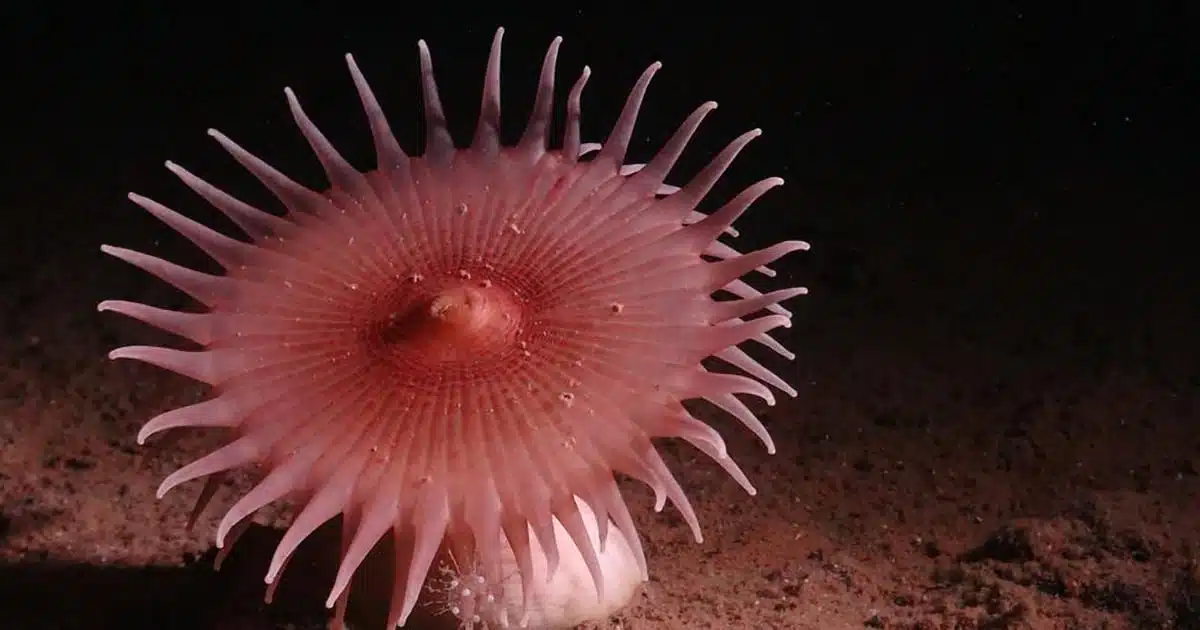
Using a remotely operated vehicle (ROV), the research team photographed the deep-sea life and took samples for future studies. One of the species captured on camera was a cup-shaped glass sponge, an animal believed to have the longest lifespan of any creature on Earth. They can live up to 15,000 years.
Another species discovered on the expedition was a pink sea pig, a sea cucumber from the genus Amperima. The species moves very slowly with its tube feet across the desolate plains in search of nutrient-rich sediments. The outgrowths on the front end of the underside are remodeled feet used to stuff food into the mouth.
“These sea cucumbers were some of the largest animals found on this expedition. They act as ocean floor vacuum cleaners and specialize in finding sediment that has passed through the least number of stomachs,” says Dahlgren.