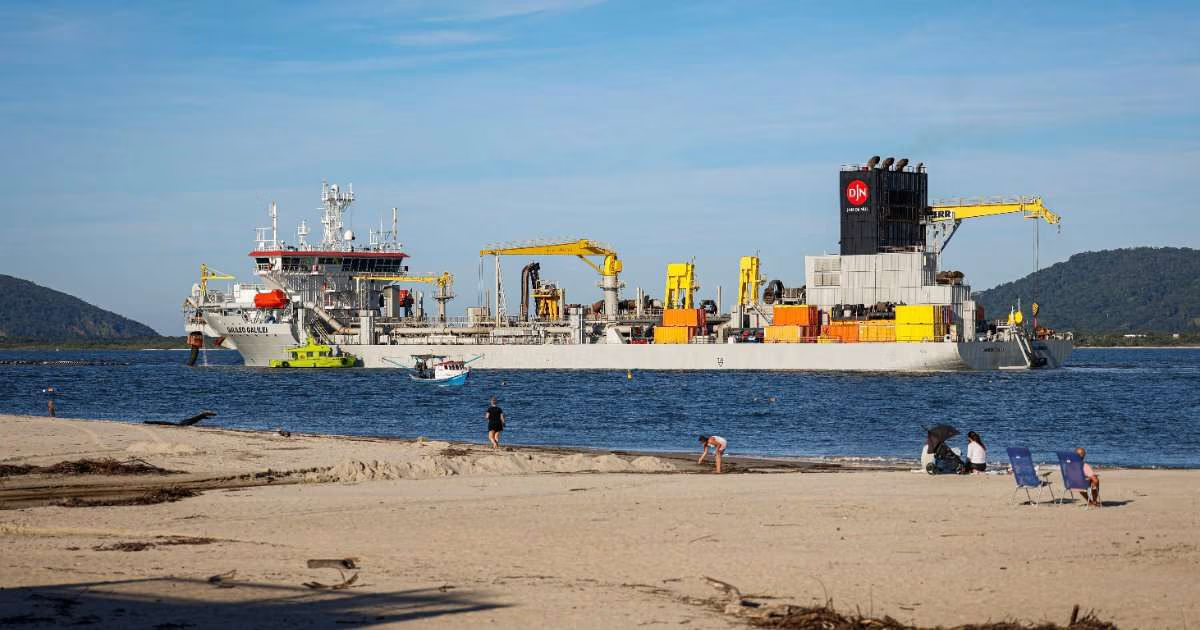
Over the past nine months, Jan De Nul has deepened the access channel to the local port of Itapoá and reused the dredged sand to create nine kilometers of beaches and five kilometers of dunes with native vegetation.
“This project has made Itapoá famous throughout Brazil,” said Mayor Jefinho Garcia.
Circular Use of Dredged Sand
Jan De Nul’s dredging vessel Galileo Galilei has deepened the access channel from -14 meters to -16 meters, making the port accessible for larger vessels. These works enhance the region’s logistical capacity and support further economic development.
Jan De Nul reused the dredged sand to protect the coast of Itapoá against the rising sea level and increasingly powerful storms. Their dredging vessel Galileo Galilei pumped seven million cubic meters of sand onto the beaches, where Jan De Nul’s teams carefully redistributed it to create the new coastline. The result: nine kilometers of new beach, ranging between 40 and 150 meters wide, and five kilometers of dunes.
300,000 Native Plants
Together with Acquaplan, a local expert in restoring ecosystems, Jan De Nul is introducing 300,000 native plants onto these dunes to help hold the sand in place and enhance biodiversity. Acquaplan collected samples of eight native plant species along the coast and propagated them in large quantities at a greenhouse near Itapoá.
Jefinho Garcia, Mayor of Itapoá: “This project represents a true rebirth for our city. For many years, our beach suffered from erosion and the continuous loss of sand, as the sea advanced. The positive impact of the works was almost immediate. During the summer season, Itapoá attracted significantly more visitors, while local businesses, building plots, and real estate all increased in value. This project has made Itapoá famous throughout Brazil.”
“This project created a win-win-win situation. The Port of Itapoá is now accessible to larger vessels, the coastal community is better protected with strengthened beaches and dunes, and nature gets a major boost with 300,000 native plants taking root. This is the world Jan De Nul is helping to build: one where quality of life, future generations, and respect for our planet go hand in hand,” said Dieter Dupuis, Senior Regional Manager for Jan De Nul in Brazil.