Some microbes—microscopic organisms like specialized bacteria, fungi, and archaea that make up 98% of the ocean’s biomass—can naturally degrade many of the chemicals contained in crude oil. Such microbes express specific genes within their DNA that encode enzymes that can break down pollutants found in oil spills, such as hydrocarbons and methane. These genes are present in microbes that belong to different taxonomic groups, but together a microbial community can form complex interactions that harness these genes and act in concert to respond to an oil spill.
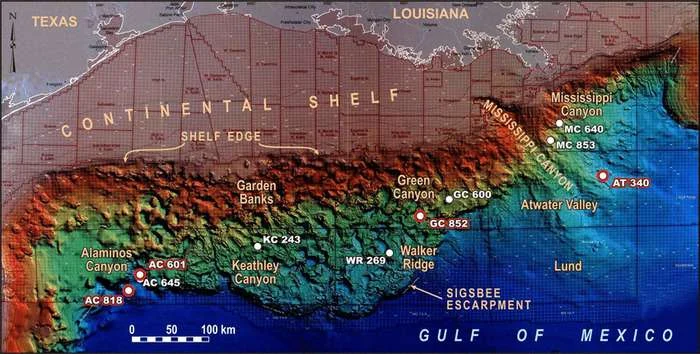
To understand what role microbes can play in degrading oil, how efficiently they can work, and how they can play into greater management efforts requires understanding baseline conditions—which groups of diverse microbial life naturally exist in a specific area and which groups became more abundant in response to the oil. In 2009, a year before the Deepwater Horizon oil spill, seawater samples were serendipitously taken in the northern Gulf of America that could shed light on the diversity of microbial life in the region.
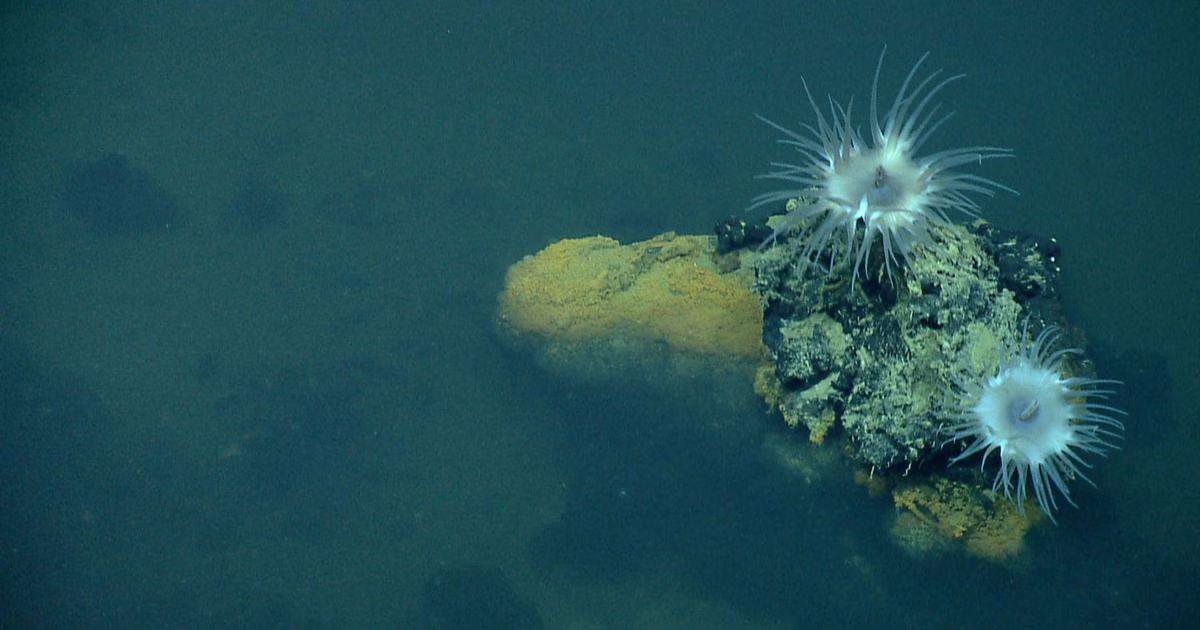
A new study led by scientists at NOAA’s Atlantic Oceanographic and Meteorological Laboratory (AOML) and Mississippi State University’s Northern Gulf Institute (NGI) captured the metabolic potential of the microbial community at a mussel-fringed brine lake deep within the Green Canyon lease area one year before the DWH oil spill. While just outside the impacted area, Green Canyon is a region of active oil exploration and exploitation along the continental shelf edge of the northern Gulf of America.
Comparing these findings against 55 existing metagenomic libraries, the team was able to gain new insights into how the microbial diversity changed before, during, and immediately after the DWH spill.
“We were looking at the diversity of microbial communities down the water column of these deeper ecosystems within an active area of oil extraction. Taxonomically distinct microbes have different genes and therefore different functions—while all working together as a single microbiome. Sequencing DNA fragments of the whole microbiome and then assembling the fragments—like putting together a puzzle of genomes—allowed us to do that,” explained Luke Thompson, Ph.D., a Research Professor with the Northern Gulf Institute and a Principal Investigator with AOML’s Omics team.
With collected seawater samples running between 656 feet and 2,132 feet, scientists in AOML’s Omics team extracted the genomic sequences of microbial life.
To investigate what taxonomic groups of bacteria and archaea are prevalent in the Green Canyon and what functions they may play in degrading oil, they reconstructed entire or partial genomes of the microbes within these samples—producing “Metagenome-Assembled Genomes (MAGs).” Mapping these genomic sequences, they compared them to libraries of microbial life collected across different oceans and regions to understand what groups exist in the deep waters of the northern Gulf.
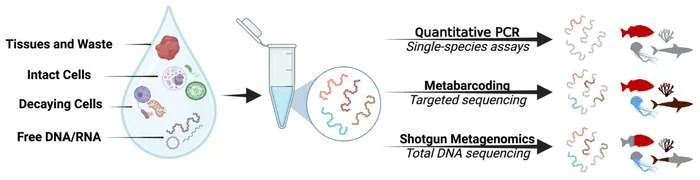
Previous studies have leveraged amplicon sequencing (the targeting of a specific gene) to get a snapshot of the microbial diversity of the Gulf region. Here, applying “shotgun metagenomic” analyses enabled the team to gain a deeper understanding of not only the microbial community in the region, but also the specific genes they have and the potential functions they translate to—including what role they may play in the communal effort of oil degradation.
The study produced MAGs for 60 bacterial, 11 archaeal, and 149 additional microbial taxonomic groups found within the Green Canyon lease block near the brine lake in the year before the DWH spill. They identified members of the archaeal genus Nitrosopelagicus as highly abundant—an ammonia-oxidizing chemolithoautotroph (an organism obtaining energy from inorganic chemical compounds rather than the sun through photosynthesis) naturally found in marine and land-based ecosystems. Other taxonomic groups included the archaea Nitrosopumilaceae, Nitrosopelagicus, and Thalassarchaeaceae. The marine bacterial taxa Pelagibacteraceae and SAR324 were also abundant.
Mapping the MAGs of each of these taxa revealed genes that can degrade methane, alkanes, and other hydrocarbons that comprise crude oil. However, recruitment of the bacterium Bermanella sp. remained low in samples collected in Green Canyon in 2009, experienced a significant spike during the DWH oil spill, and then returned to extremely low levels in the years after the spill. This indicates that microbes capable of mounting a massive response to hydrocarbon releases can lie nearly undetectable when a large oil spill is absent and dramatically increase in response to a surge.
Restoration efforts in the wake of the Deepwater Horizon spill are ongoing today. Efforts to rebuild habitat for fish and wildlife—like the creation of more than 1,200 acres of wetland habitat in Louisiana’s Barataria basin—are showing promising results for key species including shrimp, blue crab, and red drum. A six-year restoration effort working with fishermen has aided the recovery of valuable fish species including bluefin tuna and yellowfin tuna. Breakthroughs investigating mesophotic corals impacted by the oil, including the first observed spawning, have built the scientific foundation for management plans. This comes as scientists at AOML expand coral reef monitoring efforts in the Flower Garden Banks National Marine Sanctuary to mesophotic ecosystems. However, whether the DWH-oiled areas have returned to baseline conditions before the event remains an active question.
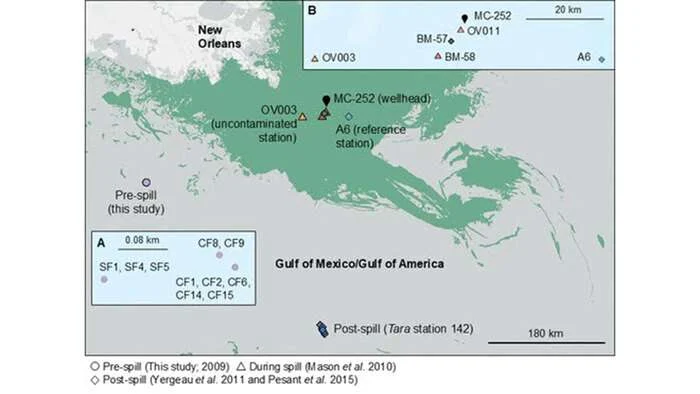
This study demonstrates how much there still is to learn about the microbial world and how it might respond to large-scale environmental changes. It offers useful insights on the microbiome diversity and function in historical samples from the Green Canyon lease area a year earlier. It provides an essential baseline that can aid machine learning, microbial indicator development, and modeling efforts aimed at understanding what taxonomic groups were prevalent prior to the DWH event—and effectively mitigating the impacts of future oil spills.
Differences in environmental conditions across vast and complex deep-sea ecosystems may also influence the diversity and function of microbial communities in bioremediation. Advancing how we understand these complexities, especially in areas of active oil exploitation, can therefore aid restoration and management plans and protect valuable fish species and additional natural resources of the Gulf of America.
This story was written by Chris Malanuk and originally published here: https://www.aoml.noaa.gov/a-new-study-investigates-oil-degrading-microbes-a-year-before-deepwater-horizon-oil-spill/