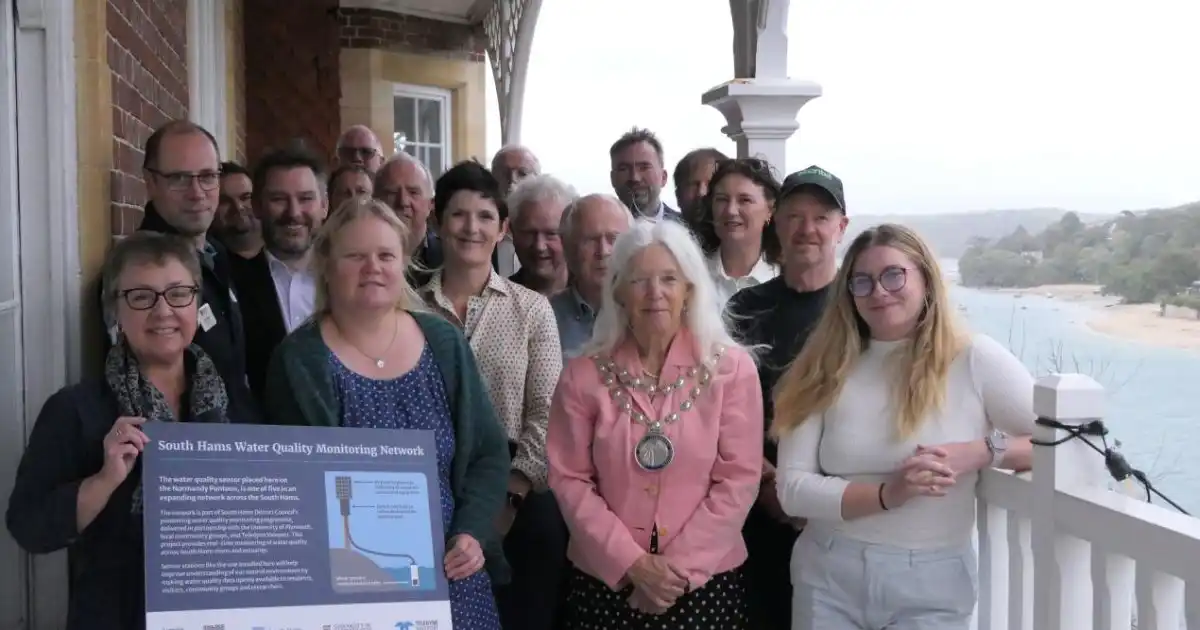
Launched on October 9, 2026, the pilot brings together four monitoring stations across the district, with data from the sites being made available to the public through an online dashboard. The aim is to make information about local water quality more accessible and easier for the public to understand.
The four initial monitoring stations are located at Dartington Pontoon on the River Dart, Sequers Bridge on the River Erme, Hatch Bridge on the River Avon, and Normandy Pontoon on the Salcombe Kingsbridge Estuary.
Teledyne Valeport has played a key role in defining the monitoring requirements for each location, supplying the sensor technology and technical expertise needed to develop a robust, long-term monitoring solution tailored to local environmental conditions.
Three of the monitoring stations use a core configuration of a miniCT—a conductivity and temperature sensor— alongside Hyperion optical sensors measuring fDOM, tryptophan, and turbidity. The fourth uses the same configuration, but with the addition of pH monitoring. Conductivity, temperature, and pH help identify environmental shifts in the water, while turbidity, fDOM, and tryptophan provide indicators of suspended material, organic matter, and potential wastewater influence within the waterways.
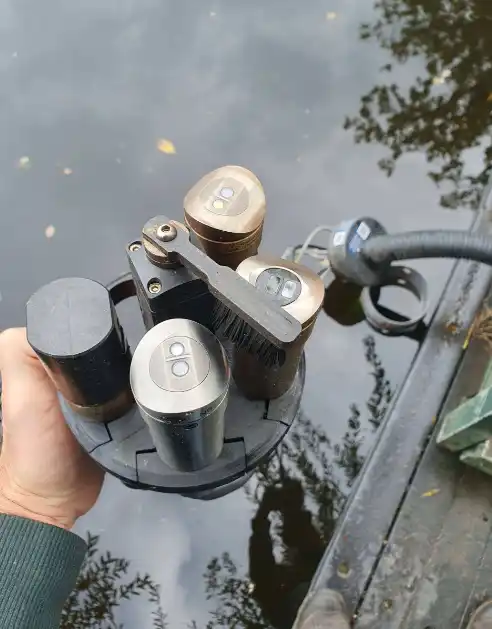
Together, these measurements provide a more detailed picture of changing water quality conditions. The flexibility of the system also means additional parameters could be monitored in future, depending on the requirements of individual sites.
The first sensors were installed in September 2025, giving Teledyne Valeport a valuable opportunity to evaluate and refine some of its latest water quality monitoring technologies in real-world conditions.
The project has acted as a long-term field trial, providing operational feedback that would be difficult to replicate through laboratory testing alone.
The monitoring stations have operated continuously through a wide range of environmental conditions, including severe winter weather during late 2025. This has provided valuable insights into sensor performance, system resilience, deployment methods, and power management in challenging field conditions.
Lessons learned during the deployment have informed refinements to both the monitoring systems and sensor technologies, helping improve long-term reliability for future environmental monitoring projects.
Iain Slade, Head of Product & Innovation at Teledyne Valeport, said: “It’s incredibly rewarding to see this project progressing into a working network of monitoring stations across the South Hams. For Teledyne Valeport, the project has provided a unique opportunity to work closely with partners while testing and refining emerging sensor technologies in real-world conditions. The experience has helped shape the development of our monitoring solutions while demonstrating how continuous environmental data can support a better understanding of local waterways.
“Most importantly, it’s fantastic to see this information being made more accessible to local communities through the public dashboard.”
The government-funded project brings together several other partners. Skentel is providing the stations’ power and communications infrastructure, including mains, solar, and battery power, as well as 4G telemetry. It also provides and hosts the online dashboard, which will be made available to the public.
The University of Plymouth has contributed to sensor and site selection, data analysis, and installation of the equipment, as well as the development of how data is presented through the dashboard. Feedback from the project team and user groups has helped inform how the information is displayed, with the aim of making the data accessible to the public.
The duration of the pilot is currently dependent on future government funding to maintain the monitoring stations.
Cllr John McKay, South Hams District Council’s Executive Member for Climate Change and Biodiversity, said: “This is a brilliant example of what can happen when communities, researchers, and businesses come together to tackle a real issue.
“People care deeply about the health of our rivers, estuaries, and coastline. By making more water quality information available in a clear and timely way, we can help residents, visitors, and water users better understand local conditions and play their part in protecting the places they love.
“This is a pilot, so we are still learning what the data can tell us and how it can best be used. But it is an important step forward and shows our continued commitment to cleaner waters and to working with partners who share that ambition.”
Amid growing public interest in water quality, the project demonstrates how continuous monitoring technology can provide communities with clearer, more timely information about the waterways around them.
The public online dashboard will give residents, water users, and other interested groups a clearer picture of the condition of the district’s rivers and estuaries. The approach could also provide a model for how similar monitoring systems could help communities access more timely water quality information elsewhere in the UK.
For more information, please visit https://www.valeport.co.uk/