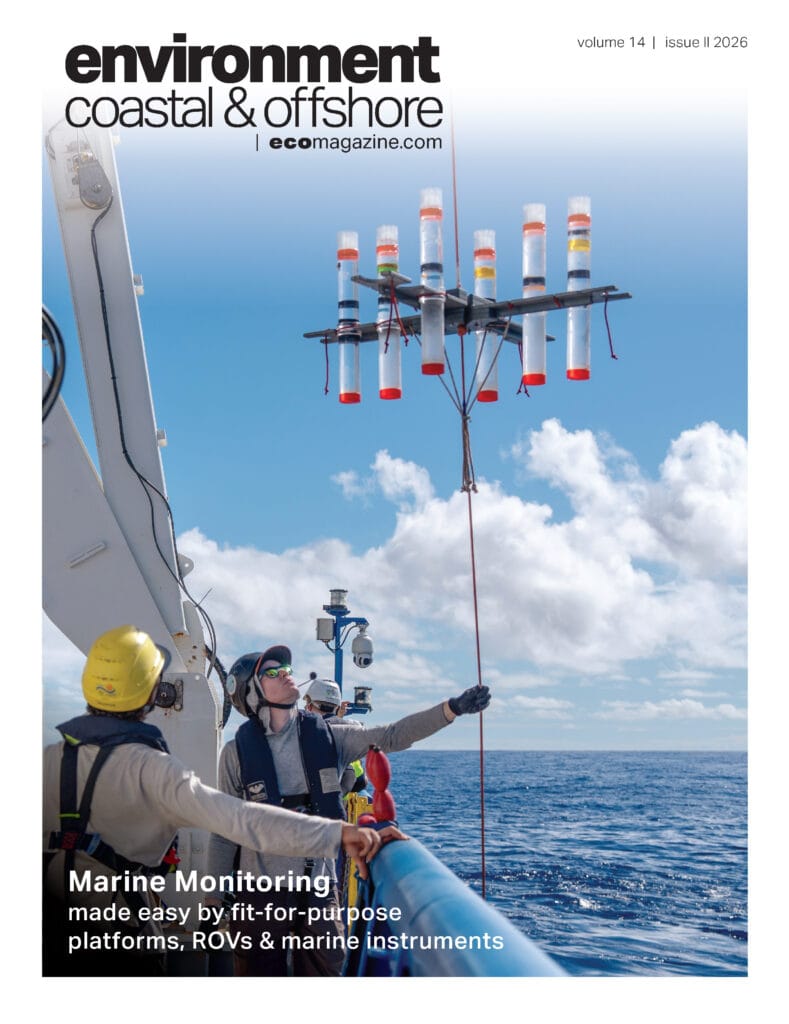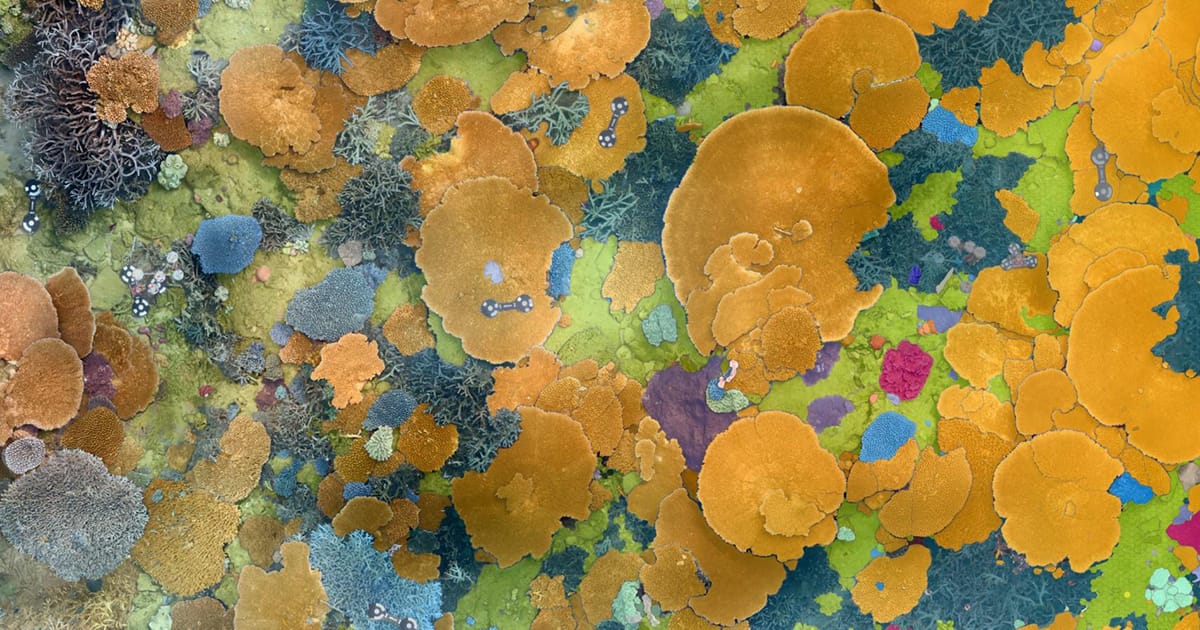
This new method, RapidBenthos, has the capability to extract an unprecedented level of data from photomosaics of coral reefs. It was featured on the cover of the February issue of Methods in Ecology and Evolution.
It automates the analysis of mosaics stitched together from thousands of seafloor images, saving our scientists about 60 hours of manual analysis per mosaic.
It can be used for monitoring coral reefs, coral bleaching and seagrass meadows, providing timely information to inform management decisions.
This 72 m2 orthomosaic of a coral reef, pictured, was automatically segmented and classified using RapidBenthos.
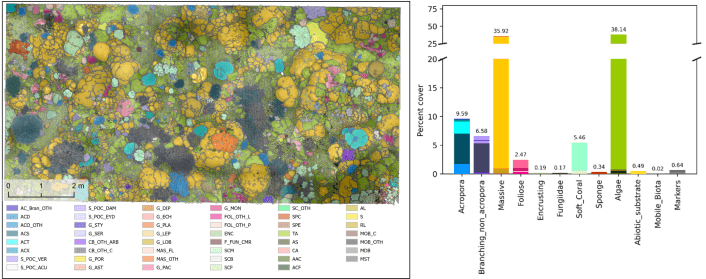
Lead author, AIMS machine learning/AI engineer Tiny Remmers, said RapidBenthos allowed AIMS to more sustainably scale up and process more seafloor imagery with much less work and cost.
AIMS ecosystem modeler Dr. Renata Ferrari said RapidBenthos was possible thanks to years of work from a multidisciplinary team of researchers whose work towards capacity building in ecological and ecosystem monitoring supports many projects across AIMS and in the world.
AIMS is investigating how RapidBenthos can be used in conjunction with ReefScan to automate the collection and analysis of reef images.
The research was supported by the Reef Restoration and Adaptation Program funded by the partnership between the Australian Government’s Reef Trust and the Great Barrier Reef Foundation, the Australian Institute of Marine Science, the College of Science and Engineering at James Cook University and the Remote Sensing Research Centre of the School of the Environment at the University of Queensland.
The paper: https://besjournals.onlinelibrary.wiley.com/doi/abs/10.1111/2041-210X.14344