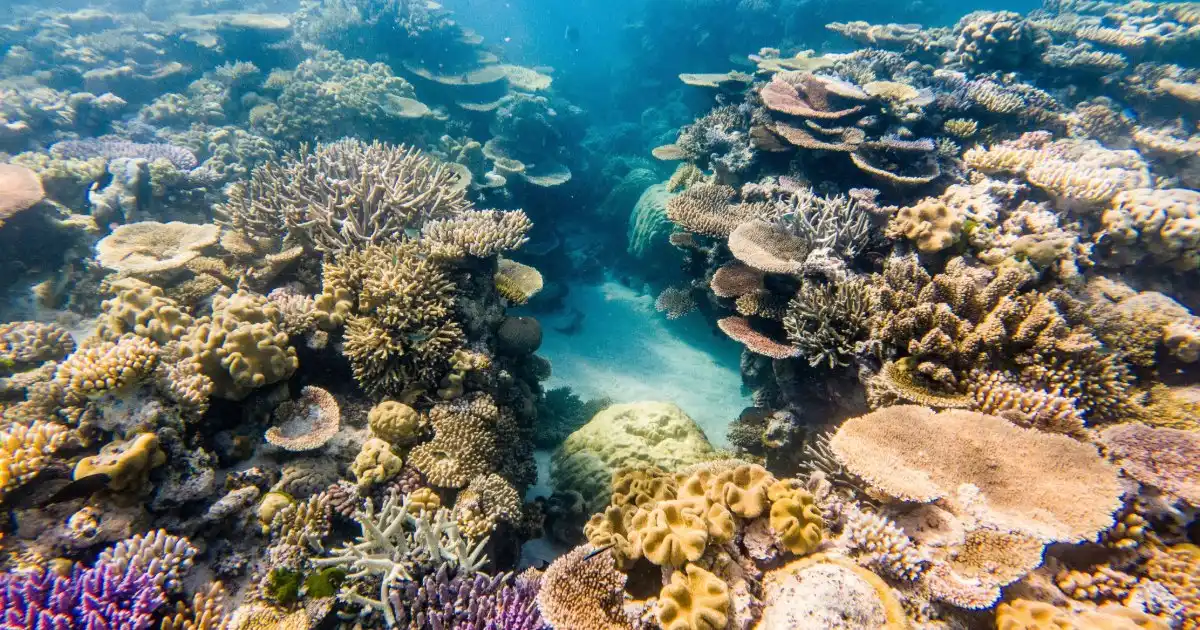
The impacts extend far beyond the reef itself. Coral bleaching and reef degradation affect tourism, fishing, cultural connections to Sea Country, and the wellbeing of communities that depend on healthy marine ecosystems.
To better understand these impacts, WAMSI has initiated a social science project through the Western Australia (WA) Reef Regen Program, exploring how communities in Exmouth and Coral Bay are experiencing coral reef degradation and what they hope for the future of Nyinggulu (Ningaloo).
WAMSI Research Director Dr. Jenny Shaw said local knowledge and perspectives are essential to shaping effective regeneration efforts.
“Reef regeneration is ultimately about supporting resilient ecosystems and resilient communities. To achieve that, we need to understand the values, priorities, and aspirations of the people who live, work, and spend time on these reefs,” Dr. Shaw said.
“This research will help us learn from the community about what matters most to them and how regeneration efforts can deliver meaningful benefits for people and the environment.”
Co-led by researchers from the University of Tasmania’s Institute for Marine and Antarctic Studies (IMAS), the project is exploring awareness of reef decline, mapping the cultural, social, and economic values associated with Nyinggulu’s reefs, and identifying opportunities to build community resilience.
The project team recently visited Exmouth and Coral Bay to speak with local community leaders about their experiences of reef change at Nyinggulu and their aspirations for the reef.
Many participants described the impacts of the 2024–25 marine heatwave and widespread coral bleaching on local businesses, marine industries, and residents.
Associate Professor Emily Ogier, a marine social scientist at IMAS, said conversations with community members highlighted a strong commitment to supporting reef recovery.
“Tour operators, local fishers, business leaders, and local conservation groups shared with us their experiences of despair at the recent extent of coral bleaching associated with the 2024 to 2025 marine heatwave and the impacts it has had on businesses, local divers, and residents,” she said. “The Exmouth and Coral Bay communities are watching for signs of recovery and sharing news when they see it.
“They told us of their hope for the coral larval enhancement trial to support recovery, their concerns about future ocean conditions, and their interest in further techniques being trialed and in how best to adapt to the changing reef.”
Participants also identified opportunities for local businesses, divers, and volunteers to contribute to regeneration efforts, highlighting the important role local knowledge and involvement can play in supporting long-term reef resilience.
Dr. Shaw said ongoing conversations with the community leaders will help shape the WA Reef Regen Program, ensuring that regeneration efforts align with community rights, expectations, and local priorities.
“The findings will not only support future initiatives at Nyinggulu but also contribute to broader discussions with other communities responding to the impacts of reef decline,” she said.
“By understanding the people alongside the reef, we can ensure future actions are guided by local knowledge, community values, and a shared vision for Nyinggulu’s future.”