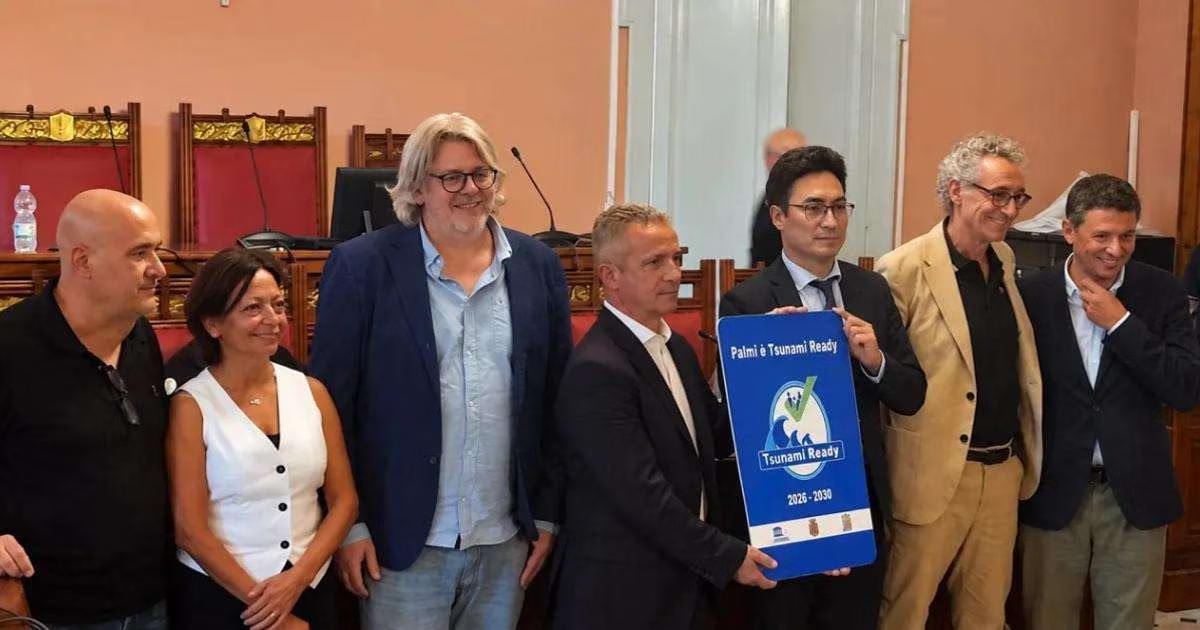
Dr. Denis Chang Seng, Technical Secretary for the IOC-UNESCO Tsunami Warning and Mitigation System for the North-East Atlantic, the Mediterranean and Connected Seas (NEAMTWS), presented the recognition, marking the culmination of a long-term process involving local authorities, scientific institutions, Civil Protection bodies, and the community.
“Today is a recognition ceremony, but it is also the conclusion of a long and demanding journey. Palmi was one of the earliest communities to embark on the path towards Tsunami Ready recognition. The process required patience, continuity, and the sustained commitment of many people. This makes today’s achievement especially meaningful,” said Dr. Chang Seng.
Turning Tsunami Science into Local Preparedness
The UNESCO-IOC Tsunami Ready Recognition Programme (TRRP) is an international community-based initiative aimed at strengthening tsunami risk prevention and preparedness in coastal communities. It is based on 12 indicators covering areas including hazard knowledge, warning procedures, emergency response, and public awareness.
Palmi lies on Calabria’s Tyrrhenian coast in an area of medium-to-high tsunami hazard, with documented historical tsunami impacts. Mayor Giovanni Calabria emphasized the importance of public understanding of the risk: “Education and awareness are key to minimizing the tsunami effects.”
Through the EU DG ECHO-funded CoastWAVE 2.0 project and in collaboration with INGV, work in Palmi included research into public perceptions of tsunami risk, preparedness meetings, inundation and evacuation mapping, workshops, and public outreach. Studies of local bathymetry, coastline morphology, and natural features helped identify exposed areas and develop evacuation routes connecting the coast with designated assembly points.
A new tide gauge installed in Palmi by the Institute of Environmental Protection and Research (ISPRA) and INGV further strengthens local monitoring capabilities and provides another tool supporting scientific knowledge and public safety.
Science, Warning, and Public Awareness
Representatives of Italy’s scientific and Civil Protection institutions stressed that effective tsunami preparedness requires not only monitoring and warning systems, but also an informed and prepared population.
Stefano Lorito, Coordinator of the INGV Tsunami Alert Center, said: “Research and early warning are not enough; public awareness and preparedness are essential when a tsunami occurs.”
Domenico Costarella of the Calabria Region’s Civil Protection Department added: “Prevention, along with early warning, is fundamental for tsunami risks. The Civil Protection Department is committed to supporting local mayors. Raising public awareness leads to better responses during emergencies.”
The recognition also reflects cooperation under Italy’s National Alert System for Earthquake-Induced Tsunamis (SIAM), involving the Civil Protection Department, INGV, and ISPRA. As part of the process, tsunami evacuation maps were developed to identify potential inundation zones and establish escape routes from the coastline to designated assembly areas.
The approach adopted by the Municipality of Palmi is particularly significant given the characteristics of the area. Situated along the Tyrrhenian coast of Calabria, Palmi has been affected by tsunamis throughout its history, as documented by INGV’s Italian Tsunami Effects Database (ITED). Awareness of the risk and preparedness of the population are therefore key to strengthening the community’s response capacity.
Palmi Municipality also conducted a survey of residents’ perceptions of tsunami risk before accreditation. Repeating the survey over time can help assess changes in community awareness and the effectiveness of preparedness and communication initiatives.
Continuing Commitment
Palmi Municipality now joins the growing network of Tsunami Ready communities across the North-East Atlantic and Mediterranean region and globally. The recognition is not the end of the process: preparedness plans and procedures need to be maintained and exercised, while residents and visitors need continued access to information on how to respond.
Palmi’s preparedness efforts also demonstrated their value in a multi-hazard context when a severe cyclonic storm struck the coastline in February 2026, causing extensive damage and coastal erosion. Capacities strengthened through the Tsunami Ready process, including clearer procedures, stronger coordination, and enhanced community preparedness, enabled a more effective local response.
As Dr. Chang Seng highlighted: “Its experience sends a clear message: science becomes most valuable when it is translated into action, and resilience becomes durable when institutions and citizens build it together.”