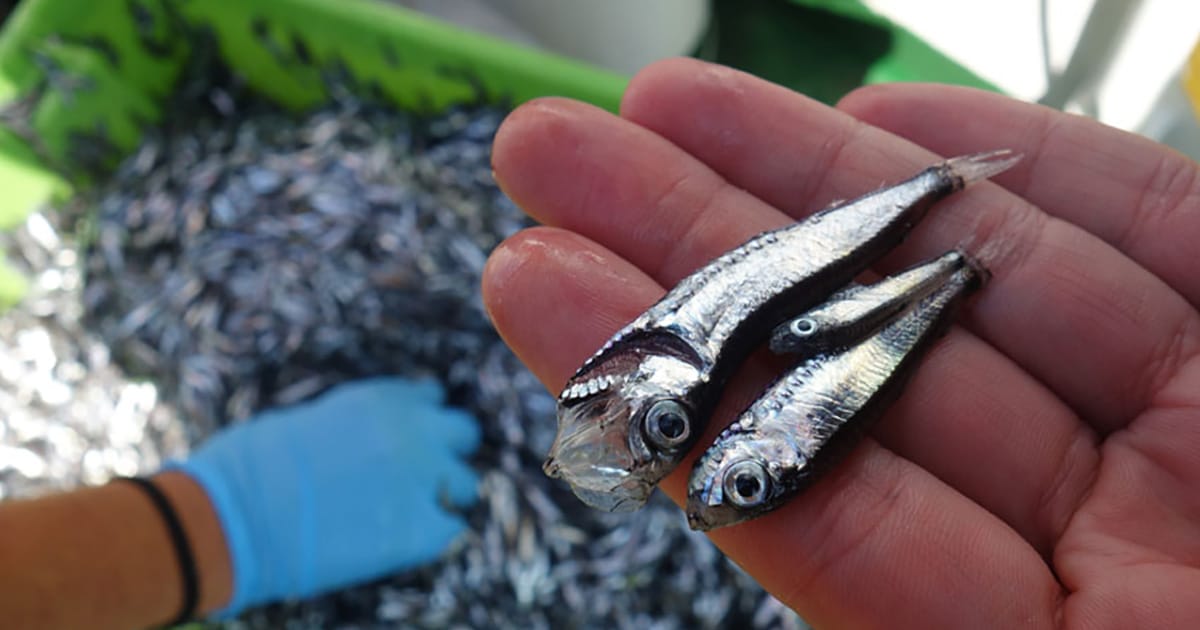
To shed light on this dark and cold area of the oceans, the research team has developed since 2019 different performance protocols to estimate the total biomass of this region, establish its role and importance in the food chain, and analyze its role in carbon transfer and sequestration.
Research has shown that mesopelagic fish have a diurnal-night migratory behavior, rising to surface waters at night to feed and descending to safer depths during the day to avoid predators. This migration is fundamental not only for their survival but also for the ecosystem’s functioning, as it contributes to the transfer of carbon and nutrients to the lower layers of the ocean.
“Our main conclusion is that, at present, it is more beneficial to protect this area than to exploit it. It provides essential nutrient and climate regulation services and supports numerous fish populations of commercial interest,” says Raúl Prellezo, AZTI expert in fisheries economics and project coordinator.
Abundance and Molecular Sources
The research, led by the AZTI technology center, has estimated abundant biomass in this area: 1.3 billion tons, which represents 87% of the total pelagic biomass and is 15 times higher than the entire oceanic fishery in 2022 (81 million tons).
“Despite this large biomass, the commercial viability of exploiting this area for fisheries is limited, first, because of the wide and dispersed distribution of the fish. Second, because of their small size, they require processing into fishmeal and fish oil; third, because of their slow metabolism and low productivity. All this makes them very vulnerable to overfishing,” Prellezo explains.
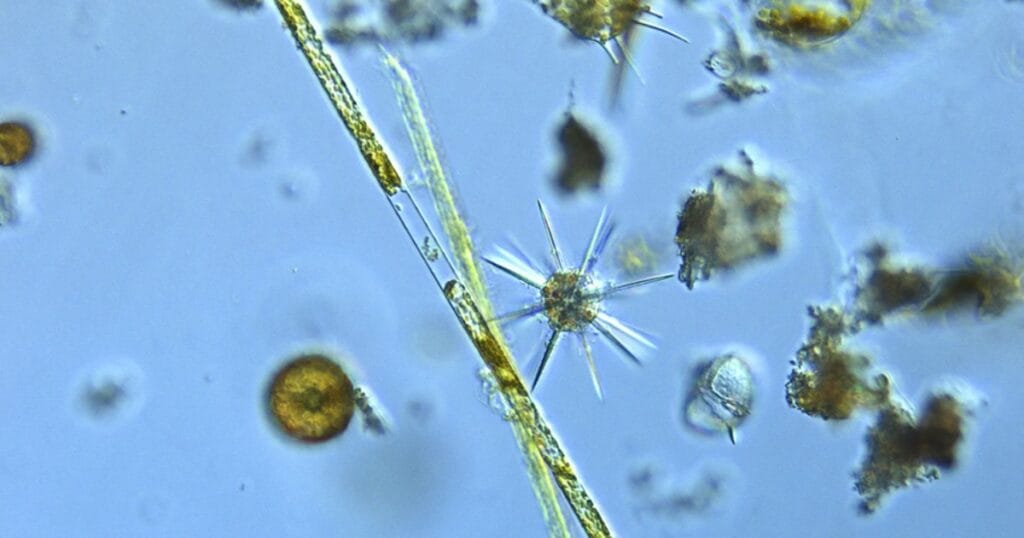
The study has also observed how the extreme conditions at these depths have driven the evolution of microbial communities with unique biochemical traits and promising sources of novel molecules.
The SUMMER project has evaluated the antimicrobial activity of some 700 microbial extracts against a variety of human and fish pathogens, as well as human cancer cells. The results highlight the potential of mesopelagic organisms for pharmaceutical applications.
Bacteria that produce omega-3 fatty acids, which are important for the nutraceutical industry and aquaculture, have also been found in fish viscera.
“Profitability issues in obtaining fish oil require careful evaluation to determine if it is commercially viable. However, the targeted search for organisms in the mesopelagic zone offers a promising and sustainable avenue to harness microbial and chemical diversity for potential pharmaceutical and nutraceutical advances,” adds the AZTI researcher.
Key Environmental Role
The research results especially highlight the fundamental ecological role of mesopelagic organisms in carbon sequestration and food webs, underscoring the significant societal risks of overfishing.
The nocturnal movement of mesopelagic organisms, including fish and zooplankton, into surface waters for feeding is the largest daily migration by biomass on the planet. According to the study, 44% of the biomass in this area performs these vertical migrations. This active flux, as the report highlights, represents 1.5 times all CO2 emissions from automobiles worldwide.
To support the management of the exploitation of mesopelagic organisms, the project has developed a virtual tool that allows stakeholders to interactively experience the impacts of diurnal vertical migrations on the biological carbon pump.
The research team has also quantified the dependence of predators on specific mesopelagic resources and found that all top predators depend to a greater or lesser extent on these resources, making food webs particularly sensitive to the capture of mesopelagic fish.
The SUMMER initiative, funded by the European Union’s H2020 program, brings together a consortium of 22 institutions led by the AZTI technology center. This project is distinguished by its cross-cutting and multidisciplinary approach, integrating research personnel from diverse areas such as economics, genetics, microbiology, food, and ecosystems. This collaboration allows a comprehensive analysis of mesopelagic resources, ranging from the evaluation of their economic viability to the study of the bacteria that inhabit these organisms and their potential application in aquaculture. In addition, the initiative has involved the participation of industrial companies that are interested in exploring the potential of these mesopelagic resources from multiple perspectives.
Key Data:
- Biodiversity and biomass: Although still uncertain, the mesopelagic zone is considered to contain 1.3 billion tons or 87% of the total pelagic biomass.
- Food webs and resilience: Marine food webs are particularly sensitive to the capture of mesopelagic fish, and fishing for mesopelagic fish could have a major impact on other species, depending on the region.
- Carbon storage and climate regulation: The 1.3 billion tons of mesopelagic fish are capable of transporting carbon, equivalent to 1.5 times the annual CO2 emissions of all the world’s automobiles.
- High-value products: The mesopelagic zone is a largely untapped resource with great potential for unique bioactive compounds. Reducing this resource at this time would limit its potential future uses.
- Assessment of management and ecosystem services: Commercial fishing simulations indicate that the benefits of mesopelagic fish products do not outweigh the costs in climate regulation and biodiversity. The estimated average social cost is 19 euros per ton of mesopelagic fish caught.