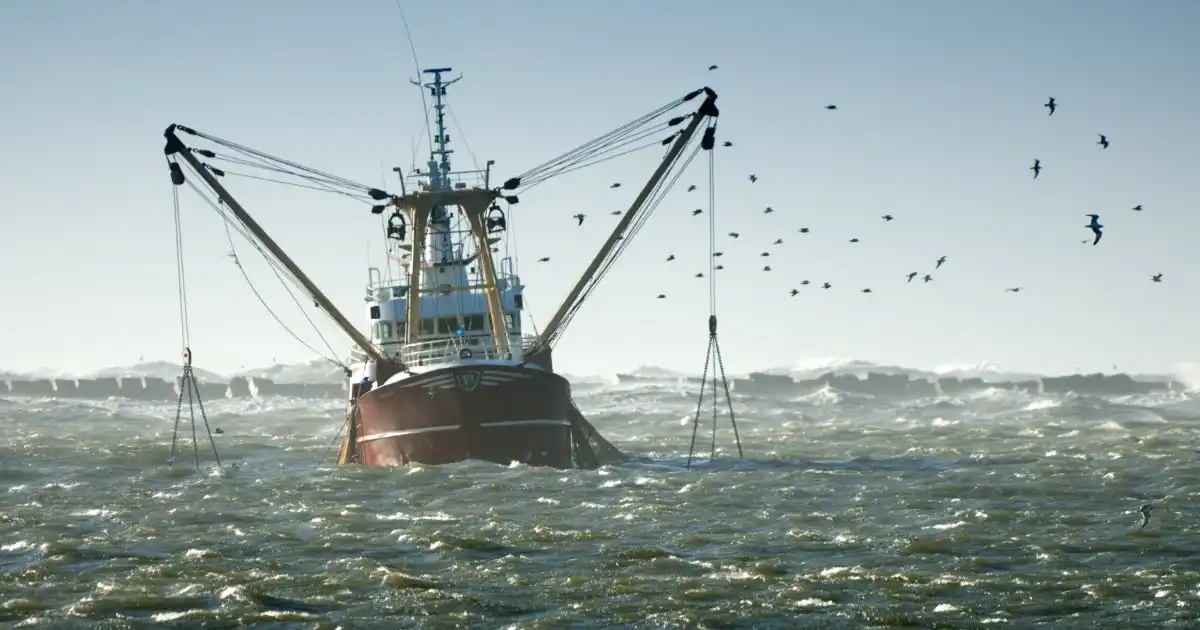
A new study offers a strategy to find unseen vessels: strapping audio recorders onto seabirds. Using this tactic, Jonathan Rutter and colleagues ferreted out unseen vessels across the North Atlantic, Mediterranean, and South Pacific coasts.
Vessels can hide their activity by turning off Automatic Identification Systems (AIS) tracking technology. This ultimately thwarts scientists’ and policymakers’ ability to understand animal-vessel interactions globally. To reveal covert vessel interactions, Rutter et al. placed lightweight audio recorders on three seabird species (northern gannet, Westland petrel, and Balearic shearwater, each of which lives in a distinct ocean habitat).
They mapped the birds’ activity through GPS and analyzed audio recordings, documenting various distinct vessel sounds. They found that a sizable percentage of documented sounds from vessels did not overlap with AIS-reported activity. For example, on average, the northern gannet spent 68 minutes per day near vessels—and at least 22 minutes of that time was around unseen ones. In other words, at least 32 percent of vessel audio captured by gannets came from AIS-silent vessels. However, Rutter et al. note this is a conservative estimate, and suggest the numbers may be closer to 57 percent.
With regard to policy applications for their findings, the authors write: “Audio detection could be particularly useful for improving bycatch and collision risk assessments with suspected bias from small-scale fisheries, poor AIS reception, or AIS disabling.”