In a breakthrough milestone achieved in November 2025, the China National Offshore Oil Corporation (CNOOC) and the Huairou Laboratory successfully completed the world’s first exploratory sea trial of deep-water CO2 hydrate solidification and storage in the Qiongdongnan Sea Area of the South China Sea. Published in the journal ENGINEERING Energy, this pioneering study presents a low-cost, large-scale marine carbon storage pathway that harnesses natural deep-water high-pressure and low-temperature environments to lock liquid CO2 into stable solid hydrates.
Key Research Findings & Highlights
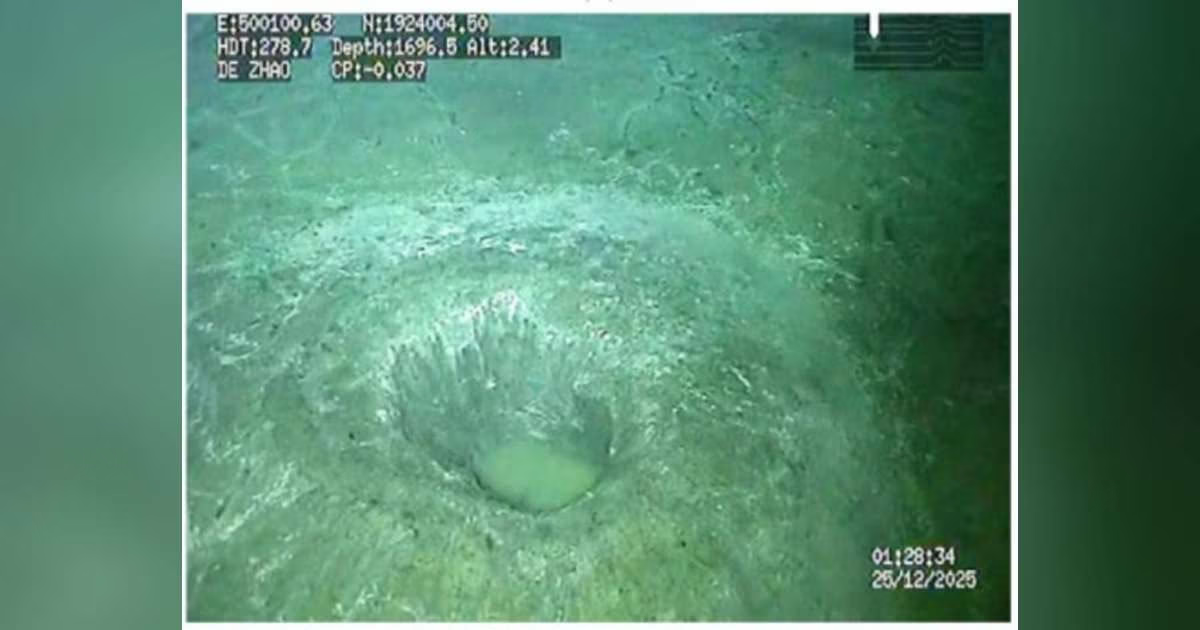
- World-First Deep-Water Sea Trial: Successfully injected and solidified liquid CO2 in situ under ultra-deep-water conditions (water depth of 1,696.5 m, reservoir depth of 119 m) in the South China Sea, capturing the world’s first artificial deep-water CO2 hydrate “iceberg.”
- Simplified Site-Selection & Reduced Costs: Unlike conventional methods requiring complex structural traps, tight cap rocks, and rigorous seal-integrity evaluations, deep-water CO2 hydrate storage relies on broad subsea physical conditions, significantly cutting down evaluation and infrastructure costs.
- High Environmental Safety: Near-field in situ sensor monitoring during the sea trial showed that seawater pH remained stable at approximately 7.4 with no abnormal CO2 concentration spikes, confirming that the storage test had negligible impact on the surrounding marine environment.
- In Situ Engineering Breakthroughs: Established a preliminary engineering system encompassing shallow soft-formation drilling, dynamic CO2 injection, multi-orifice swirl nozzle atomization, interface control, and multidimensional acoustic-optical-electrical monitoring.
Transforming Natural Gas Hydrate Challenges into Carbon Storage Advantages
The innovative approach conceptualized by the research team reverses the technical difficulties traditionally encountered in natural gas hydrate (CH4 hydrate) exploration, turning them into structural advantages for permanent carbon sequestration:
- Favorable Thermodynamic Conditions: While CH4 hydrate typically requires water depths greater than 600 m and temperatures below 3°C, CO2 hydrate forms more readily at depths greater than 500 m and temperatures below 10°C.
- Long-Term Stability Without Traps: Because deep-water subsea temperatures and pressures remain remarkably stable, formed solid CO2 hydrates persist safely as a non-mobile solid without requiring traditional geological trap formations or tight cap rocks.
- Favorable Reservoir Mechanics: Unconsolidated muddy-silt or weakly cemented sand-mud mixed layers found on the shallow seabed are highly favorable for CO2 injection and localized hydrate agglomeration.
During the sea trial utilizing the “SS Amazonia” deep-water platform, 70 tons of liquid CO2 in total were injected across two wells (Wells LS18-1-C1 and LS18-1-C2). Liquid CO2 was pumped through continuous oil tubing and atomized via a multi-orifice swirl nozzle into the surrounding seawater, immediately forming white hydrate composite particles (“ice mist”) around the drill column.
After 40 days, Remotely Operated Vehicle (ROV) imaging verified the successful formation of an accumulated solid CO2 hydrate body with visible heights ranging from 2 to 30 cm above the seabed. ROV-mounted sensing arrays confirmed that seawater pH and CO2 levels remained undisturbed throughout the injection and release stages, establishing the high ecological safety of this novel technique.