Deep-Sea Canyon Survey Reveals Human Debris in the Southwestern Atlantic

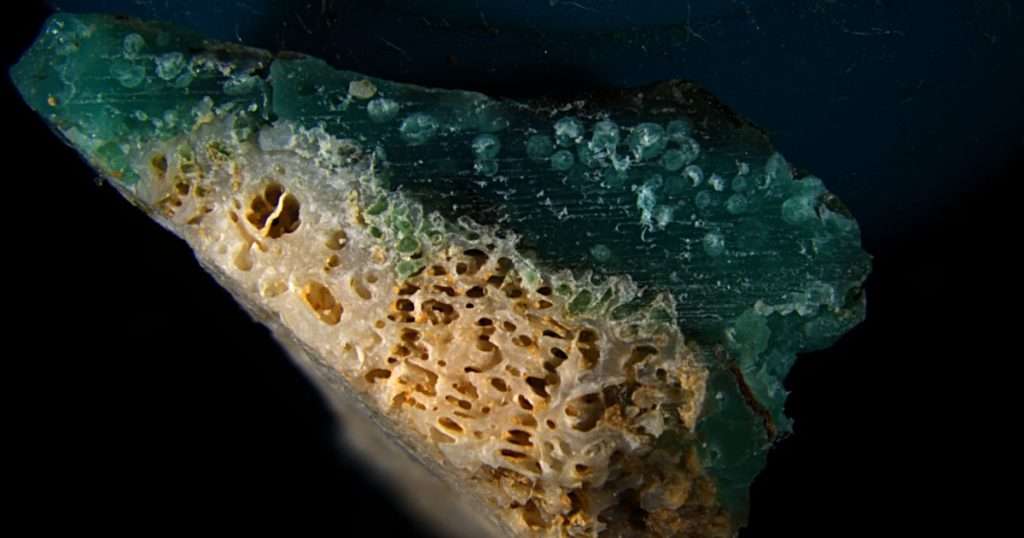
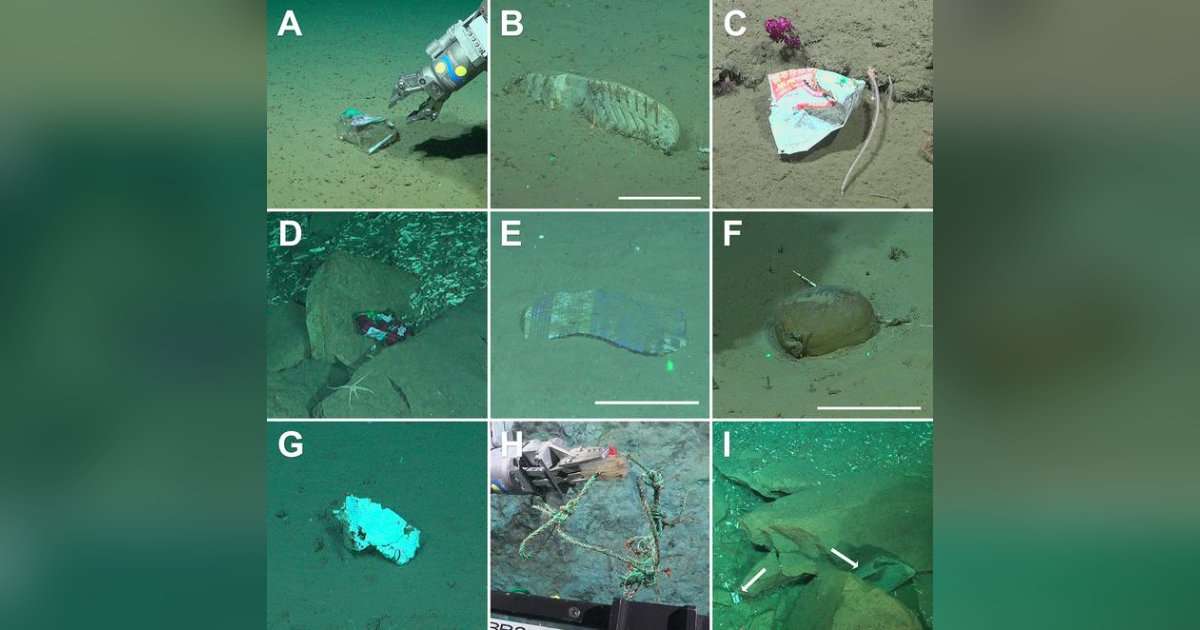
xamples of deep-sea litter found in the Mar del Plata Submarine Canyon. (A) Medium-sized plastic wrapper, 2,109 m. (B) Rubber boot, 2,598 m. (C) Food wrapper, 1,920 m. (D) Snack wrapper, 3,231 m. (E) Tissue paper wrapper, 3,814 m. (F) Sediment-filled plastic bag, 3,739 m. (G) Highly degraded plastic fragment, 3,709 m. (H) Nylon cord with a hook, 1,949 m. (I) White plastic cup and bag (arrows), 3,243 m. Scale bars: 10 cm. (Image credits: Schmidt Ocean Institute/ROV SuBastian, expedition FKt250712; Teso et al., 2026, PLOS One, CC-BY 4.0)

It's no secret that plastic and other human trash are a problem for marine life, but our understanding has long focused on the ocean's surface. Now, a more complete picture is coming into focus, revealing that even some of our planet's greatest depths have become home to our debris. As described in a study published in the open access journal PLOS One, an international team led by Dr. Daniel Lauretta of Argentina's natural science museum surveyed the Mar Del Plata Submarine Canyon in the southwestern Atlantic, finding that our trash has accumulated in a part of the planet we typically consider pristine.

The ocean’s depths remain one of Earth’s greatest unknowns, but as the fish swims—or as the debris sinks—the sea floor is not all that distant. On average, our oceans are just a few miles deep, and thus, not so far from human influence. This study, which took place in the summer of 2025, marked the first time scientists had taken images of the seafloor within the Mar Del Plata Submarine Canyon. They documented approximately 40 species that may be new to science but also some more familiar sights.

Across 10 of the 17 dives with a remotely operated submersible, the researchers saw 29 identifiably manmade objects. The vast majority were plastic, along with a few rubber items. They ranged from fishing gear to plastic bags and food wrappers and even a boot. Some were buried in the sediment, while others were trapped in rocks or still drifting. The researchers observed more litter inside the canyon compared to the surrounding area, suggesting the geography and currents funneled these items into the fissure.

Researchers observed that some animals also interacted with the waste. Mobile creatures like crustaceans had transient interactions, while more stationary creatures—like starfish and corals—had attached to some debris, often partially subsumed plastic packaging and fishing ropes. Though life was present, the team cautioned that we can’t assume these objects are suitable habitats.

This is not the only time scientists have found traces of our trash so far below the surface. Just a few months before the expeditions in the Mar Del Plata Submarine Canyon, a plastic bag was found in the Mariana Trench, the planet’s deepest fissure. The sinking of organic material is essential to life beyond the reaches of sunlight, but this new study adds to emerging evidence that nutrients aren’t the only matter pulled to the ocean floor.

To read the full article published in PLOS One, visit: https://plos.io/3UwaXhS
latest edition
From the Pacific tuna grounds to the Chesapeake Bay to the shallows of Florida’s coastline, applied marine science is rethinking who collects ocean data and how that data builds toward long-term coastal stewardship and a stronger ocean economy.

got marine science news?

Send us your latest corporate news, blogs, or press releases

Search