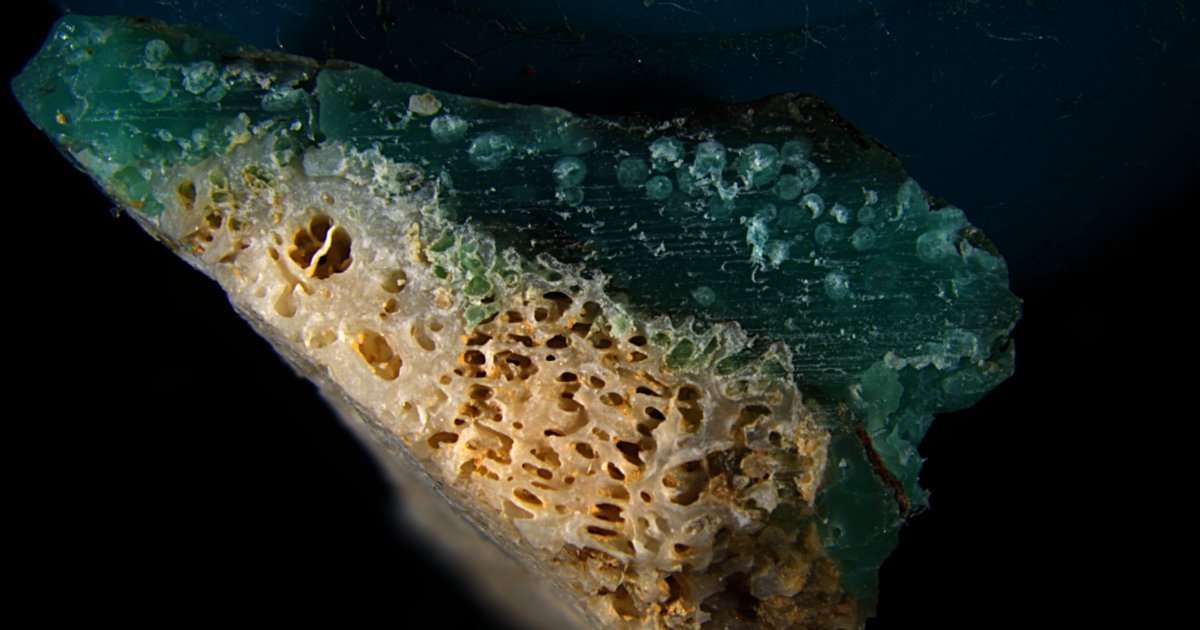
During routine beach litter surveys on the subtropical island of Okinawa, Japan, researchers came across small, brightly colored specks in the pale coral rubble.
Back at the lab, spectroscopic and microscopic analyses revealed that these specks are, in fact, melted polymers from common household plastics that have seeped inseparably into the skeletal pores of the dead coral pieces.
In a new paper published in Marine Pollution Bulletin, researchers from the Okinawa Institute of Science and Technology (OIST) and the University of the Ryukyus describe what first author Dr. Ifenna Ilechukwu and senior author Professor James D. Reimer have dubbed ‘plasticorals’. A type of plastiglomerate—hybrid debris formed from plastic and naturally occurring materials—they represent the long-lasting impact of plastic pollution on reef ecosystems that are already threatened by climate change and other human activities.
Coral rubble found on beaches can be washed back into the sea, where it plays several important roles in reefs. New corals use rubble as a stable substrate, and the rubble’s irregular shapes create nooks that shelter juvenile fish and other small marine life from strong currents and predators.
While more research is needed to determine the exact origin of plasticorals—one likely source is beach bonfires—and their specific, potentially toxic effects on reef organisms, we already know from previous studies that chemicals leaching from common polymers disrupt coral propagation, and plastic pieces have been found to harbor coral pathogens and propagate up through the marine food chain.
Plastic is the third-most widely manufactured material in the world after cement and steel. But whereas the latter two degrade over the millennia, plastic remains intact for significantly longer, to the point that future geologists will likely be able to pinpoint the period from the 1950s onwards, popularly called the Plasticene, as a distinct plastic layer in the Earth’s crust.