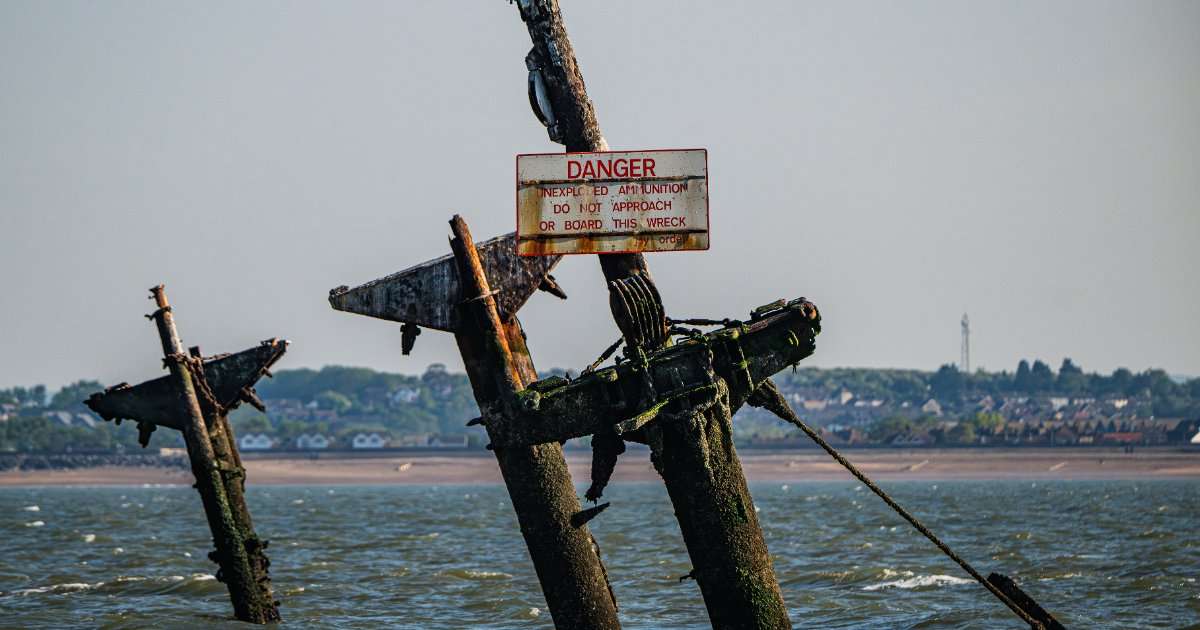
Marine engineers and divers will spend the coming weeks carefully cutting and lifting the masts under strict safety controls. The existing exclusion zone around the wreck will remain in place throughout and will continue to be closely monitored.
Once removed, the masts will be transported to The Historic Dockyard Chatham, where specialist heritage experts will store, assess, and conserve them.
They will then go on display locally, giving people in Kent and visitors the chance to learn more about the region’s maritime heritage, and delivering an economic boost through regional tourism. It means a remarkable piece of Anglo-American wartime history will be preserved for future generations, telling the story of the American Liberty ship that ran aground in the Thames Estuary in 1944 while carrying munitions to support the Allied war effort, and of the sailors who risked their lives to keep the Allies supplied.
The first mast is expected to be removed by September 21, 2026, with timings subject to weather and operational considerations.
Maritime Minister Keir Mather said: “The SS Richard Montgomery is one of the most extraordinary wrecks in the world—a piece of wartime history that has rested in the Thames Estuary for over 80 years.
“Beginning the careful removal of its masts is a hugely significant moment, and every step of this operation has been shaped by rigorous safety and engineering expertise because protecting the public will always come first.
“Preserving this remarkable part of Anglo-American history also means future generations can learn about the extraordinary risks faced by the merchant sailors during the Allied war effort.”
Naval Architect and Project Manager at Resolve Marine, Nolan Conway, said: “After extensive planning and preparation, we are pleased to move the project into its operational phase. Resolve Marine is focused on carrying out this work safely and working closely with our partners to successfully remove the masts.”