The deep sea is one of the most challenging environments on Earth to study, yet it faces a rising tide of threats from human actions. MBARI has invested nearly four decades of engineering innovation to study deep-sea ecosystems, using Monterey Bay’s deep submarine canyon as a technology testbed. We are committed to expanding access to our research, data, and technology. Synchro is a technology testing initiative hosted by MBARI to bridge the gap between technology innovation and widespread adoption.
Synchro Program Manager Amy West and MBARI Research Specialist Lonny Lundsten joined the Deep Ocean Collective Solution Accelerator to share their expertise in advancing accessible ocean technology and managing ocean data, respectively.
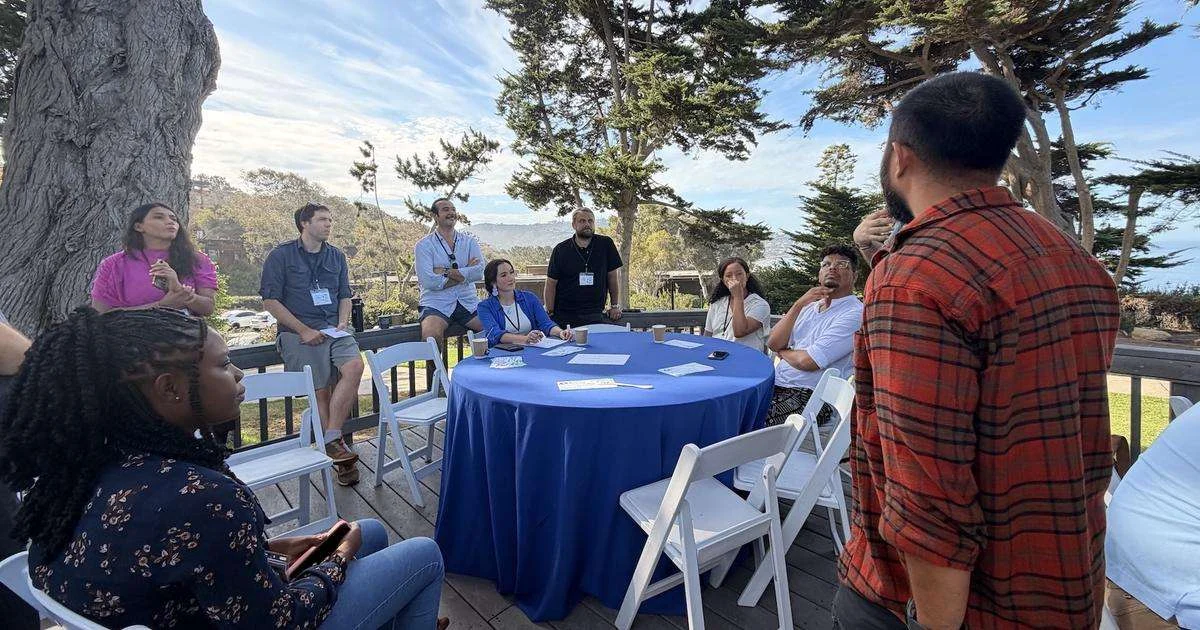
Held September 8–11, the Deep Ocean Collective Solution Accelerator was a highly collaborative workshop that tackled four distinct challenges:
- Getting biodiversity data into the Ocean Biodiversity Information System (OBIS) open-access hub for ocean observations
- Making lower-cost and accessible ocean technology more investable
- Reducing technical barriers to prepare video data of the seafloor for database analysis
- Aligning research standards and priorities to guide implementation of the United Nations Agreement on Marine Biological Diversity of Areas beyond National Jurisdiction (BBNJ Agreement).
Together, these efforts reflect the broader goals of the DOOS initiative to connect science with societal needs by enabling communities to collectively solve a problem.
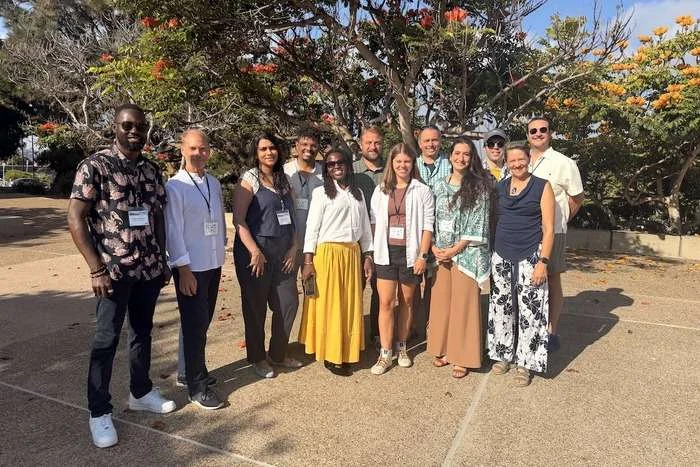
Teams were intentionally curated to ensure representation from diverse backgrounds. The four women-led teams included participants from a range of disciplines, career stages, and geographies. “Constructive meddling” was an integral part of the workshop’s design, encouraging participants to move between the four teams to share fresh perspectives, challenge assumptions, and build more connections.
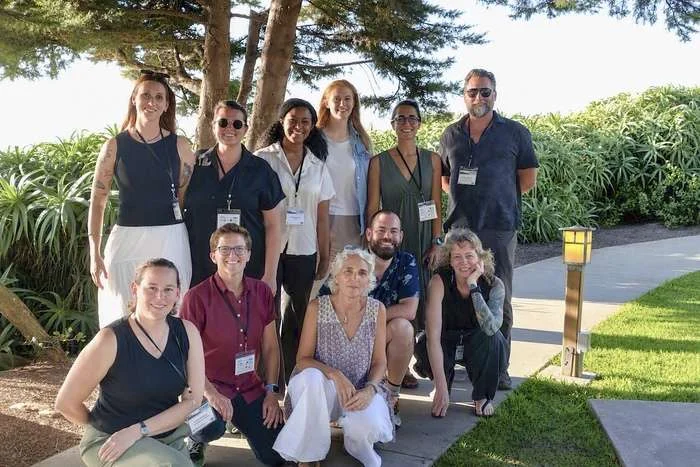
West represented the Accessible Ocean Technology (AOT) network, a growing community advancing cost-effective and easier-to-use tools that broaden who can participate in ocean observing. The AOT network grew largely from the first DOOS Accelerator in 2023 that West participated in. Lundsten joined representatives from six of the major philanthropically funded research vessels to work with deep-sea researchers from around the world to develop data collection standards needed to implement and evaluate the BBNJ Agreement.
More than just discussion or brainstorming, each team co-created practical products, frameworks, tools, or roadmaps for the broader deep-ocean community, ensuring tangible progress on ideas after the meeting.
The workshop teams will reconvene in May 2027 for the DOOS Annual Meeting to broaden discussions to the global community about work accomplished from the accelerator.
The Deep Ocean Collective Solution Accelerator was supported by Schmidt Marine Technology Partners, Schmidt Ocean Coalition, REV Ocean, Synchro, Minderoo, Inkfish, OceanX, Schmidt Ocean Institute, Blue Robotics, and the Ocean Decade Capacity Development Facility.