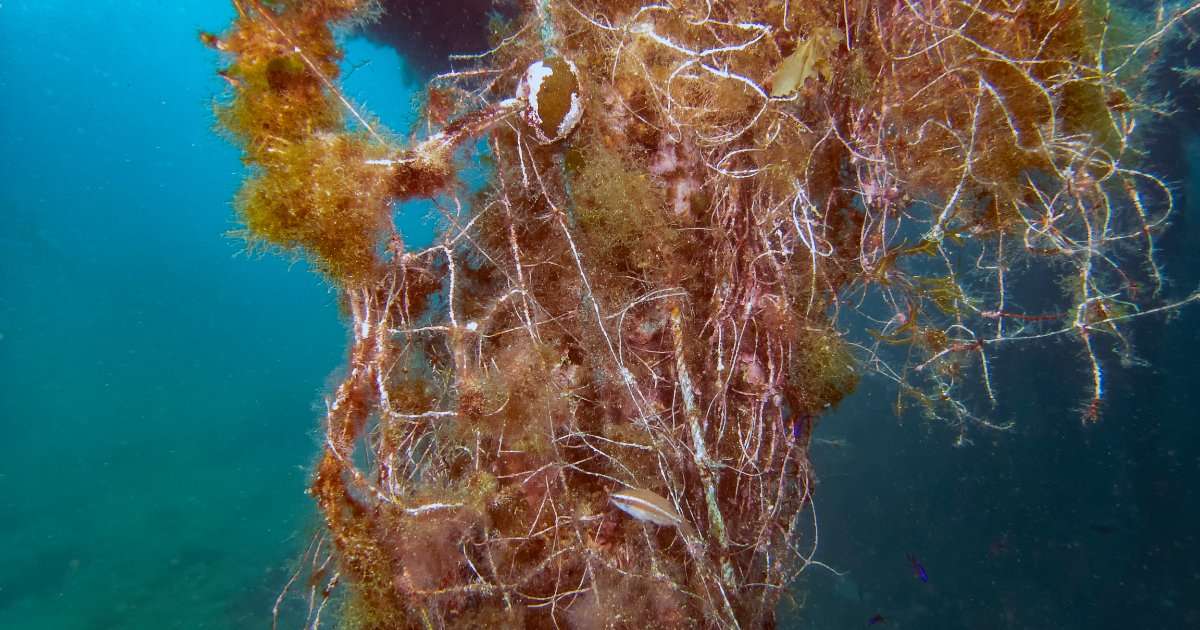
A new private-sector-driven solution for ghost gear emerged when a client approached GHD seeking a permitting solution that would “offset” lost marine fisheries habitat with one of equivalent or greater ecological value. However, there were few suitable marine offsetting options. Instead, GHD proposed a new offsetting pathway: removing ghost gear to create measurable ecological benefits that would qualify for offsetting.
“Government-funded programs have played a critical role in advancing ghost gear retrieval; however, their reliance on periodic funding opportunities limits the consistency and scale of implementation. Bringing ghost gear into the private sector as an offsetting measure creates a pathway to accelerate retrieval efforts and integrate conservation outcomes into development projects, creating opportunities for more sustained and impactful solutions,” says Jessica Romo, Environmental Scientist in GHD’s Halifax office.
For the proof-of-concept offsetting project, GHD partnered with experienced contractors who have worked on ghost gear retrieval projects using remotely operated underwater vehicles to successfully retrieve 147 abandoned lobster traps and approximately 2,725 meters of rope, benefiting eight marine species, including American lobster, flounder, Jonah crab, and scallops. Without a regulatory precedent, the team developed a science-based equivalency framework for calculating offsets, addressing policy and data gaps.
“This project wasn’t simply about removing abandoned fishing gear from the ocean. It was about demonstrating that a proven conservation activity could serve as a fisheries offsetting solution for our clients. The journey took 22 months of collaboration, technical analysis, and regulatory engagement. Success depended on strong partnerships with First Nations, regulators, NGOs, local experts, and industry partners, as well as specialized technology and expertise that helped build confidence in an innovative approach. Together, we helped identify a new offsetting approach that not only delivers positive environmental benefits today, but also provides a scalable framework for future coastal and marine development projects,” said Amanda Smith, GHD’s Senior Manager, Fisheries Sciences Central Canada.
Based on this now federally accepted approach, GHD has now submitted more ghost gear offsetting applications in Canada. Similar approaches could also be considered across other regions facing ghost gear challenges.
“After almost two years of technical work, collaboration, and regulatory engagement, we have shown that private-sector investment can match the conservation benefits of government-funded ghost gear retrieval programs. We now have a new mechanism to address ghost gear while helping clients meet permitting and offsetting requirements. That’s what makes this approach so powerful and scalable,” Smith and Romo added. “We see significant potential to expand this approach beyond Nova Scotia, scaling into a repeatable model that delivers measurable fisheries benefits while creating new options for sustainable development projects. The question is no longer whether it can work, but where and how we can apply it next.”