Launched on World Oceans Day 2026, Ecoreef replaces conventional concrete mooring blocks with engineered reef structures specifically designed to support young fish, encourage coral recruitment and enhance marine biodiversity. It is ideal for use around ports, harbors, marinas, tourism resorts, aquaculture, solar installations and coastal developments.
Originally conceived by Ecocoast in 2023 as part of the company’s Drive Change philosophy during the UAE’s ‘Year of Sustainability’, Ecoreef was designed by a team of in-house specialists and renowned artificial reef expert and marine ecologist Dr. Aaron Bartholomew.
It has undergone three years of dedicated research, engineering and iterative development. Fujairah Research Centre (FRC) collaborated on post-design research, and a team of interns from the American University of Sharjah and University of Oxford supported post-deployment monitoring.
The project represents a fresh approach to reducing the environmental footprint traditionally associated with conventional mooring infrastructure and offers a more sustainable solution for mooring buoys, pontoons and other floating structures while supporting healthier local marine ecosystems.
Ecoreef is the latest addition to Ecocoast’s well-established Advanced Mooring Systems portfolio and has already undergone successful trial deployments in the UAE since August 2025. Unlike conventional mooring blocks, which typically cause ecological harm, Ecoreef incorporates engineered complex habitat and settlement surfaces designed to support marine life throughout multiple development stages.
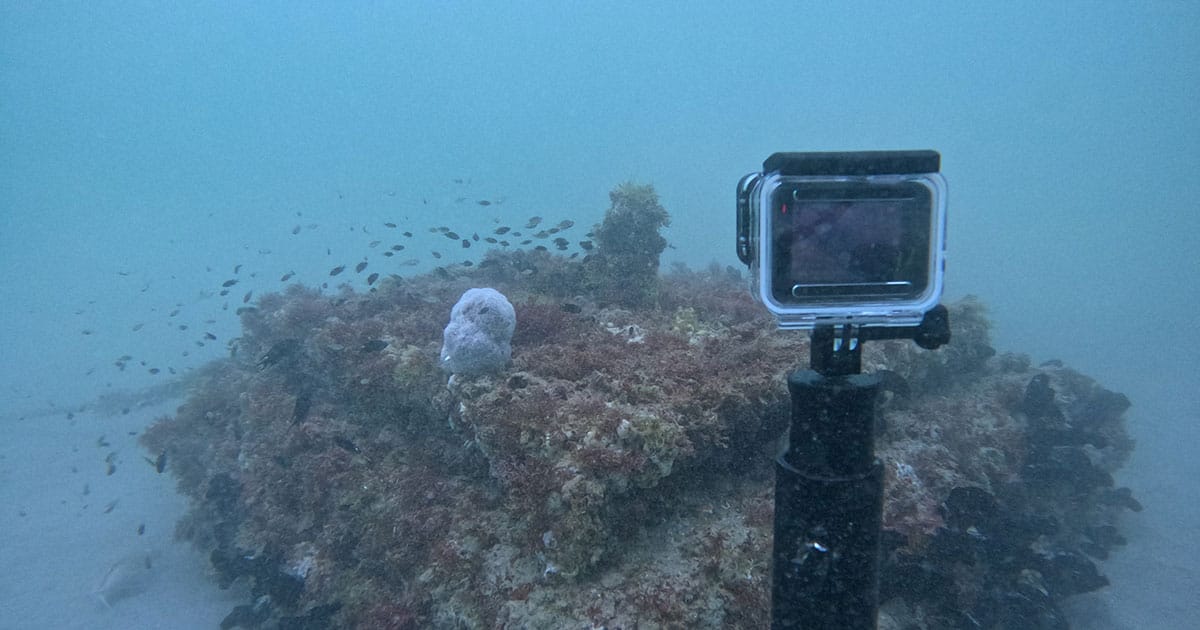
Particular focus has been placed on creating refuge for juvenile fish, helping increase survivorship rates in early development. During initial underwater monitoring in the UAE, the team also witnessed juvenile Snappers and Groupers (hammour) on the deployed Ecoreefs, indicating that they could help produce commercially important fish, with potential to contribute to local fisheries.
Coral settlement is also encouraged by the Ecoreef design, contributing to the gradual development of marine ecosystems around operational infrastructure. Trials have discovered that these structures also benefit a wider range of biodiversity, including cryptic species, filter feeders that have impact on water clarity, and commercially important fish species—both adult and juvenile.
Ecoreef is designed for use with Ecomoor, Ecocoast’s neutrally buoyant mooring line technology, which helps prevent the scouring and habitat damage commonly associated with traditional steel mooring chains. Together, Ecoreef and Ecomoor enable ports, marinas, tourism destinations, aquaculture and civil operators to replace conventional mooring systems with small investment, big-impact moorings that support habitat creation and marine regeneration.
Dr. Aaron Bartholomew said: “I have been exploring concepts for more effective artificial reefs and marine infrastructure since my Ph.D. research in 2001, and it has been incredibly rewarding to work with Ecocoast to help bring these ideas into practical application. Initial results have exceeded expectations, with strong early evidence of juvenile fish using the structures as refuge habitat.
“With the potential to support fish, corals and wider marine biodiversity, Ecoreef demonstrates how mooring blocks can be designed to deliver both operational performance and measurable ecological value.”
Dr. Philip Sanders, Aquatic Ecologist and Sustainability Strategist at Ecocoast, said: “Marine infrastructure has traditionally been designed with little consideration for ecological function. Ecoreef represents a different approach, actively contributing to healthier marine ecosystems while still delivering the operational performance required by ports, marinas and coastal projects.
“One of the most important aspects of Ecoreef is its focus on juvenile fish survivorship. Many artificial reef systems attract existing fish populations. Ecoreef has been specifically designed to help protect younger fish during vulnerable life stages, supporting the development of local aquatic populations and healthier marine ecosystems over time.
“By combining protection for juvenile fish with coral recruitment and reduced seabed disturbance through the Ecomoor system, Ecoreef represents a new generation of underwater infrastructure that goes beyond traditional anchoring systems to actively support marine ecosystem recovery and regeneration.”
As a new patent-pending technology, Ecoreef joins Ecocoast’s broader sustainability and marine regeneration offering for customers in the Middle East and Europe, which focuses on greening grey infrastructure and integrating ecological enhancement into operational marine assets. Ecoreef manufacturing is split between the UK and UAE, supporting both quality and delivery readiness.