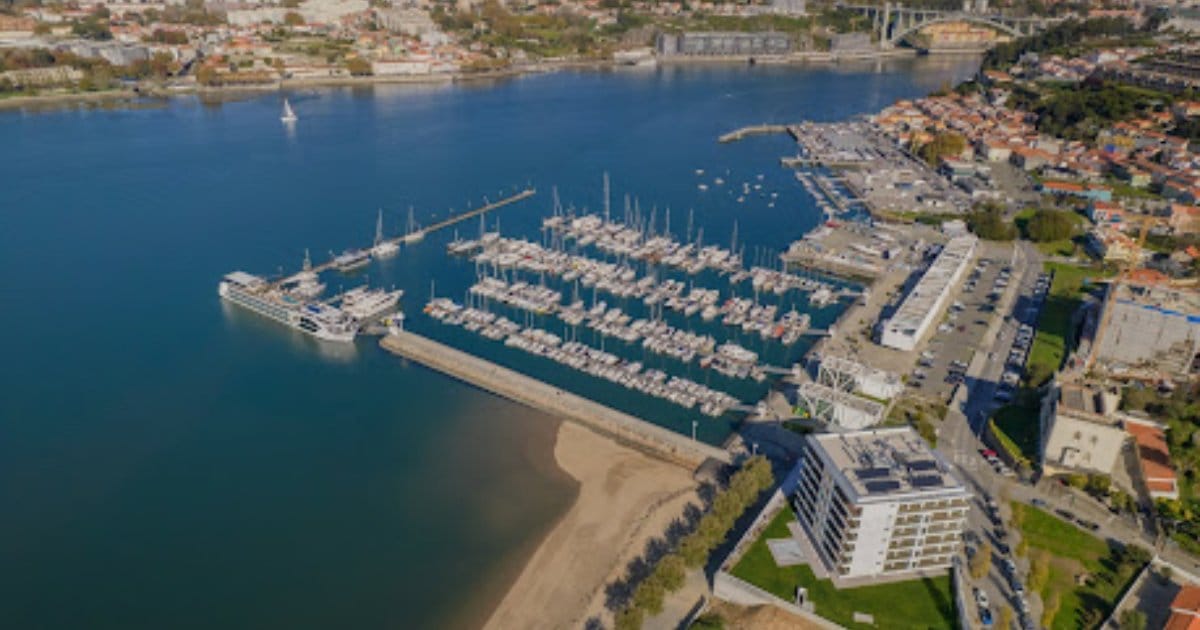
The study aims to assess how proposed expansion layouts will interact with the hydrodynamic conditions of the Douro estuary. Key objectives include evaluating the impact of different design solutions on local flow patterns, analyzing water velocities around mooring structures and floating walkways, and determining the potential implications for maintenance dredging.
Hidromod will simulate both typical operating conditions and extreme events, including a 100-year return period scenario, to assess performance under a wide range of environmental conditions. These simulations will be carried out for both the existing configuration and the proposed expansion designs. In a second phase, the hydrodynamic model will be coupled with a sediment transport model to evaluate siltation patterns and inform long-term maintenance requirements within the marina and surrounding areas.
The study is underpinned by the MOHID modeling system, a well-established numerical platform codeveloped by Hidromod and widely used in Portugal for river, estuary, and coastal applications. Hidromod has extensive prior experience applying MOHID in the Douro estuary, including studies related to the breakwaters and navigation bar, Afurada fishing port, Cais do Cavaco, and Douro Marina.
Commenting on the project, José Chambel Leitão, Managing Director of Hidromod, said: “This study brings together advanced modeling capabilities and deep local knowledge of the Douro estuary. By analyzing both hydrodynamic behavior and sediment processes, we are supporting a design that is not only technically robust, but also sustainable over the long term.”
Through this work, Hidromod will provide critical insights to support the selection of a sustainable marina design. The study reinforces ABL’s commitment to delivering technically rigorous, environmentally responsible solutions for coastal and maritime infrastructure projects.