Scientists refer to this phenomenon as freshening, and a new study has highlighted the impact this could have on species living in the shallow coastal waters off Antarctica. It has led researchers to warn that continued coastal freshening may pose a significant threat to many marine invertebrates living in the region, but that it could also change the nature of the global ocean.
The research was conducted by scientists at the University of Plymouth and the British Antarctic Survey (BAS), and builds on previous work by the organizations to assess the impact of changing ocean conditions on some of the planet’s smallest, but most important, inhabitants.
Professor John Spicer, Professor of Marine Zoology at the University of Plymouth and the study’s lead author, has spent almost 40 years examining the effect of climate change on marine organisms.
He said: “I was working at the Rothera Research Station on the Antarctic Peninsula in 2017 when there was an extreme freshening event. I was interested in the effect this would have on one of the region’s largest amphipods, and we found that even if the water is diluted fractionally, the amphipods lose their salts, gain water, and their gills are damaged.”
“This is important for the whole planet, as while Antarctica and its wildlife are wonderful, they are also essential to a functioning environment. Damaging the Antarctic damages us all, and if there is freshening, it will not have to be very strong before the health of many invertebrate species will be severely impacted.”
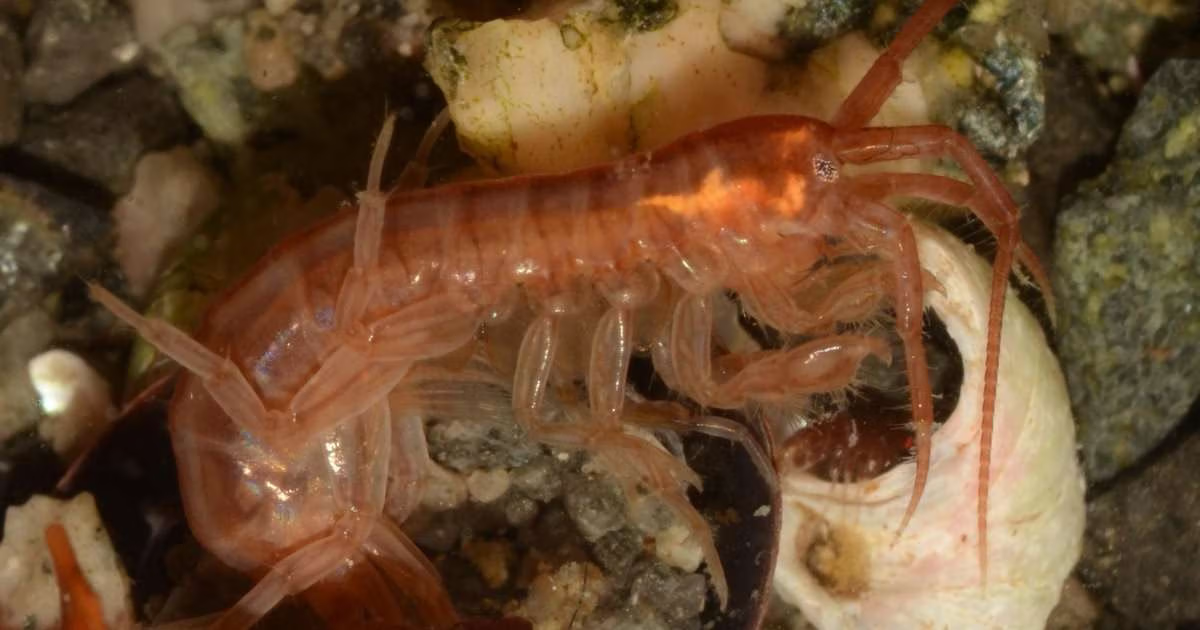
Published in the Marine Environmental Research journal, the new research focused on the giant amphipod species Paraceradocus miersi, found in abundance in Antarctic waters and relatives of the sandhoppers on temperate beaches.
Using creatures collected from Ryder Bay on the Antarctic Peninsula, researchers assessed how their body fluids and internal organs responded when exposed to a simulated freshening experiment. They found that when exposed to a reduction in salt levels within the water, the species was still able to regulate some of the key chemicals—including calcium—which are critical to its bodily functions.
However, its overall regulation of the ions that make up the full concentration of sea water is impaired meaning the amphipods lose their salts, gain water and their gills are damaged. This, the researchers say, could have led to significant deaths among shallow-dwelling individuals during the 2017 freshening event and other similar events before and after it.
Dr. Simon Morley, an Ecophysiologist at the British Antarctic Survey and a study co-author, added: “As climate change continues, environments will change beyond the conditions that animals living there can cope with. In the seas around Antarctica, the biggest signal of climate change is the melting of ice, and this is adding large quantities of freshwater into the oceans. This lowering of salinity could have dramatic impacts, reshaping the communities on the sea floor. Our study provides critical evidence of what could happen to different species in the future.”
![Researchers documented the distinctive benthic [deep-sea] behaviors of three peristediid (armored searobin) fishes observed in the South China Sea: Scalicus engyceros, Paraheminodus murrayi and Peristedion liorhynchus. (Image credit: Kedong Yin)](https://ecomagazine.com/wp-content/uploads/2026/08/researchers-film-deep-sea-armored-searobin-walking-sideways--1024x538.avif)