The Portsmouth-based warship is deployed to the Caribbean during the region’s hurricane season from June to November and is providing valuable support to British Overseas Territories as they work to be as prepared as possible for any storm leaving a trail of destruction through their communities.
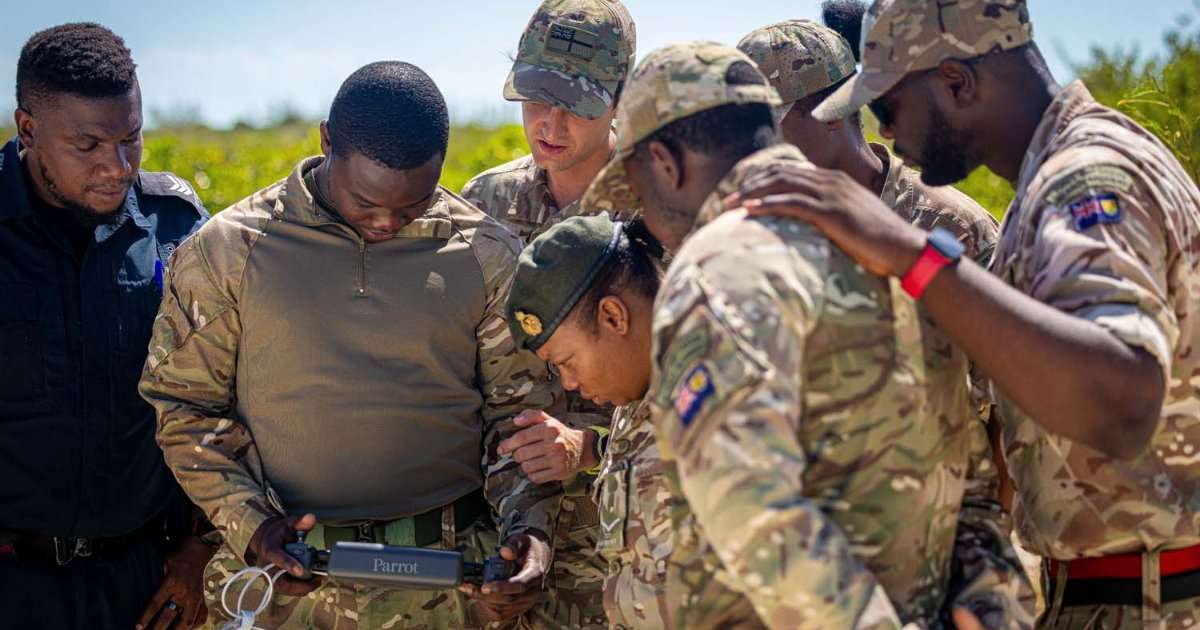
Members of Crisis Response Troop, from 24 Commando Royal Engineers, and drone operators from 700X Naval Air Squadron gave training to emergency personnel, including from the Turks and Caicos Islands Regiment (TCIR), fire service and police force, to help increase resilience to hurricane damage.
The commandos provided cha
insaw training to the fire and regiment personnel, enhancing their ability to clear fallen powerlines, while a medic team provided workshops in administering initial emergency first aid while waiting for medical assistance, such as an air lift or ambulance, to arrive.
All of this took place on the capital island of Grand Turk and Providenciales.
Warrant Officer 2 Brett Dixon, Crisis Response Troop Commander, said: “We received a very warm welcome from the TCIR and thoroughly enjoyed working alongside them, building strong relationships throughout the training.
“The package enhanced resilience to natural disasters, supported the honing of their capabilities, and further strengthened the partnership between the TCIR and the UK Armed Forces.”
Scout Flight from 700X brought their Puma and Parrot Anafi drones to Turks and Caicos, showing how aerial surveillance technology can support damage assessment, search operations, and situational awareness during emergency response efforts.
Flight Commander, Lt Charles Harper, said: “The ability to rapidly gather and share accurate information is vital during disaster response operations. Demonstrating our UAS capabilities and training with our Turks and Caicos Islands Regiment partners highlighted how UAS can enhance situational awareness, support decision-making, and strengthen resilience across the islands.”
The embarked crisis response team is taken ashore by HMS Trent‘s Warfare Department, working closely with the TCI Regiment to strengthen coordination, preparedness, and disaster response capability across the Turks and Caicos Islands.
The visit also focused on engagement with the local community. Sailors and embarked personnel met with young people across the islands to discuss careers, leadership, and life in the Armed Forces, while also gaining a greater understanding of the challenges and opportunities facing local communities.
In support of the upcoming academic year, the team worked alongside local partners to help prepare primary schools for the return of students. Personnel assisted with painting classrooms and carrying out maintenance tasks, helping create welcoming learning environments ahead of the new school term.
As part of HMS Trent‘s wider mission to support regional resilience, representatives from the ship met with the TCI Department of Disaster Management and Emergencies (DDME).
This visit provided an excellent opportunity to gain a greater understanding of the resources, personnel, and challenges the islands face when responding to events such as hurricanes and other natural disasters.
The team was able to share the Humanitarian Assistance and Disaster Relief capabilities within HMS Trent, Crisis Response Troop, and 700X Naval Air Squadron. They also discussed a range of scenarios in which they could potentially provide support across the Turks and Caicos Islands, particularly within the Central Caicos Islands.
Lieutenant Commander Kelly Jenkins-Hill, an officer with HMS Trent leading on Humanitarian Assistance and Disaster Relief operations, said: “Building strong relationships with local partners is vital to ensuring an effective response to future emergencies. The discussions highlighted how our collective capabilities could support communities across the Turks and Caicos Islands when they need it most.”