A computational biologist, Zhang, of South Kingstown, brings to the project a background that includes computer science and expertise in microbial diversity and molecular ecology. Now she’ll bring that interdisciplinary background to lead this new project at URI, with Hui Zhou in URI’s Department of Environmental and Natural Resource Economics, Erin Peck in URI’s Graduate School of Oceanography, and colleagues at the Rhode Island Department of Environmental Management and Roger Williams University. Zhang’s diverse training gives her a unique perspective on solving problems across traditional disciplinary boundaries, she said.
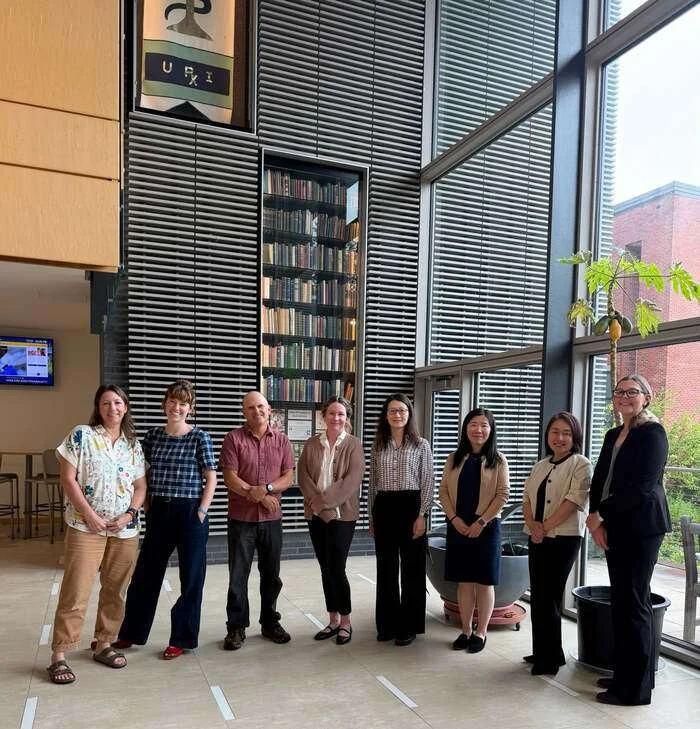
The Ecological-Economic Collaboratory for Advancing coastal wetland REstoration and REsilience (EcoCARE) project addresses the need for expanded research on coastal wetland restoration in both regions. A team of scientists, practitioners, policy experts, and stakeholders from Rhode Island and Louisiana will develop innovative methods in AI-enhanced modeling, wetland valuation, molecular biomonitoring, and restoration financing.
Although Zhang has led previous National Science Foundation (NSF) grant-funded initiatives, including a CAREER award and an EPSCoR fellowship, she is now leading the multi-institutional EPSCoR project for the first time under the Focused Collaborations Program. She has been meeting with the team since last fall and is looking forward to the work getting underway.
“I am excited as a scientist and a resident of Rhode Island to contribute to the health and resilience of our coastal wetlands,” she said. “This research could set important precedents for coastal wetland socio-ecological systems. As the ‘Ocean State,’ around 90% of Rhode Island’s residents live within a 20-minute drive of the shoreline. Coastal wetlands play a significant role in flood protection, habitat maintenance, and recreational services. This project will provide new tools for us to better assess their value and provide new insights to help support the protection and restoration of coastal wetlands.”
Zhang is also pleased to collaborate with Xiaochen Zhao and George Xue at LSU, as their work will tie together research currently happening miles apart in different settings. Their expanded team will develop novel biomarkers for environmental monitoring and work closely with coastal modeling experts, economists, and AI scientists to inform coastal wetland management in both states.
The project represents the first transdisciplinary team that seeks the convergence of molecular biomonitoring, AI-enhanced geophysical modeling, and experimental economics under a single integrated research framework, Zhang said.
Coastal Management by Region
Zhang and her colleagues in Baton Rouge have already noticed some differences in how Rhode Island and Louisiana approach coastal management.
“Louisiana takes a top-down strategy to support statewide networks in wetland monitoring and priority assessment,” Zhang said, “while Rhode Island takes a bottom-up approach with active initiation from regional reserves, nonprofit organizations, and municipalities. We are interested in understanding how these two strategies may influence the preparedness of coastal states in data collection, strengthening research, and promoting community engagement and translational science.”
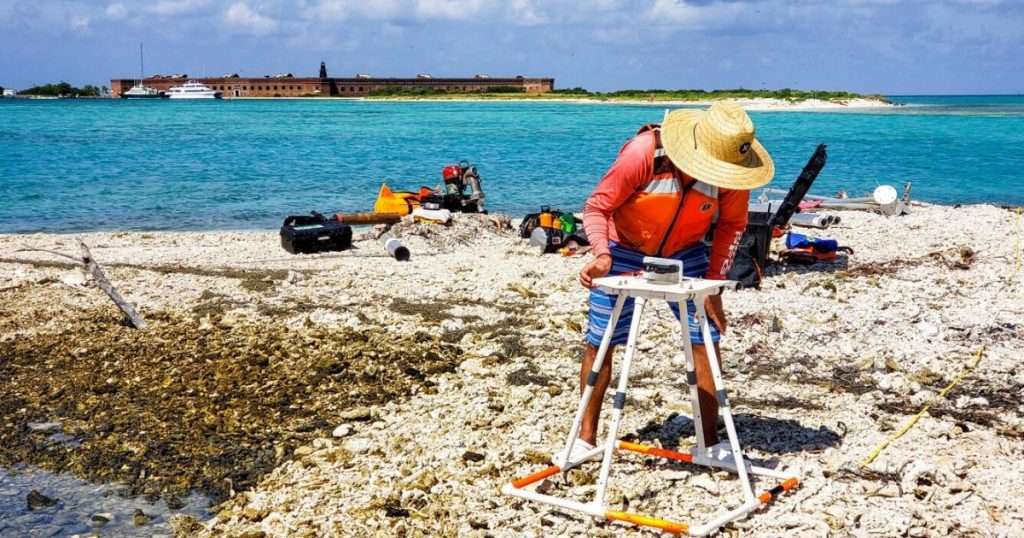
In Rhode Island, Zhang will also work with URI alum Kenneth Raposa ’93 ’97 ’00 at Rhode Island DEM. Raposa is the research coordinator for the Narragansett Bay National Estuarine Research Reserve and brings more than two decades of field experience to the project. He will contribute wetland data collection, field monitoring, and vegetation assessment.
The EcoCARE team will ultimately share their results in a public web portal that will determine drivers and metrics for wetland management across both states.
The grant will also incorporate research and career development opportunities for students, postdocs, and early-career faculty, hands-on training for the wider community, and workshops for trainees from colleges and universities in both Rhode Island and Louisiana.