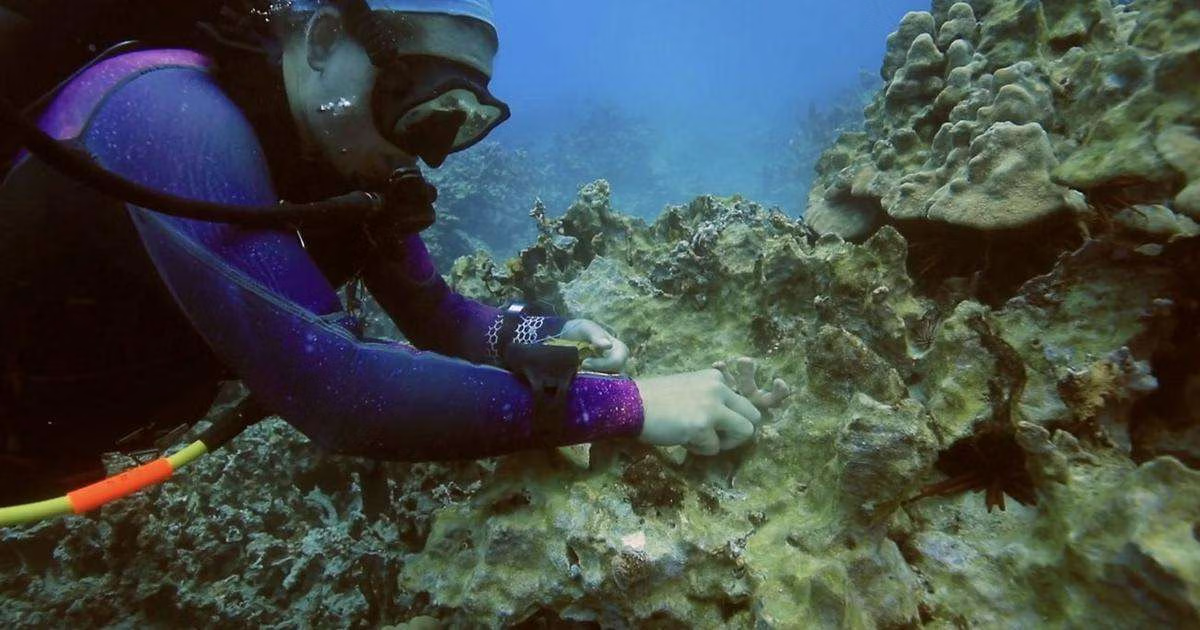
The large swells, reaching up to 30 feet on Kauaʻi and 20 feet on Oʻahu, caused substantial damage along exposed coastlines and are believed to have significantly impacted coral reefs on south- and west-facing shores. On Kauaʻi, live corals have already been documented washed ashore, while underwater assessments are being mobilized to determine the extent of reef damage and marine debris.
This storm recorded strong enough winds to trigger a second payout from the reef insurance policy held by The Nature Conservancy in collaboration with the Hawaiʻi Emergency Reef Restoration (HERR) Network. The payout of $300,000 will fund a reef damage assessment and repair following the impacts from Hurricane Lowell.
This comes two weeks after TNC received the first-ever payout of $200,000 on August 21 after Hurricane Lala brought dangerous flooding, strong winds, and massive power outages throughout the state, with the most damage occurring on Hawaiʻi Island.
Active since 2022, when it became the first insurance policy for nature in the United States, the policy is designed to rapidly disburse funding when hurricanes or severe tropical storms produce wind speeds of 50 knots (57 mph) or more near the Islands.
“In an era when climate-related hazards are occurring more often and intensely, we need innovative ways to support ecosystems and people. Parametric insurance, with its swift and flexible payouts, is one option to catalyze repair and restoration of reefs that protect coastal areas from storm damage,” said Eric Roberts, TNC’s climate and disaster risk finance senior manager. “Hawaiʻi’s program is a model that could be applied to other reefs and ecosystems throughout the US and beyond.”
Distribution of the payout will be determined collaboratively with the HERR Network. These funds will enable the HERR Network—a coordinated statewide coalition of government agencies, scientists, nonprofits, and community groups—to assess reefs around the state after the storm and determine next steps to rescue, reattach, and repair damaged corals, and build capacity for reef restoration around the state.
Currently, the team is still addressing the damage caused by Hurricane Lala. The group will meet to determine the best course of action to catalyze reef recovery in areas impacted by the latest storm.
“A top priority will be to facilitate reef damage assessments following this storm. Given what we saw with Hurricane Lala, I think the best thing we can do is work to understand impacts as quickly as possible,” said Julia Rose, TNC’s coral restoration program manager in Hawaiʻi and Palmyra. “Understanding damage is the first step in being able to address some amount of it. But I also see that storm-driven reef damage has historically been overlooked and under-documented in Hawai’i. We don’t know how much was lost during Iniki in 1992 or Iwa in 1982, outside of anecdotes. We don’t know if there was any reef recovery and how long that took. Bringing attention and resources to this effort, even if we can only address a small fraction of the damage, will hopefully have lasting impacts on future responses and stewardship of our reefs.”
Initially funded by philanthropic support, the policy has catalyzed new cross-sector partnerships and preparedness efforts across the state. The formation of the HERR Network is one of its most important outcomes.
Generous support from the Howden Foundation and donors to TNC’s Climate Solutions Fund enabled the purchase of the 2026 policy.