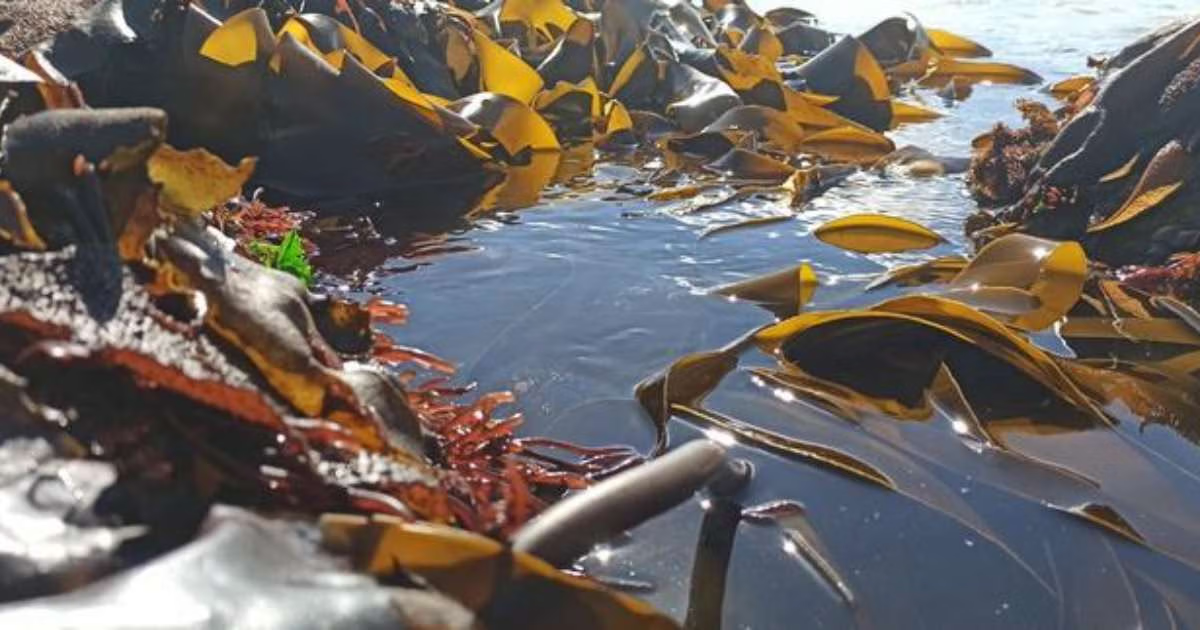
Although most animals reproduce sexually, asexual (clonal) reproduction is common in plants, fungi, and algae. Many species are capable of both sexual and asexual reproduction, but how and why organisms choose to switch between these two reproductive strategies is poorly understood. To investigate, researchers studied laboratory and wild populations of the split-fan kelp (Laminaria pallida), a species of large, brown seaweed found along the Southern Atlantic coast. Laboratory experiments revealed that both males and females are capable of reproducing asexually. However, asexual reproduction produced fewer offspring, which tended to exhibit developmental abnormalities and slower growth.
To understand the molecular mechanisms underpinning kelp reproduction, the researchers sequenced RNA from male and female kelp at different stages of sexual and asexual reproduction. Although gene expression patterns in male and female kelp were distinct, during asexual reproduction, male gene expression underwent de-masculinization, becoming more similar to that of females.
Next, the researchers collected 523 samples of wild split-fan kelp from South Africa and Namibia and found no evidence of asexual reproduction in wild populations. However, when wild kelp were grown in single-sex cultures in the lab, 92% reproduced asexually. The researchers hypothesized that the presence of the opposite sex might suppress asexual reproduction, explaining why it was observed in the lab but not in the wild. To test this hypothesis, they grew male and female kelp in the same Petri dish, separated by a fine mesh. Both sexes were significantly more likely to reproduce asexually in the absence of a suitable mating partner. This suggests that asexual reproduction may be suppressed by a chemical signal that can diffuse through water and alert kelp to the presence of nearby mates.
The study demonstrates unexpected flexibility in the kelp life cycle and reveals how they balance different reproductive strategies. Although asexual reproduction is less efficient, it may provide a back-up strategy for kelp in sparsely populated habitats or during times of environmental stress. These findings may help conservationists protect this ecologically important marine species in a changing ocean environment.
The authors added, “Our findings show that kelps have much greater flexibility in how they reproduce than previously appreciated. Remarkably, even male gametes can develop into new individuals without fertilization, providing a potential reproductive backup when mating partners are scarce. This flexibility may help kelp populations persist under challenging environmental conditions.”