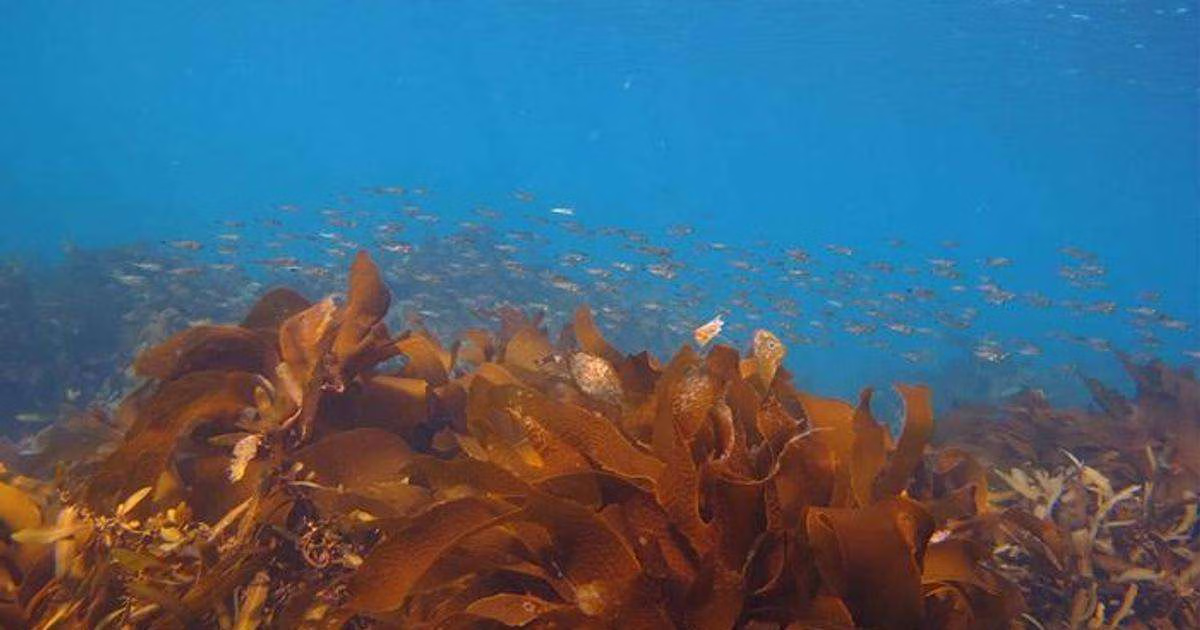
To identify the drivers behind this collapse, researchers investigated the causes of kelp forest decline by integrating more than 40 years of data on the biomass of Ecklonia cava (kajime kelp) and long-term surveys of kelp cover across approximately 200 km of the Izu Peninsula coastline. These datasets were combined with satellite-derived sea surface temperature and marine heatwave records, field surveys of herbivorous fish, and laboratory experiments examining the thermal tolerance of E. cava.
The study found that the Izu coast experienced a dramatic surge in warming and marine heatwave activity from 2017 to 2025, during the prolonged Kuroshio Large Meander event. Laboratory experiments demonstrated that the photosynthetic performance of E. cava declined rapidly at temperatures above approximately 29.5°C. At the same time, warming extended the annual window of temperatures suitable for herbivorous fish grazing by up to 86 days. These findings suggest that the combination of heat-induced physiological stress and a longer grazing season has hindered E. cava recovery, ultimately contributing to widespread loss of kelp forests and the transition to isoyake conditions along the Izu Peninsula.
To read the full article published in the Journal: Global Change Biology, visit: 10.1111/gcb.71106