NOAA’s National Marine Fisheries Service works with regional fishery management councils to identify essential fish habitat (EFH)—areas necessary for federally managed fish and shellfish to spawn, feed, grow, or survive. Within EFH, particularly important areas can be designated as habitat areas of particular concern (HAPCs), helping focus conservation, management, and research efforts.
In 2006, the Pacific Fishery Management Council designated rocky reefs along the US West Coast as HAPCs for groundfishes because of their ecological importance, sensitivity to human activities, and relative scarcity. The next step was to comprehensively map where those reefs occur.
A Clearer Picture of the Seafloor
To build that comprehensive habitat map, researchers compiled available information and identified rocky reef areas that were missing from the dataset used in the original 2006 designation.
The team then incorporated the best available data into a refined geographic dataset that can be visualized and used for coastal and marine management.
The updated mapping shows that rocky reefs occur throughout the US West Coast continental margin, from California to Washington. It also reveals that reefs are more patchily distributed than previously understood.
Across all of the data incorporated into the analysis, rocky reefs accounted for about 8% of the mapped extent.
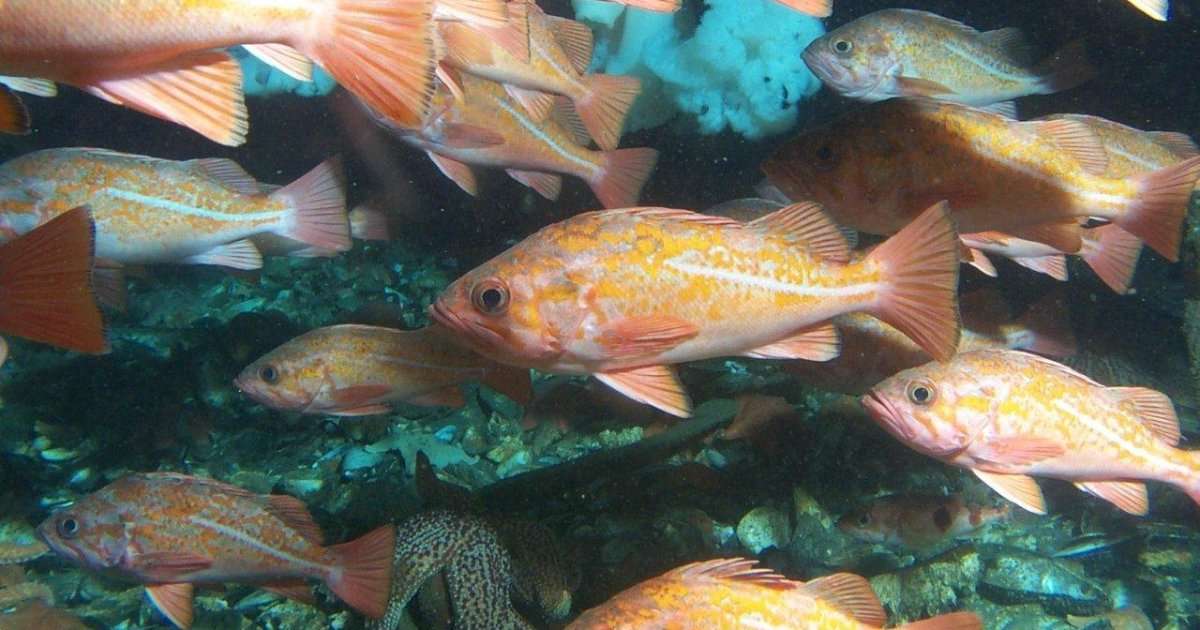
That relatively limited footprint helps underscore why these habitats are so important. Rocky reefs can provide complex surfaces and structures that support diverse communities of marine life, including commercially and recreationally valuable groundfishes.
Supporting Habitat Conservation
More detailed maps of rocky reef habitat can help resource managers evaluate potential impacts from activities in coastal and offshore waters, allowing them to make more informed decisions about where conservation efforts may be most valuable.
The updated dataset also provides a common geographic resource for scientists studying rocky reef ecosystems and for agencies responsible for managing marine resources.
As human activities expand offshore and managers work to balance conservation with other uses of the marine environment, reliable habitat information becomes increasingly important. This new dataset provides a stronger foundation for understanding, managing, and protecting the relatively rare but ecologically significant rocky reef habitats along the US West Coast.
Read the study, A geographic dataset of rocky reefs habitat areas of particular concern for the United States West Coast, in Scientific Data.
This article was originally published by USGS here: https://www.usgs.gov/programs/cmhrp/news/mapping-rocky-reef-habitats-along-us-west-coast