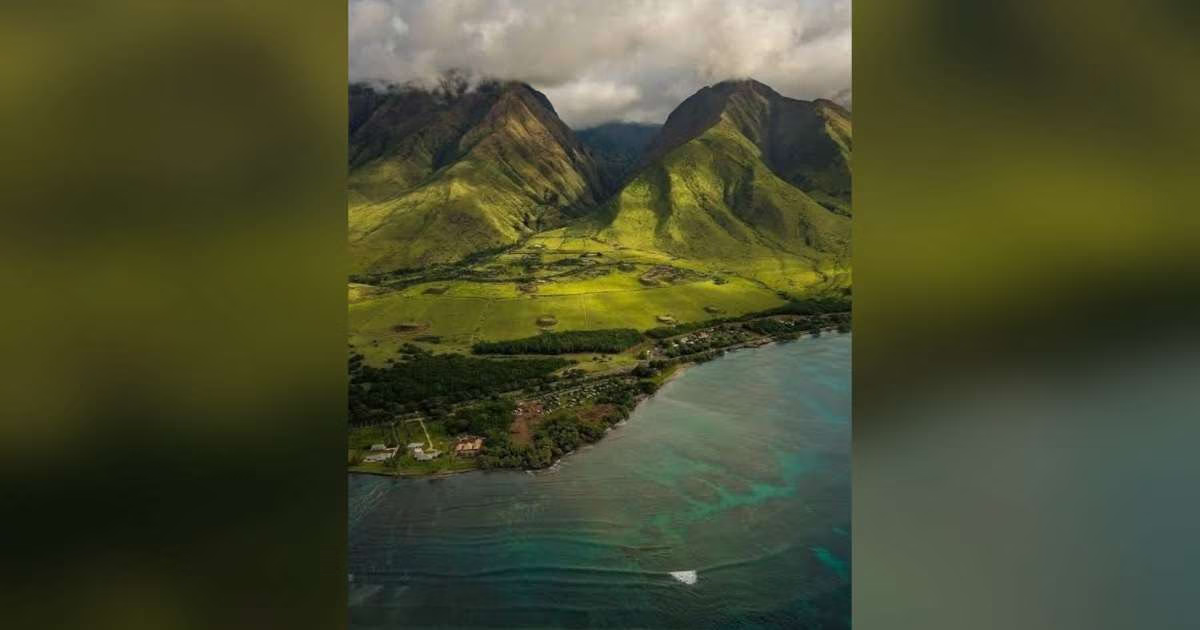
Their study, published recently in the journal Coral Reefs, analyzed the coral core from approximately 1760 to 2013, which provided a rare glimpse into the conditions that began before large-scale changes to the West Maui landscape following Western contact occurred, and continued through plantation agriculture and modern coastal development.
Like the rings of a tree, corals build their skeletons incrementally over time. As they grow, elements from the surrounding seawater become incorporated into their skeletons. By measuring this chemistry along the length of the Olowalu core, the researchers were able to reconstruct how conditions affecting the reef changed over generations.
“One of the important lessons from this study is that some of the changes that occurred on land more than a century ago can still provide important context for what we see on reefs today,” said Samuel Kekuewa, Ph.D., Hawai’i Sea Grant postdoctoral affiliate researcher. “Understanding these legacy impacts can help us make better decisions about how we manage these areas moving forward.”
The researchers paired the chemical record with measurements of coral growth, historical records of land-use change, and large-scale climate patterns such as El Niño. The coral recorded both natural climate variability and major changes occurring within the watershed. Chemical indicators associated with sediment, nutrients, and other land-derived inputs generally increased over the 253-year record, with some of the largest changes occurring during the twentieth century as sugarcane agriculture expanded across West Maui. At the same time, the coral’s growth record showed that calcification increased through much of the record before beginning to decline around the late 1960s, concurrent with sugarcane expansion.
The research occurring at Olowalu is particularly important because it is one of Hawai’i’s largest continuous reef systems, and an important source of coral larvae for reefs throughout Maui Nui.
“Across Hawai’i, there is already a large amount of work being done by the lāhui to restore watersheds, retain sediment on land, and protect the downstream coral reefs,” noted Kekuewa. “Records like this can help provide the long-term context needed to support and guide that work.”