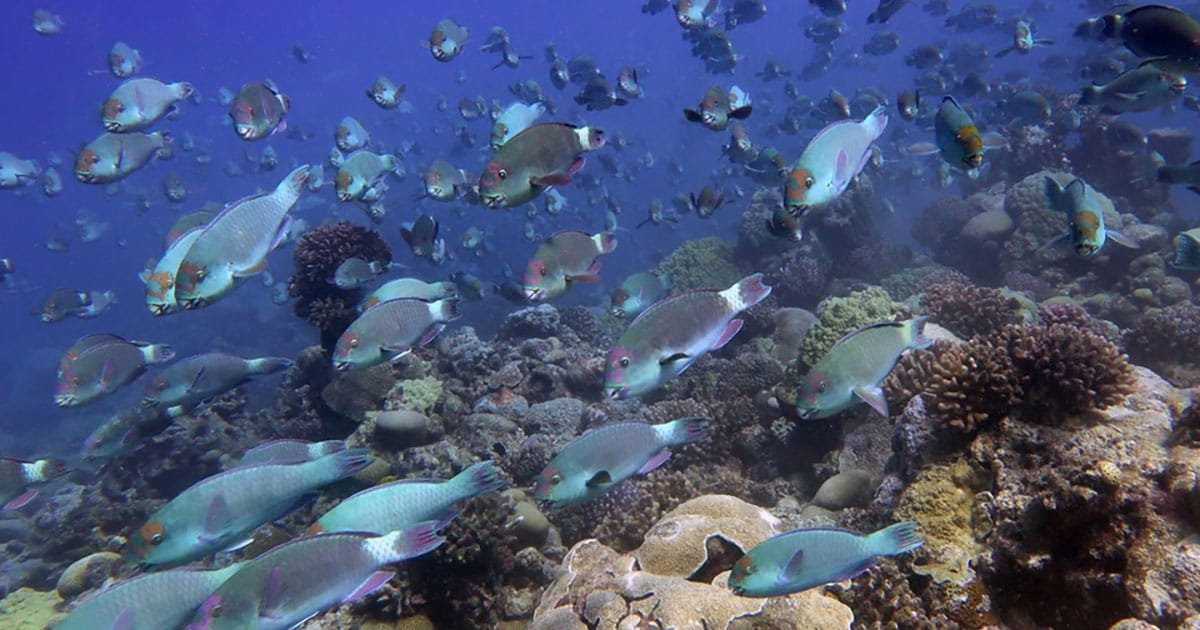
Coral reefs contribute over $3.4 billion each year to the US economy, supporting more than 70,000 jobs in tourism and recreation in southeast Florida alone. They also provide flood protection benefits of $2.6 billion annually across the United States.
However, coral reef ecosystems are under threat from stressors, including land-based sources of pollution, fishing impacts, disturbances such as disease, invasive species, and coral bleaching, and changing ocean chemistry. Global and national-scale studies have shown that coral reefs have been declining for 50 years. There is an urgent need to protect, manage, and restore coral reef ecosystems in the face of these threats.
Despite the numerous and varied threats to coral reefs, there is a path forward to conserve and restore these vital marine ecosystems. NOAA, along with its partners, has developed a National Coral Reef Resilience Strategy that will guide the actions of the US coral reef conservation community through 2040, with the goal of healthy, resilient coral reef ecosystems in the United States that provide a variety of valuable services to current and future generations.
This strategy is ambitious, covers far more work than a single organization can achieve alone, and seeks to inspire and catalyze action for positive change. The strategy’s multidisciplinary approach includes capacity building, research, monitoring, mapping, social science, and communication. It uses an adaptive management framework and resilience-based management to provide a broad context for how the coral reef conservation community will achieve the goals outlined in this document. Specific strategies under six focus areas will drive the research, monitoring, and management actions needed to achieve the vision of thriving, diverse, resilient coral reefs that are able to sustain valuable ecosystem services for current and future generations.