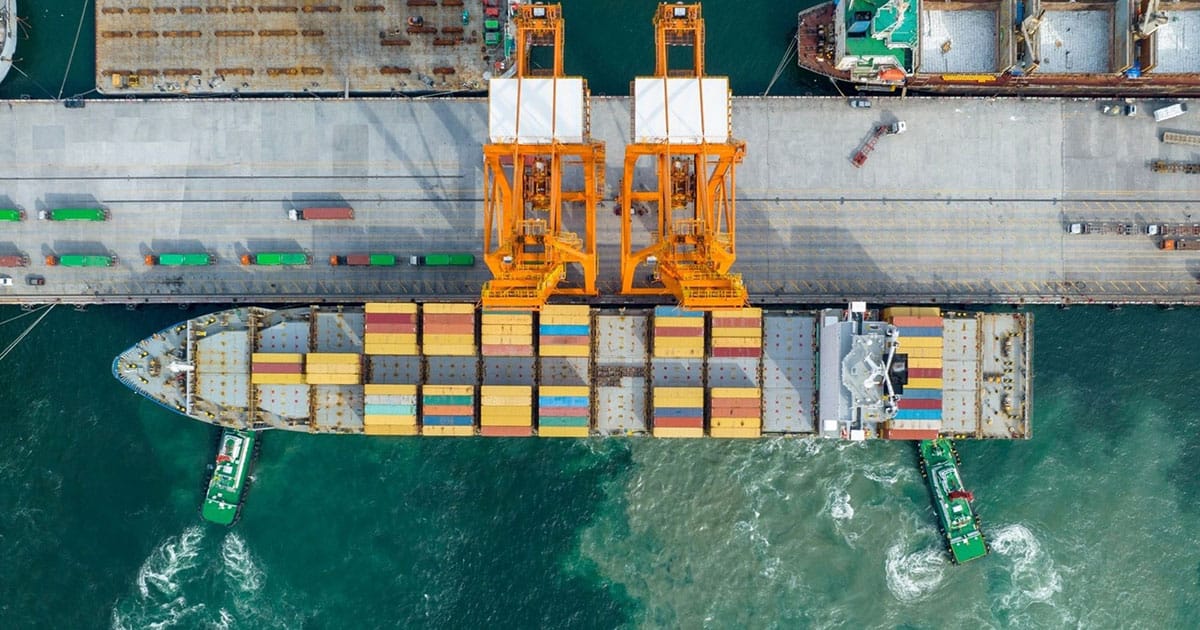
Already used by more than 30 ports, PortView helps ports move beyond assumptions and fragmented reporting by providing continuous insight into vessel activity, emissions trends, and the effectiveness of environmental measures from cleaner vessel incentive schemes to infrastructure investments such as shore power and alternative fuels.
The growing relevance of such insight comes at a defining moment for European ports. The EU Ports Strategy, published in March 2026 by the European Commission, raises expectations for ports to reduce emissions, justify investments, and demonstrate measurable environmental progress to regulators, governments, customers and local communities. Yet translating these ambitions into practical, day-to-day decisions remains a major challenge. PortView is designed to help close that gap.
Rather than relying on infrequent studies or retrospective reporting, ports can use PortView to understand whether environmental incentive schemes are achieving their intended impact, how vessel behavior evolves over time, where emissions hotspots emerge, and whether investments are aligned with actual vessel demand and sustainability trends.
Turning Strategic Ambition into Measurable Results
Running a port means managing complexity that extends the port authority’s direct control. Decisions about attracting and retaining vessel traffic, operational efficiency, and infrastructure investment all depend on understanding what is actually happening at the port over time. Without continuous visibility into these developments, decisions can become difficult to prioritize, justify or measure—making long-term planning harder to prioritize, justify and evaluate.
Where ports have historically depended on infrequent consultancy reports or fragmented datasets, PortView delivers a continuous flow of vessel-level environmental data—broken down by vessel, vessel type, pollutant, time period, and even customized port areas, such as individual terminals or operational zones. This enables port teams to identify emission hotspots, evaluate the impact of shore power and other investments, design and assess vessel incentive schemes like Environmental Shipping Index (ESI), and report progress credibly to all stakeholders.
“Ports across the world are now expected to show measurable environmental leadership, not just commit to it,” said Thomas Smith, Head of Cargo at OceanScore.
“PortView gives port teams the continuous intelligence they need to make better decisions faster, reducing uncertainty around environmental performance, vessel trends and long-term planning.”
A Trusted Partner to the Global Ports Community
OceanScore’s work in the ports sector extends beyond data products. The company is mandated by the International Association of Ports and Harbors (IAPH) to manage the Environmental Shipping Index (ESI)—the globally recognized scheme used by ports worldwide to incentivize and reward vessels for strong environmental performance.
The recently launched ESI Core (ESI 2.0), developed under IAPH’s leadership, represents the most significant evolution of the Environmental Ship Index (ESI) to date—a globally recognized framework used by ports to assess and incentivize vessel environmental performance. ESI Core introduces an updated methodology that more accurately reflects today’s shipping realities, strengthens incentives for cleaner operational practices and technologies, and improves reporting and transparency, including enhanced quarterly insights into vessel activity, sustainability trends and infrastructure needs for participating ports.
“ESI Core reflects how far the ports sector has come in its approach to environmental performance and how seriously ports are now taking the data behind those decisions,” said Ralf Garrn, Managing Director at OceanScore.
Validated by Leading Port Authorities
PortView is being used by ports across the globe to support environmental reporting, sustainability strategies and infrastructure planning.
Among them are APRAM, which manages the ports of the Madeira archipelago, and APDL, the port authority of the Port of Leixões. Together with a growing number of ports across Europe and beyond, they are using PortView to gain deeper insight into vessel activity, emissions trends and the effectiveness of environmental measures and investments.
João Neves, Chairman of the Board of Directors, APDL, said, “The Port Authority of Leixões, Viana and Douro is committed to achieving carbon neutrality by 2035 and has established a Decarbonization Roadmap that guides ambitious measures focused on emissions reduction, energy efficiency, electrification, and the promotion of renewable energy. Tools such as PortView are essential for monitoring progress, supporting informed decision-making, and ensuring that we remain on track towards increasingly sustainable port operations.”
The growing adoption of PortView reflects a broader shift within the ports sector toward continuous, data-driven environmental decision-making and greater transparency around sustainability outcomes.