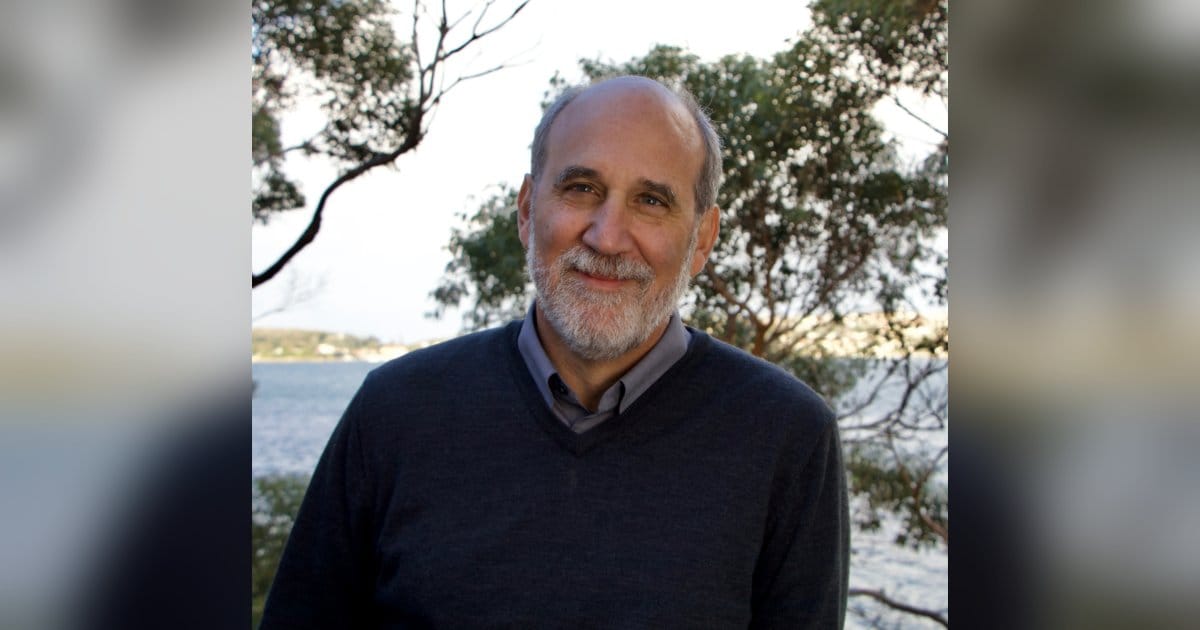
Professor Steinberg will lead the independent Advisory Group responsible for reviewing and recommending research applications to the SeaSim Access Program, with final approvals made by the AIMS Chief Executive Officer.
Professor Steinberg said he was honored to take on the role and contribute to the future of Australia’s premier marine research infrastructure.
“I’m thrilled with my appointment as Chair of the SeaSim Advisory Group. SeaSim is a globally unique facility, and the research it enables will play an important role in our understanding and management of marine ecosystems.
“I look forward to the growth and development of this critical piece of national research infrastructure and the opportunities it will create for the science community.”
AIMS Chief Executive Officer Professor Selina Stead said Professor Steinberg’s appointment marked an important milestone for the SeaSim Access Program.
“Peter is one of Australia’s most respected marine scientists, and his experience leading world-class research organizations and national research infrastructure makes him exceptionally well suited to chair the Advisory Group.
“As Chair, Peter will play a central role in ensuring the integrity, transparency and scientific excellence of the assessment process.”
Leadership across Australian Marine Science
Professor Steinberg is an Emeritus Professor of Marine Science at UNSW Sydney, where he spent more than 30 years, including serving as the inaugural Director and Chief Executive Officer of the Sydney Institute of Marine Science from 2009 to 2020.
His research spans coastal ecology, habitat restoration, environmental microbiology, and marine conservation and management, resulting in more than 250 scientific publications and recognition as a Web of Science Highly Cited Researcher among the world’s top one percent of researchers over multiple years. His contributions to marine science have also been recognized through honors including the Australian Marine Science Association’s Silver Jubilee Award and the NSW Premier’s Prize for Science and Engineering (Environmental Biology).
Alongside his research achievements, Professor Steinberg brings extensive experience in research governance and national scientific infrastructure. He serves on the AIMS Council, chairs the Research Advisory Committee for Australia’s Marine National Facility, RV Investigator, and has held leadership and advisory roles across Australia’s national marine science ecosystem, including the Integrated Marine Observing System (IMOS).
His experience across National Collaborative Research Infrastructure Strategy (NCRIS)-supported facilities provides a strong understanding of the national benefit, collaborative access, and scientific excellence that underpin Australia’s investment in research infrastructure.
The SeaSim Access Program will provide a competitive, merit-based pathway for Australian and international researchers to undertake complex, controlled experiments in the National Sea Simulator (SeaSim), one of the world’s leading experimental marine research facilities.
It is supported through funding from the Australian Government’s NCRIS, which invests in nationally significant research infrastructure to drive scientific excellence, innovation, and collaboration.
SeaSim Director Craig Humphrey said applications will be independently assessed against scientific merit, feasibility, researcher capability, strategic alignment, and the potential to deliver meaningful research outcomes.
“The SeaSim Access Program is designed to enable ambitious, high-impact research that addresses some of the biggest challenges facing our marine environment.
“An independent Advisory Group ensures researchers have confidence that access is awarded through a transparent, merit-based process that supports the very best science.”