
The observatory, established in 2014 on the Rame Head Peninsula, continuously measures a range of gases in the air, including ozone, sulfur dioxide, carbon dioxide, and methane, alongside aerosols, tiny solid or liquid particles suspended in the air. It also records weather conditions such as wind, temperature, and humidity.
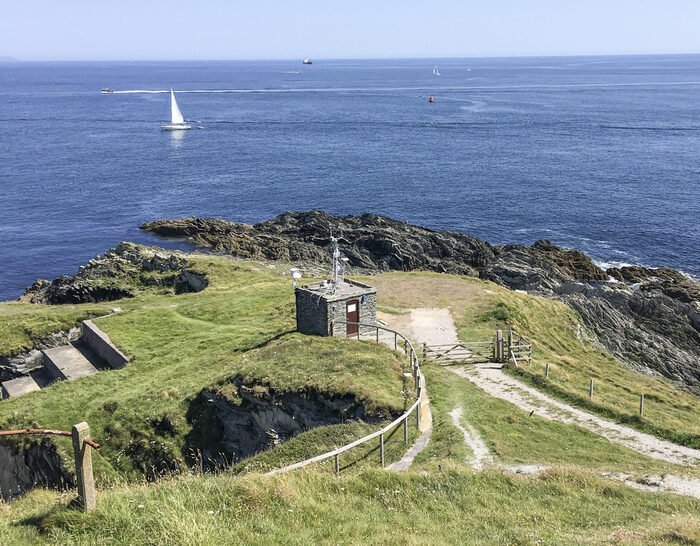
These long-term measurements help scientists understand how the atmosphere and ocean interact, as well as how human activities can influence the coastal environment—and how the ocean, in turn, can affect the land nearby.
The observatory is part of several sampling stations managed by PML across the western English Channel as part of the Western Channel Observatory (WCO).
Data from the WCO has been collected for over a century, dating back to 1903, making it one of the most studied areas of ocean on the planet, and supporting huge amounts of academic research, policy, and innovation around the world.
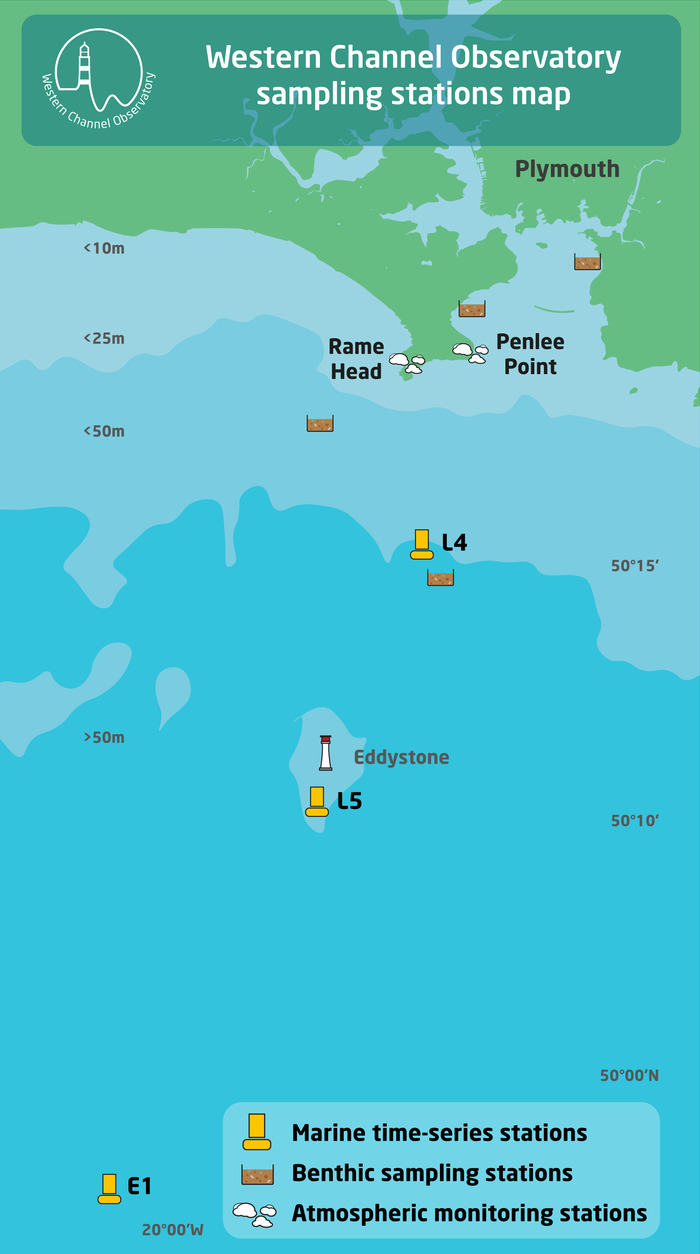
The new study, led by PML’s Chemical Oceanographer Dr. Mingxi Yang, analyzed 10 years of observations from the Penlee site, where it identified 428 individual diurnal sea breeze events.
What is Diurnal Sea Breeze (DSB)?
Essentially, a sea breeze occurs due to the difference in temperature between the ocean and the land.
Diurnal sea breeze (DSB) is a well-known circulation pattern that occurs near the coast due to land heating up faster than the sea during the day and cooling off faster at night. Solar heating causes updraft of air over land, which causes a pressure gradient that under certain conditions can pull in cooler air from the sea at the surface. At night, longwave cooling can cause subsidence of air over land which then flows out to the sea, reversing the circulation.
Did you know? The phenomenon of a sea breeze is likely very familiar to most sailors. Even the Greeks used it to their advantage, 2,500 years ago, in the Greek–Persian Naval Battle of Salamis.
While sea breezes are a familiar feature of coastal weather, the new research shows that they can have a much more complex relationship with air quality than their refreshing reputation might suggest.
The researchers found that sea breeze events were most common during spring and summer, particularly under sunny, calm conditions when the sea was slightly cooler than the land.
These conditions can also be favorable for pollutants to build up.
Overnight, weak offshore winds and limited atmospheric mixing can allow pollutants to accumulate over the sea. During the following day, the sea breeze can then transport this air back towards the coast.
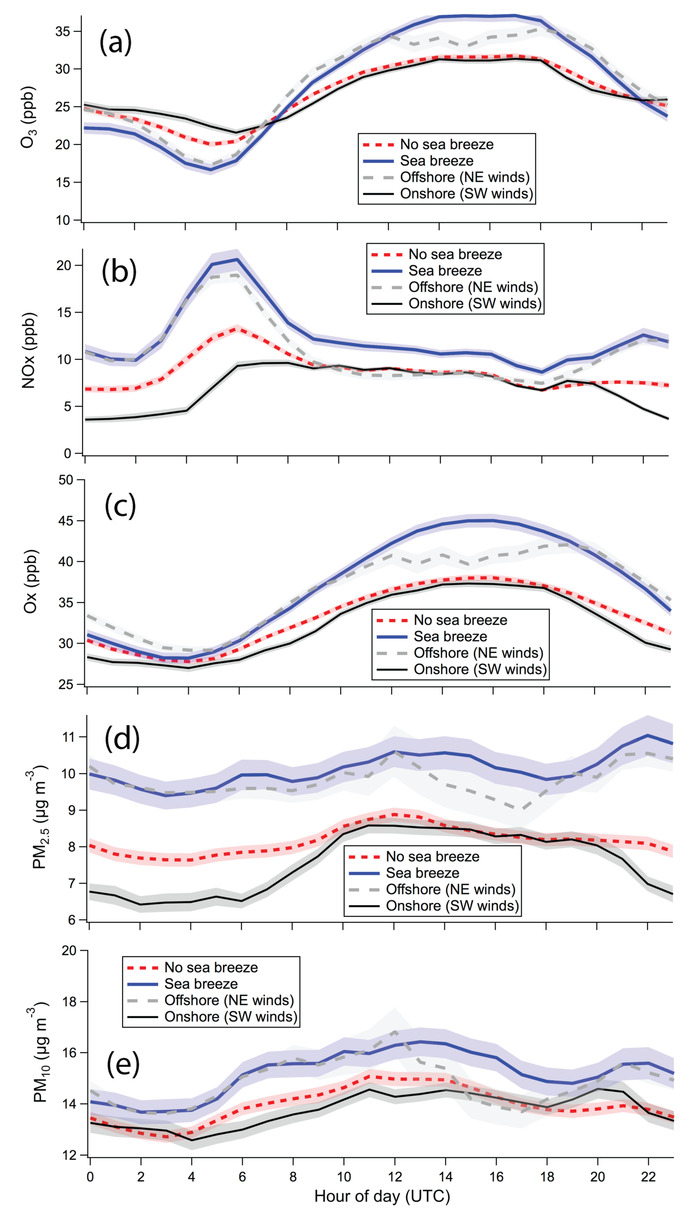
At Penlee Point, daytime concentrations of gases and airborne particles were generally around 20% higher during sea breeze events than during comparable periods of onshore flow.
Lead author Dr. Mingxi Yang surmized: “We often think of sea air as something that’s very healthy, but our observations show that the reality can be much more complicated. During sea breeze events, pollutants can build up and be recirculated between the land and sea, leading to higher concentrations at the coast.”
“We found that the effect was particularly pronounced for sulfur dioxide, a pollutant associated with shipping, with daytime concentrations more than twice as high during sea breeze events compared with periods of consistent onshore flow.”
Sulfur dioxide (SO2) is a sharp, acidic gas released mostly by burning coal and oil, and is known to cause impacts to both human health and ecosystems.
“Direct exposure to sulfur dioxide is associated with asthma and chronic bronchitis, and can lead to irritation and constriction of the airways. SO2 emitted from coal burning played a key contributory role to thousands of respiratory-related deaths during the London smog in 1952 […] SO₂ can also combine with water vapor in the atmosphere to form acid rain that can be transported large distances and can cause significant damage to ecosystems.”
Ozone was another important part of the picture. During sea breeze events, strong sunlight and the build-up of pollutant precursors can drive active atmospheric chemistry, producing higher concentrations of ozone—a harmful air pollutant and powerful oxidant that can affect human health.
Dr. Yang explained: “Ozone can be a confusing subject, because we often hear about it as something that is good for us. And in the right place, it is!”
“The ozone layer high up in the stratosphere (upper atmosphere) protects life on Earth from harmful ultraviolet radiation. But ozone near the surface, in the troposphere where we live and breathe, is a harmful air pollutant. High concentrations can affect our health and damage crops and ecosystems, while also contributing to climate change.”
“So, when we talk about ozone, it really matters where that ozone is.”
At Penlee Point, ozone levels reached 100 parts per billion (ppb) during one sea breeze episode in August 2022—the highest level recorded at the observatory since measurements began in 2014.
Across the 10-year dataset, the proportion of observations exceeding the European Union’s eight-hour ozone limit increased from 0.8% across all observations to 2.4% when looking specifically at daytime conditions during sea breeze events.
Dr. Yang delved into the levels of pollutants measured further inland in Plymouth city center, measured through the DEFRA air quality network:
“During the day, all pollutant concentrations during sea breeze events are higher than during periods of onshore and even offshore wind flow. This suggests a lack of dispersion of pollutants from the previous night over the sea, which then comes back over land during the daytime.”
Coastal air quality aside, the new research suggests further implications that can affect wider environmental monitoring.
Penlee Point is ideally positioned to study the atmosphere over the North Atlantic, with prevailing south-westerly winds bringing air from the ocean towards the site. But the researchers found that sea breeze events can complicate this picture, and efforts to monitor the remote North Atlantic atmosphere.
Although the wind may appear to be coming from the direction of the Atlantic, the local circulation associated with a sea breeze can cause air to recirculate between the land and sea—making it harder for scientists to distinguish truly remote marine air from air influenced by land.
This means that measurements taken during these events may not always represent truly remote marine air.
The team found that excluding sea breeze events from the dataset reduced the daily variation seen in ozone and methane and altered their seasonal patterns—suggesting that accounting for these local circulation patterns could improve our understanding of long-term changes in the remote North Atlantic atmosphere.
The study also found that sea breeze events were not always captured accurately by atmospheric models or air-mass back-trajectory calculations, highlighting the importance of long-term, high-resolution observations at coastal monitoring sites.
The researchers also found substantial variability in the frequency of sea breeze events from one year to the next, beyond the expected seasonal differences. The factors driving this year-to-year variability are not yet fully understood—raising an important question as our climate changes: could we see more, or fewer, sea breeze events in the future?
Dr. Yang concluded with a question for the future: “With our changing climate, it’s important to understand how the frequency of sea breeze events might change in the future. Will we see more, or less, of these events? What will be the effect on air quality? These are all questions that we don’t yet have the answer for. Continued, long-term observations will be essential for helping us identify trends and understand how these patterns may change over time.”
By combining 10 years of measurements from Penlee Point with observations from the wider Plymouth area, the researchers have shown that something as familiar as a summer sea breeze can have consequences reaching far beyond the daily weather forecast—influencing coastal air quality and the way we understand the chemistry of the atmosphere over the ocean.
“Diurnal sea breeze worsens coastal air quality and complicates monitoring of remote North Atlantic air,” Mingxi Yang, Thomas G. Bell, Ian Brooks, Frances Hopkins, Jani Pewter, Katie Read, and Timothy J. Smyth: doi.org/10.5194/acp-26-10909-2026