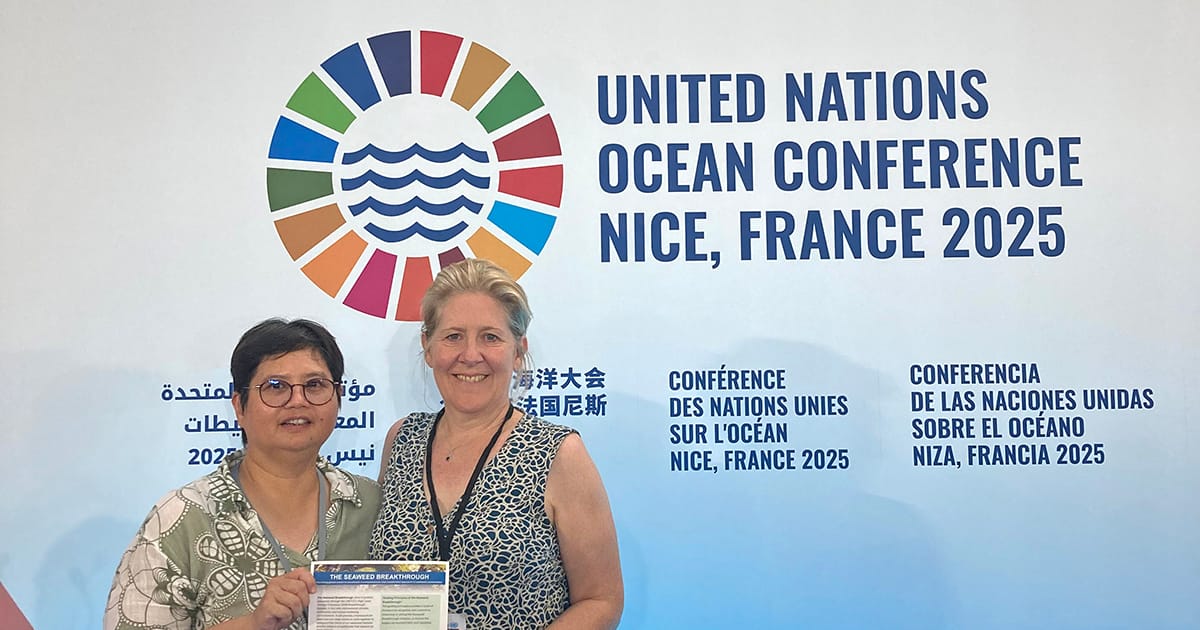
GlobalSeaweed-SUPERSTAR, led by the Scottish Association for Marine Science (SAMS) in Oban, will ask the UN Ocean Conference (UNOC3) in Nice to recognize the importance of seaweed to ocean health and food security and request it be given conservation status similar to coral reefs, mangroves and seagrasses.
The program, which is funded by the UK’s Global Centre on Biodiversity for Climate (GCBC), has already published the State of the World’s Seaweed report, which identifies the risks of inaction, and is preparing a Seaweed Breakthrough report to be launched at COP31 next year.
GlobalSeaweed-SUPERSTAR is also backing the call to form a UN Global Seaweed Initiative and is in support of the Nice Ocean Action Plan, which includes promotion of sustainable cultivation practices.
Prof. Elizabeth Cottier-Cook of SAMS, who leads the program, said: “Seaweeds are remarkable: they can grow over 30 times faster than many terrestrial plants, and their long-term carbon burial outranks mangroves and tidal marshes. They absorb excess nutrients to reduce eutrophication, absorb carbon dioxide, increase biodiversity by up to 40%, and provide food and other commercially important products.
“More than six million farmers in 54 countries worldwide culture seaweeds with an annual global production valued at over USD $ 17 billion in 2024. We therefore recognize the importance of wild seaweeds in the growth and contribution of the seaweed sector to food security, trade and economic diversification, environmental sustainability, and local livelihoods of local communities, small-scale producers, traders, and other stakeholders, particularly in developing countries, Least Developed Countries (LDCs), and Small Island Developing States (SIDS).
“This can only be realized, however, if seaweeds are given as high a conservation status as coral reefs, mangroves, and seagrasses to ensure that their long-term protection is secured and that the livelihoods of the millions of farmers who are dependent on seaweeds are safeguarded.”
In its Seaweed Breakthrough, GlobalSeaweed-STAR will call on global, regional, and national finance could be mobilized to halt the loss, and support the protection and restoration of at least 30% of wild seaweed habitats.
The Seaweed Breakthrough initiative aims to catalyze global action to conserve, restore, and sustainably manage seaweed ecosystems. Targets for (i) halting loss, (ii) protection, (iii) restoration, and (iv) sustainable finance that are aligned with key global commitments, including the Kunming-Montreal Global Biodiversity Framework, the Paris Agreement, and the UN Decades on Ecosystem Restoration and Ocean Science, will be developed. By securing the Seaweed Breakthrough within these internationally recognized commitments, the initiative will enable greater environmental and climate action for seaweeds at the local, national, and international levels.
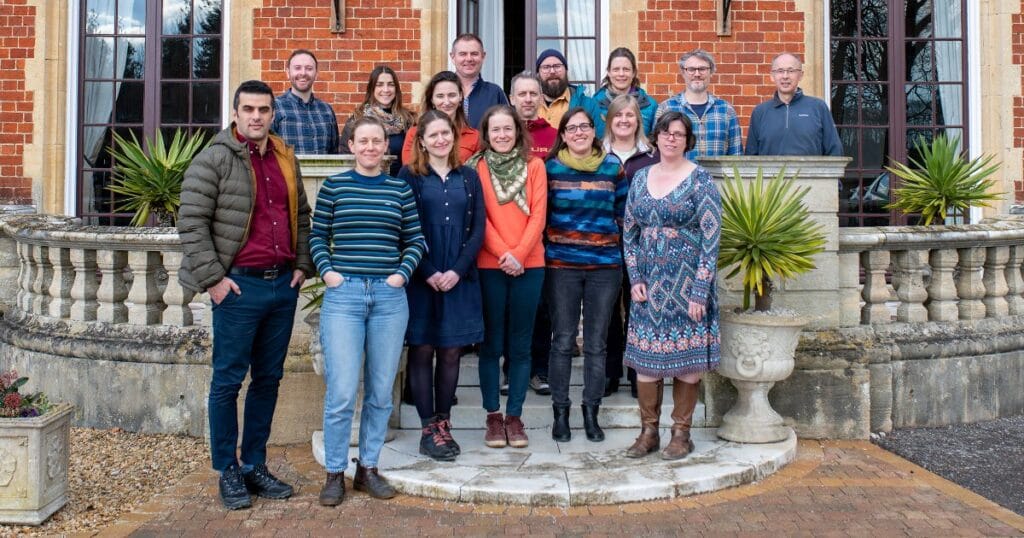
GlobalSeaweed-SUPERSTAR’s program partners include the Natural History Museum, London; UN University – Centre for Regional Integration Studies; University of Malaya; UN Global Compact; Global Seaweed Coalition; Marrakesh Partnership; and UN Climate Champions.
UNOC3 is being held at a critical moment for the world’s ocean, a time when they are facing immense pressure from both climate change and biodiversity loss. Supporting the implementation of the UN Sustainable Development Goal (SDG) 14: Conserve and sustainable use the ocean, seas and marine resources for sustainable development is, therefore, critical.