Lead authors Ph.D. student Michelle VanCompernolle and Associate Professor Ana Sequeira, from UWA’s Oceans Institute and School of Biological Sciences, worked with more than 300 contributors from 51 countries on the paper published in Conservation Biology.
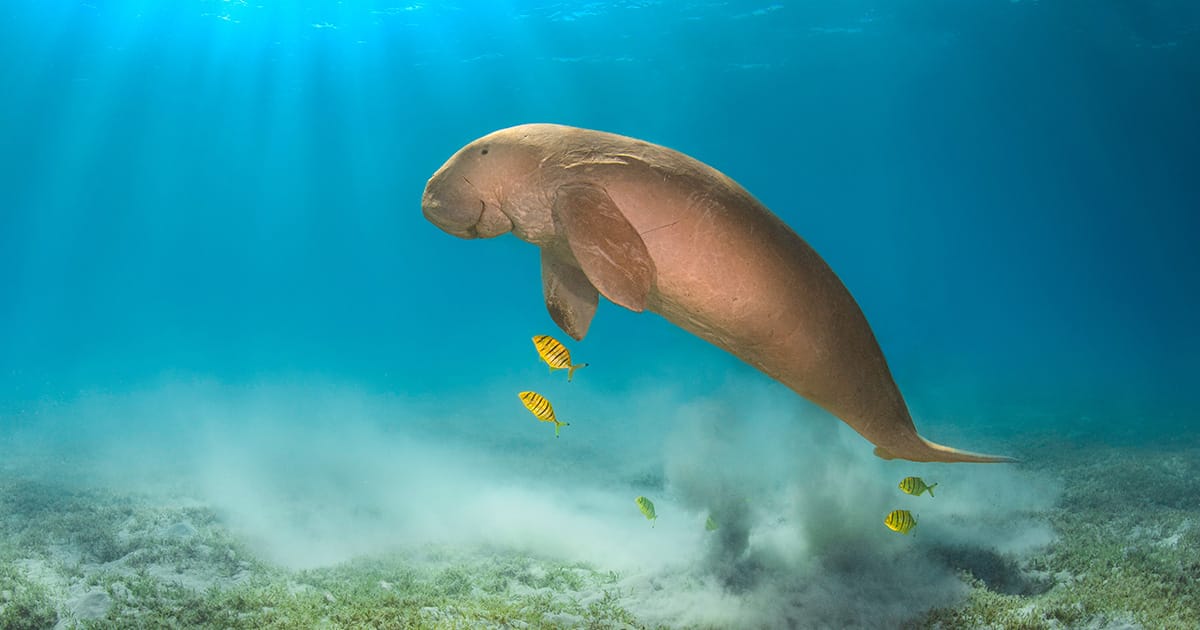
The study assessed the vulnerability of 256 marine megafauna species , including whales, sharks, bony fish, turtles, seabirds, polar bears, seals, and sirenians (dugongs and manatees), to 23 threats that originate from human activities.
“We put the main threats into four categories, which included climate change, coastal impacts, fishing and maritime disturbances,” Ms. VanCompernolle said.
“The major threats identified within these categories were temperature extremes, drifting longlines, and fixed fishing gear.”
The study examined the severity (intensity of impact) and scope (extent of exposure) while accounting for the timing of the expected impact (present or in the future) of the threats.
The resulting vulnerability scoring framework based on timing, scope, and severity of threats builds on the existing International Union for Conservation of Nature Red List classification system, which classifies species into nine categories based on their risk of global extinction.
“We found some threats such as fishing gear are high severity, which mean they can cause steep population declines,” Associate Professor Sequeira said.
“Other threats, such as climate change and plastic pollution, have a large scope, meaning they can affect many populations of marine megafauna but may not always be directly associated with population declines.”
According to the results, about 40 percent of species are highly vulnerable to at least one threat.
Turtles and sirenians were vulnerable to at least one threat across each of the four threat categories while sharks and rays were especially impacted by fishing-related threats.
Temperature extremes and plastic pollution affected the largest proportion of species populations.
“Our findings highlighted the need for coordinated, multi-threat conservation strategies to reduce the risk of global extinction,” Associate Professor Sequeira said.