A group of interdisciplinary researchers from the University of Central Florida, Utah State University, and East Carolina University aim to answer that question through a new four-year project funded by the National Centers for Coastal Ocean Science (NCCOS). This is one of three national projects that were funded under the NCCOS Effects of Sea Level Rise program. The total award amount is $1.5 million, with UCF receiving $338,000.
Professor Thomas Wahl, an expert in coastal flooding and sea level rise, and doctoral student Sajeewan Gajasinghe are leading the project for UCF. Additional researchers include Daniella Hirschfeld from Utah State University, Brandon Pucket from the National Oceanic and Atmospheric Administration, and Siddharth Narayan, Hannah Sirianni, and Rachel Gitman from East Carolina University.
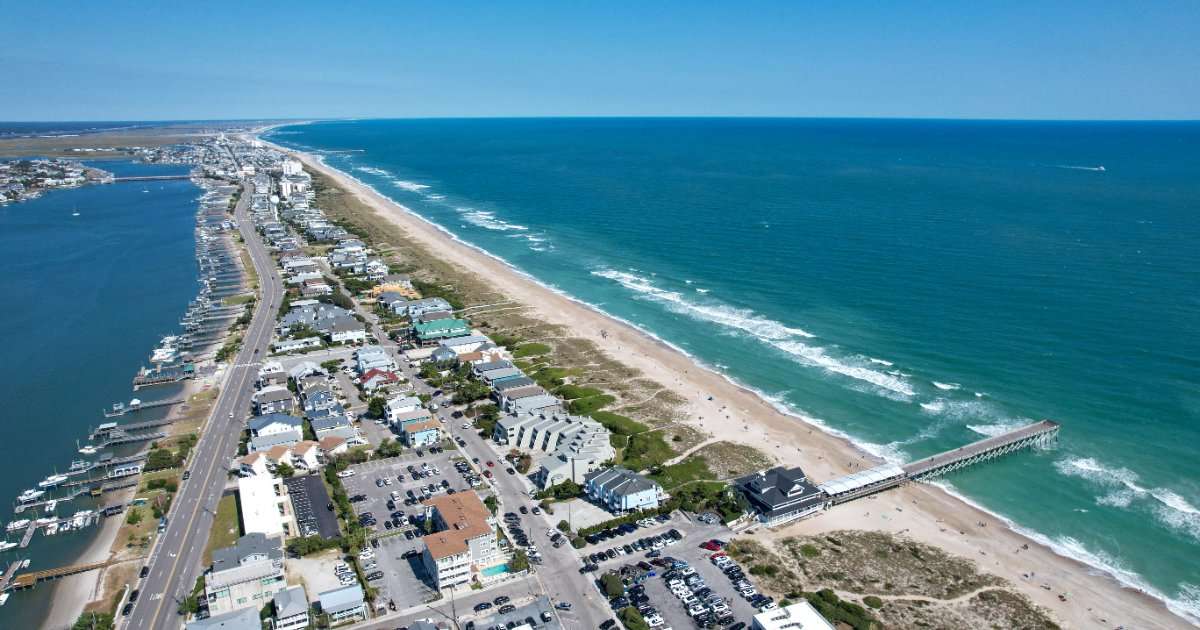
The goal of the project is to determine what types of natural infrastructure can best support flood resilience in North Carolina’s coastal communities.
“The whole idea of this call [for proposals] and this program that we responded to is to manage the risks of sea level rise,” Wahl said. “North Carolina—as most coastal states in the US—is facing challenges with more flooding, more erosion, and more storm impact. So we want to look for solutions, and nature can be part of that solution.”
Wetlands, marshes, oyster reefs, living shorelines, and sand dunes are all natural solutions that can not only mitigate flood impacts but can benefit wildlife, improve water quality, and offer recreational opportunities. But each type of natural infrastructure can only thrive in certain environmental conditions, so the research team must determine what solution is right for each community.
The North Carolina communities that will be studied for this project have not been determined yet, but the researchers plan to sync up their selection with an ongoing state initiative that provides funding for communities interested in implementing nature-based solutions to flooding impacts. Wahl says their team is more likely to work with communities whose plans align with their scientific research, but may not have the resources to implement their ideas.
“We want to be very deliberate in the decision of who we are actually going to work with to make sure that there is interest on their side, that it matches the criteria that we are looking for, and that there is some capacity to support and collaborate with us actively throughout the project,” Wahl said.
Once the communities have been selected, Wahl and his team in the Coastal Risks and Engineering Research Lab will start building 2D computer models that can help the researchers find the right nature-based solution for each community. The models will use input such as wave data, tides, and storm surge alongside local characteristics of the selected case study area to assess the effectiveness of different natural infrastructure solutions. The team will also assess how those solutions perform under changes in sea level, including long-term sea level rise but also shorter-term variability, for example, as a result of El Niño.
“This year’s El Niño, for example, is going to be a very impactful event that has effects on sea level,” Wahl said. “We may very well see the equivalent of 30, 40 years of long-term sea level rise within just one year because of this El Niño. So we want to understand also how these nature-based solutions behave, not just in the long term with long-term changes, but also under those inter-annual variations that we experience.”
At the end of the four years, the team will develop a framework for natural infrastructure design, implementation, and optimization for the North Carolina coast. Wahl says that framework could potentially be adapted across other areas of the US.
“We hope that a lot of it will be generalizable in terms of the framework,” Wahl said. “From the social science perspective, we’re asking what are the hurdles that are still making implementation of natural infrastructure solutions challenging? I don’t think that’s a unique North Carolina problem. I think that’s a challenge that we face everywhere, and understanding what those hurdles are in one place, I think, can help us understand a lot about what similar challenges are elsewhere.”