For nearly three decades, Mote scientists have worked to develop, refine, and evaluate responsible marine stock enhancement strategies for snook and other native sportfish species. The 2026 releases represent another step forward in Mote’s science-based efforts to support Florida’s recreational fisheries and enhance understanding of stock enhancement best practices.
“These releases reflect the continued growth and refinement of Mote’s fisheries enhancement capabilities,” said Dr. Ryan Schloesser, Manager of Mote’s Fisheries Ecology & Enhancement Program. “Our focus remains on producing healthy fish, releasing them strategically, and collecting the scientific data needed to better understand how stock enhancement can support resilient wild populations.”
Release locations are strategically selected based on environmental conditions and habitat characteristics that provide favorable environmental conditions and complex structure essential for juvenile snook survival and growth. Examples of favorable release habitats include tidal creeks, mangrove-lined shorelines, and sheltered coves that provide abundant food resources, protection, and complex habitat structure.
At Mote Aquaculture Research Park (MAP), researchers raised the juvenile snook that were released during these stock enhancement efforts while conducting studies that improve aquaculture practices and fish production techniques. The facility serves as a center for innovation, helping address challenges related to sustainability, conservation, and aquaculture needs. Beyond fisheries enhancement, some of the juvenile snook produced at MAP also contribute to aquaculture education initiatives, with fish distributed to classrooms throughout Florida that help inspire the next generation of marine scientists.
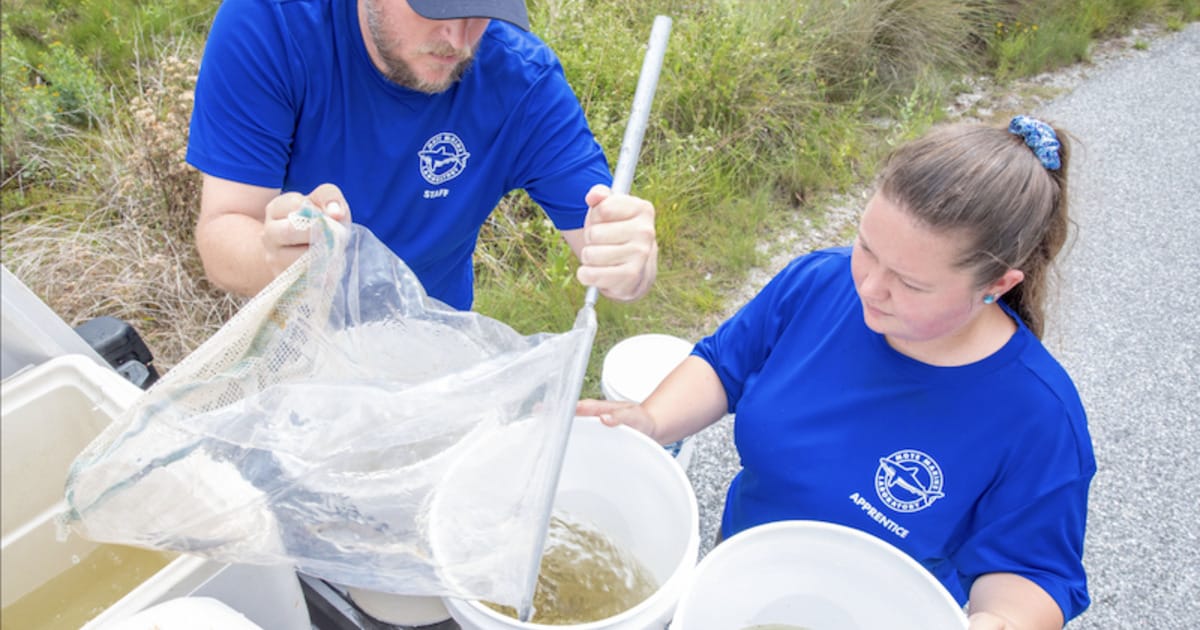
Mote’s stock enhancement program is guided by research objectives that examine post-release survival, movement patterns, habitat use, and the overall contribution of stocked fish to wild populations. Findings from these studies help inform adaptive release strategies, including optimal release timing, fish size, site selection, rearing conditions, and release methods. Prior to release, the fish undergo comprehensive health assessments to ensure they are well-suited for release.
In addition to physical tags, Mote scientists are working to utilize advanced genetic tagging techniques using known genetic profiles of parental broodstock. Through genotyping, researchers can identify individual fish and trace lineage from small tissue samples (such as fin clips) collected after release.
“We have the genetic profiles of the parents and are developing the tools needed to match offspring recovered in the wild back to their source,” said Dr. Schloesser. “This approach will allow us to evaluate stocking success while minimizing handling and stress associated with traditional tagging methods.”
Snook remain one of Florida’s most sought-after recreational sportfish and contribute significantly to Florida’s coastal economy. However, the species remains vulnerable to environmental stressors, including severe cold events, habitat degradation, and harmful algal blooms. These advancements in genetic tagging and long-term monitoring provide valuable tools for evaluating the success of enhancement efforts and understanding the role hatchery-reared fish play in supporting wild populations.
In addition to ongoing enhancement efforts, Mote is expanding its monitoring and response capacity throughout neighboring coastal regions. Following significant cold-stun-related fish mortality observed across portions of Southwest Florida during recent winter events, Mote scientists are increasing their presence and strengthening partnerships in adjacent counties and waterways. Expanding this regional reach will help researchers better understand how to respond when environmental stressors affect fish populations across a broader geographic area and improve preparedness for future cold events.
By building stronger monitoring networks and collecting data from multiple estuarine systems, Mote aims to develop a more comprehensive understanding of how adaptive management strategies can help fish populations respond to extreme environmental conditions. This expanded effort will enhance Mote’s ability to rapidly assess impacts, coordinate response activities, and inform future fisheries management and recovery strategies throughout the region.
Through the integration of aquaculture innovation, ecological research, regional monitoring, and long-term data collection, Mote’s Fisheries Ecology & Enhancement Program continues to advance the science of marine stock enhancement while supporting sustainable fisheries management and the long-term health and economic vitality of Florida’s coastal ecosystems.