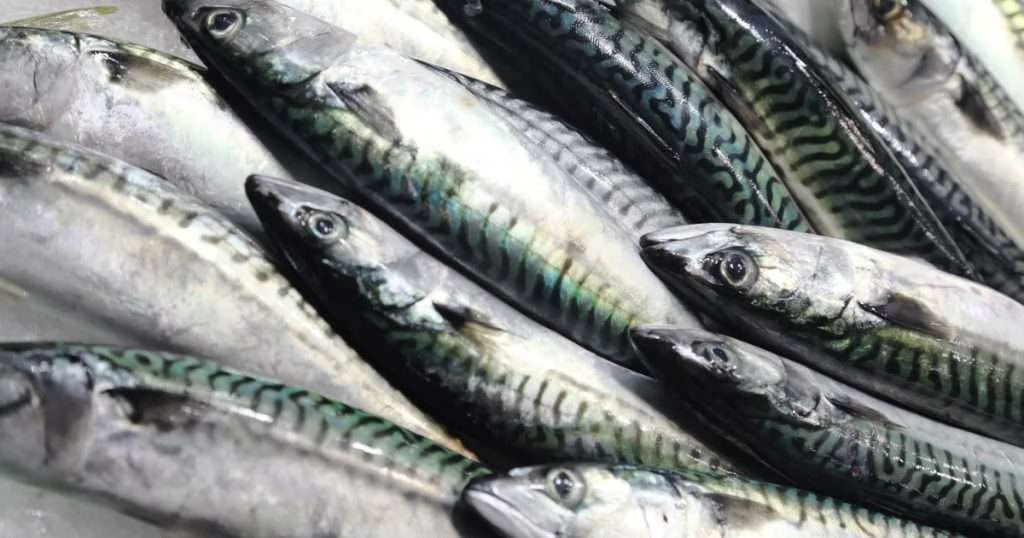
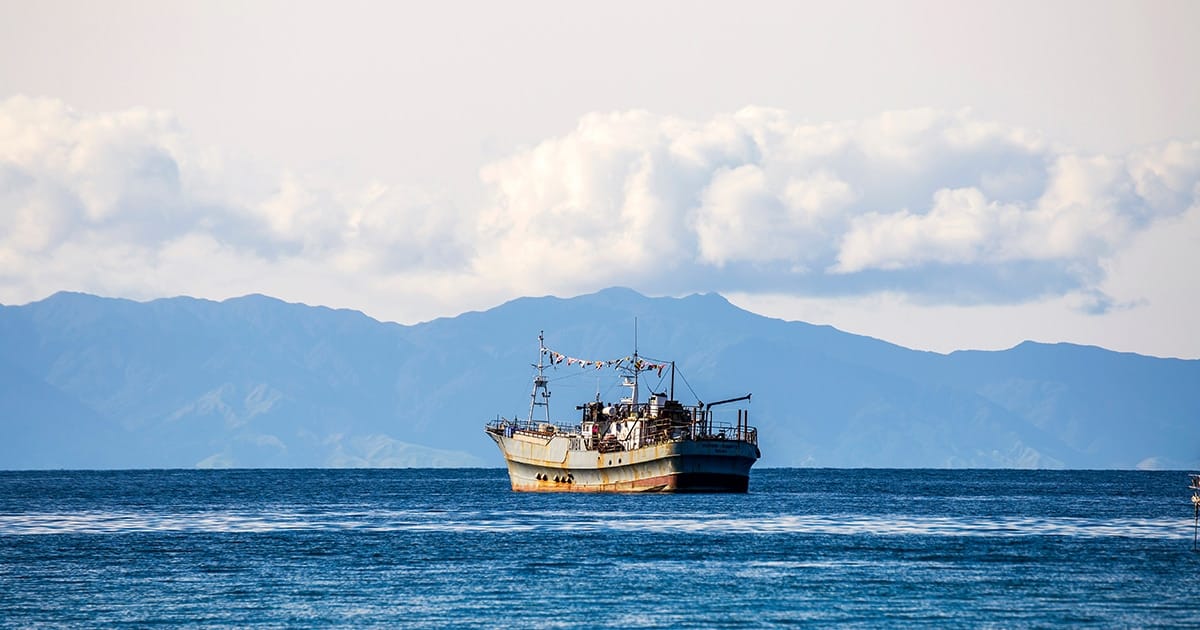
Jack mackerel is a significant species for New Zealand’s commercial fishing sector, worth over $66 million in export revenue, and Area 7 is the largest of the jack mackerel fisheries we have.
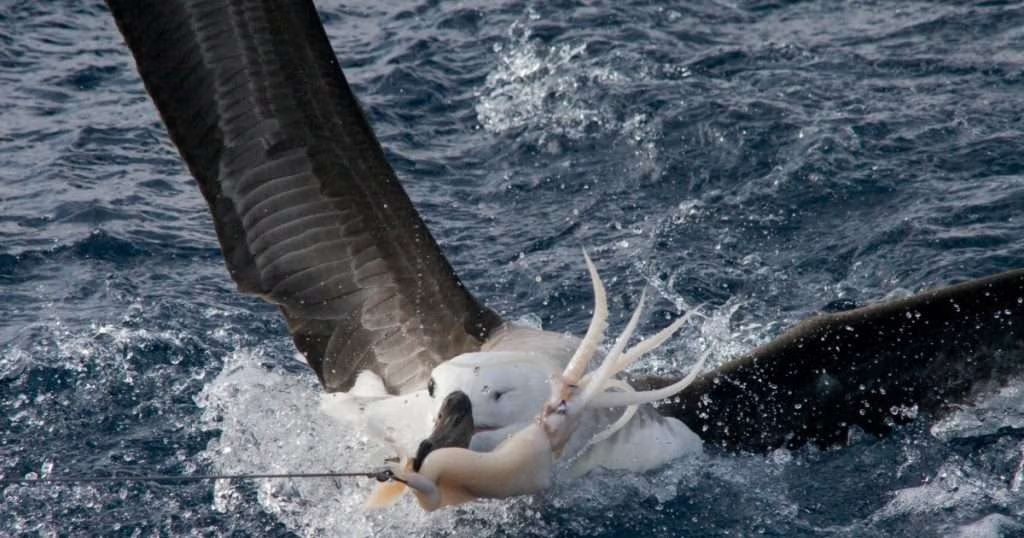
The skippers, vessel managers, and companies involved have worked to protect fur seals, seabirds, and dolphins, but because the biggest overlap was with dolphins, extra work was focused on that area.
Key tools and processes for helping to reduce dolphin captures included:
- Crews’ yearly briefings with Deepwater Environmental Liaison Officers and reviews of capture events
- open dialogue with skippers and vessel managers about risk factors,
- use of audio devices that deter dolphins
- reducing the number of nighttime tows during the ‘higher risk period’
- open communication between skippers, notifying the whole JMA fleet if/when a capture does occur
- avoidance of new moon fishing at shallow depths
The three fishing companies currently involved are Sealord, Independent Fisheries Limited, and Maruha.
Tim Law, the GM of Operations at Maruha, says the result was achieved through massive efforts by fishing experts and others looking for practical solutions. “Communication and cooperation between the three main companies involved in the fishery has been key to the success. The vessel managers and crew should also be commended for adopting new practices and equipment and abiding by the operating procedures, treating them like the Ten Commandments. This was disruptive to the crew at the beginning, but they fully adopted them, knowing it would prevent the interactions with the mammals and birds they share the environment with.”
While there is widespread delight with the result, Lisa Futschek acknowledges the industry can’t rest on its laurels. “We know there will always be more work to do. Even in this fishery, with all the effort put in, we may not get a zero result next year. But the point is we have a decade’s worth of figuring out what works. We must acknowledge that every fishery is different—different fishing vessels with vastly different operations interacting with different species across different parts of New Zealand’s oceans—so there is not a one-size-fits-all approach. But this demonstrates what can be achieved through proactive engagement, collaboration with knowledgeable skippers, supportive crews, and industry-led measures.”