Researchers from Sultan Qaboos University and collaborating institutions have developed StereoGeoBox, a system that estimates fish dimensions and weight without generating a complete depth map of the underwater scene.
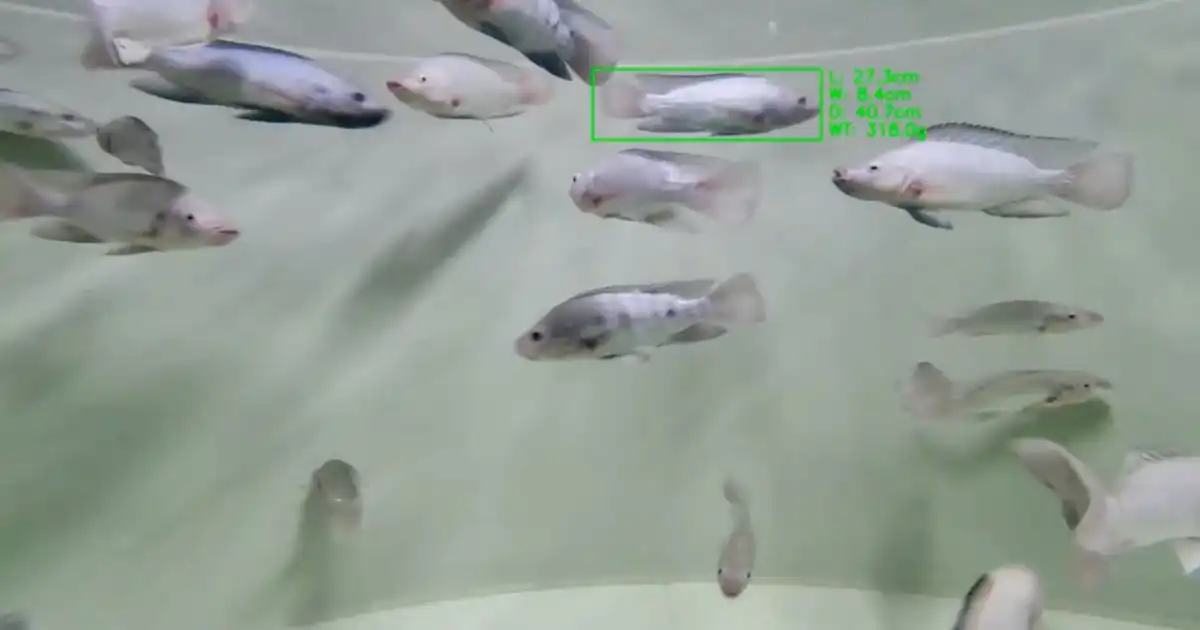
The system uses two synchronized cameras and YOLO11 artificial intelligence (AI) to identify fish in paired images. It then calculates depth from the geometric relationship between the detected bounding boxes. Estimated length and width are fed into an XGBoost machine-learning model to predict weight.
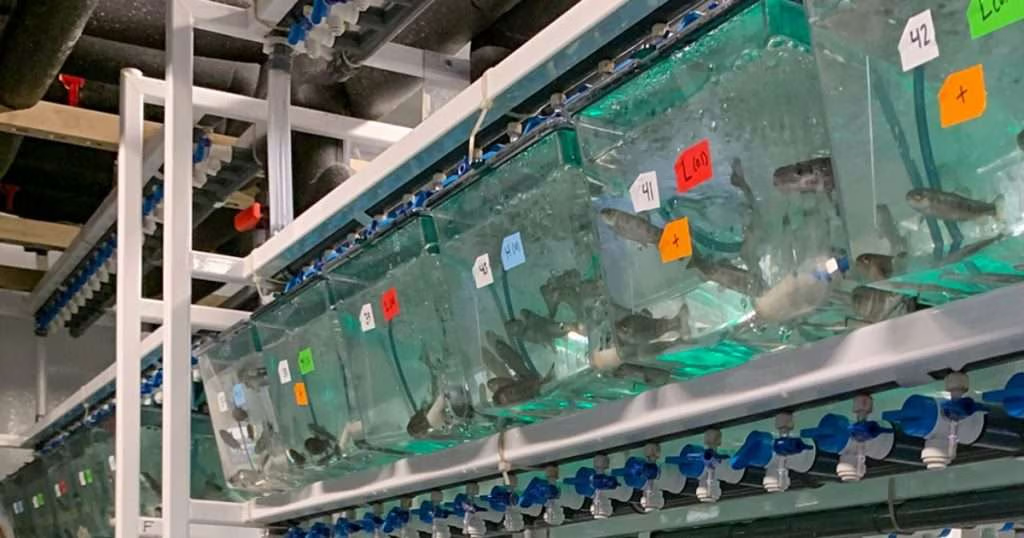
The researchers evaluated the system using tilapia monitored over 15 months at four growth stages: 2, 3, 6, and 15 months. Two stereo-camera systems were used, while manual measurements provided reference values for fish length, width, and weight.
Across most datasets, StereoGeoBox achieved the lowest or near-lowest estimation errors compared with conventional stereo-vision and learning-based depth methods, while producing fewer outliers. In a controlled test involving fish with a reference length of 15.30 centimeters, its average estimate was 15.25 centimeters.
The method also demonstrated real-time performance. Using an FD camera and an NVIDIA Jetson Thor platform, it processed 25.40 frames per second with a latency of 28.2 milliseconds and GPU memory use of 17.7 megabytes.
Tests under changing illumination, oxygen bubbles, and turbidity showed that the system maintained reasonable accuracy, although severe visual degradation reduced the number of usable measurements.
The prototype combined underwater cameras, edge computing, and a cloud-based dashboard, allowing fish-growth estimates to be recorded and viewed remotely.
However, the study did not demonstrate automatic counting of every fish or independent estimation of an entire farm’s total biomass. Because frames were processed separately, the same fish could be observed more than once. Further testing across other species and commercial aquaculture environments is required.
“By estimating depth only where fish are detected, StereoGeoBox reduces computational demands while retaining the speed and accuracy needed for real-time aquaculture monitoring.” — Dr. Said Al-Abri, corresponding author, Sultan Qaboos University
The research involved the Department of Electrical and Computer Engineering at Sultan Qaboos University, Abdullah Al Salem University in Kuwait, and Oman’s Ministry of Agriculture, Fisheries and Water Resources.
The article, “Real-time in situ fish biomass estimation from stereo bounding-box geometry without dense depth maps” was published online in Computers and Electronics in Agriculture on October 23, 2026.