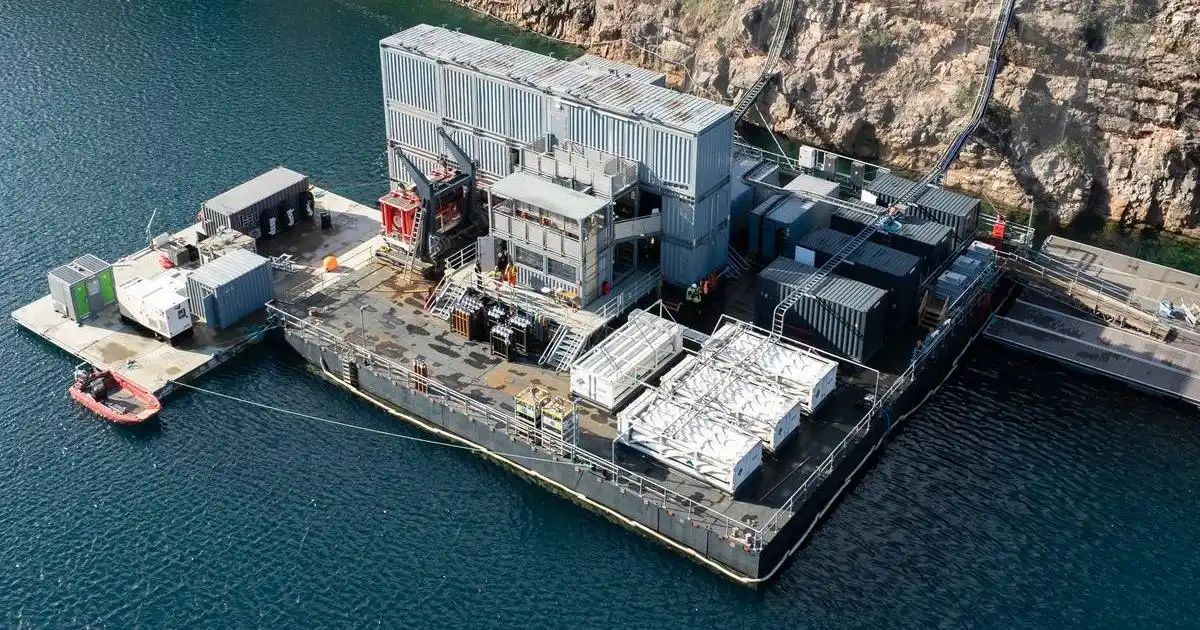
Conducted by leading diving contractor Boskalis Subsea Services, the trial saw six divers saturate to a storage depth of 50 meters, complete a closed bell dive to 60 meters, and undergo a full 53-hour decompression.
DEEP will make minor refinements to the system and its procedures, as recommended by the Boskalis team, before saturation diving training courses begin in January 2027.
The three-week course is designed for divers moving into closed bell diving. It combines classroom theory with hands-on practical training in closed bell operations, life-support systems, transfer under pressure, and emergency response.

Andy Butler, Diving Manager at Boskalis Subsea Services, said: “We’re delighted to have played a critical role in bringing this new training system online. There’s a shortage of saturation training facilities globally, and the offshore industry needs high-quality training programs to safeguard the future success and safety of subsea operations.”
Mark Hamilton, Dive Manager at DEEP, said: “Boskalis have put the system through its paces, and the rigor and expertise they brought to this trial gives us total confidence in its readiness. We can now start delivering training that the industry desperately needs to bring through the next generation of saturation divers.”
Places on DEEP’s closed bell diver course have been allocated to divers from an existing waitlist, with dates fully booked until March 2027. DEEP is now accepting applications for courses from April 2027.
Successful candidates will be awarded the UK HSE Closed Bell Diver certification, the highest-level professional commercial diving certification issued by the UK Health and Safety Executive for saturation and mixed-gas bell diving. The qualification is essential for working as a commercial saturation diver in offshore oil, gas, and renewable energy projects, providing career opportunities in the North Sea and global offshore industry.