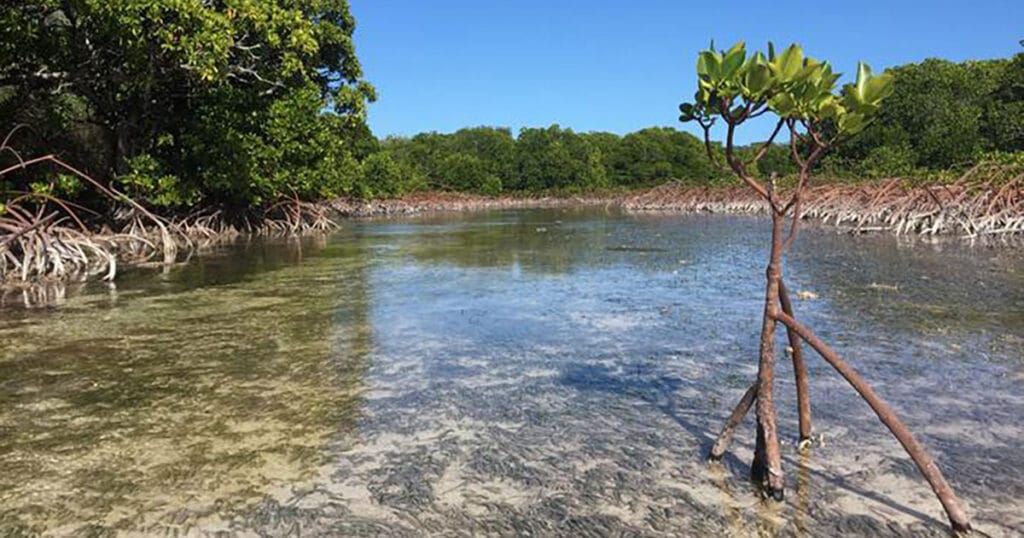
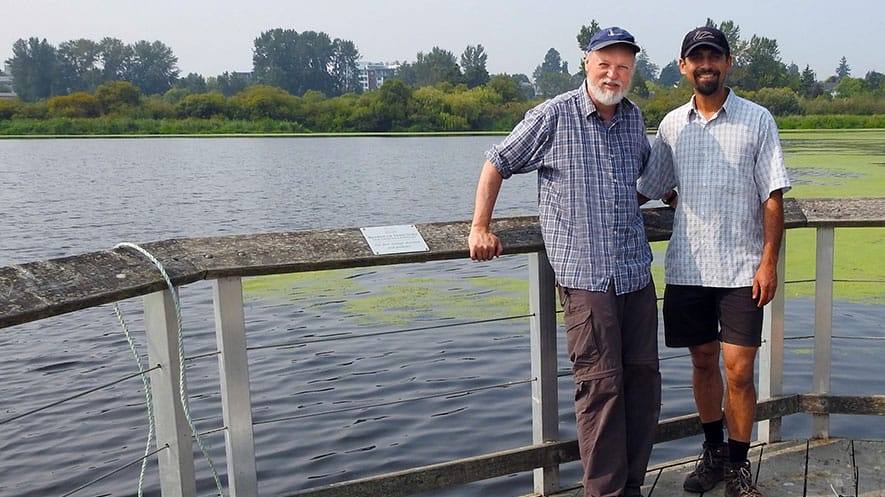
The impacts are generally negative, causing onsets of algal blooms and widespread fluctuations in oxygen levels. Through an ongoing monitoring program, Rob Bowen of Diversified Scientific Solutions has been conducting surveys of dissolved oxygen, pH, oxidation-reduction potential, temperature, nitrogen and phosphorous at Swan Lake, in Victoria, BC, Canada.
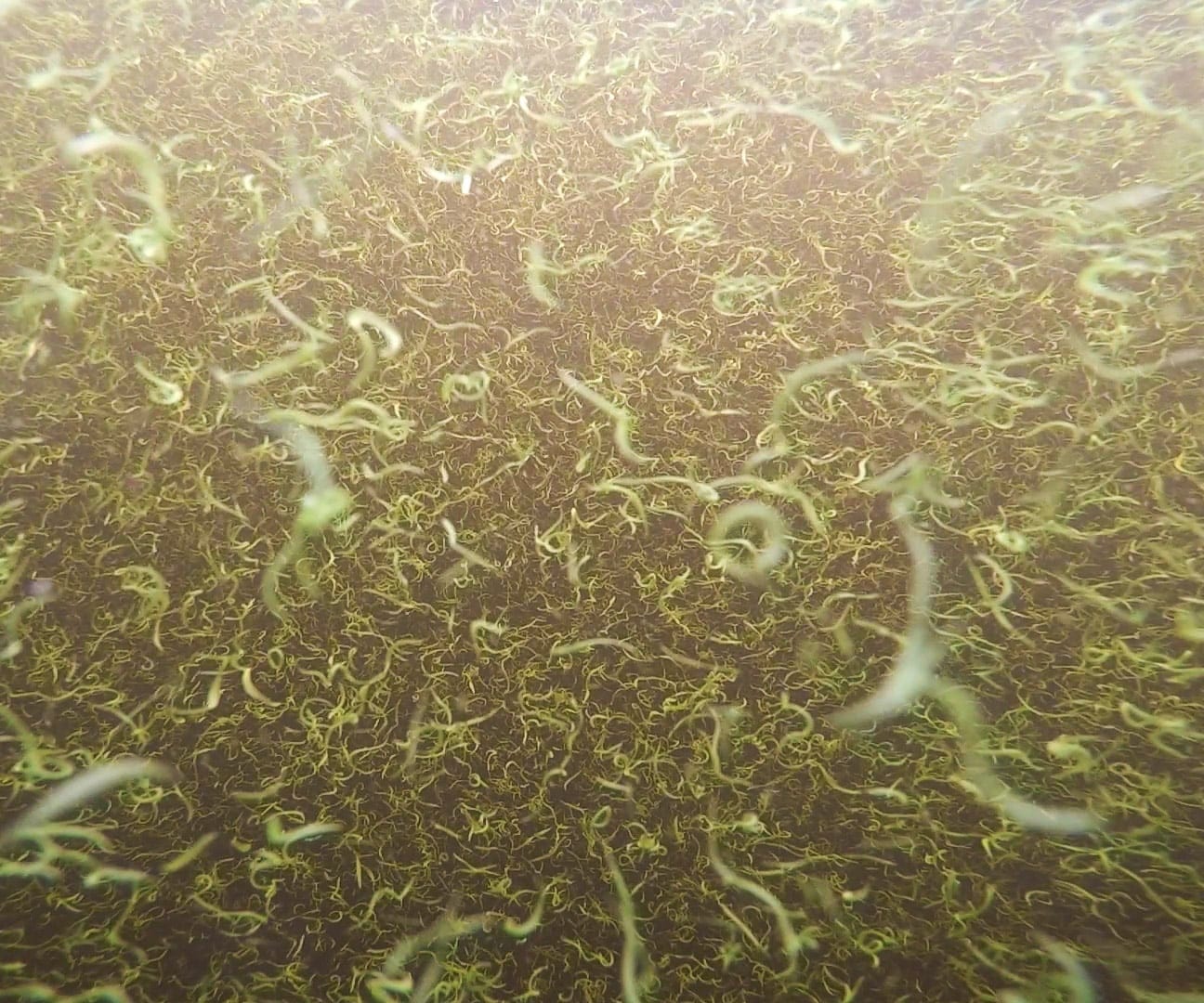 Underwater drop-down camera view of abundant suspended Aphanizomenon flos-aquae. Image taken approximately 0.75 m below surface. Filaments are typically about 1 cm in length.
Cyanobacteria play a key role in the oxygen production in this system as there is an abundance of the species Aphanizomenon flos-aquae. Over the last three years, it has been observed that the lake experiences a dramatic collapse of oxygen in the late summer leading to hypoxia and fish kills. Using a drop-down camera, pre-hypoxic conditions have shown an abundance of Aphanizomenon flos-aquae throughout the water column. Once hypoxia is established, Aphanizomenon flos-aquae die and drop to the bottom of the lake.
In this study, an ASL Environmental Sciences’ Acoustic Zooplankton Fish Profiler (AZFP) will be deployed over the late summer to collect data during this transitional period. There are a growing number of successful ocean deployments for this instrument to detect zooplankton and fish presence and abundance. Because Aphanizomenon flos-aquae are relatively large acoustic targets, it is hopeful that this new application of the AZFP will provide valuable insights into the dynamics of this freshwater system.
Source: ASL Environmental Sciences