The USA-B application area in the Clarion Clipperton Zone (CCZ) of the Pacific Ocean covers ~122,000 km2 of seafloor and hosts an estimated 1.02 billion tonnes of polymetallic nodules based on TMC’s Technical Report Summary for the Initial Assessment published in August 2025. In addition to the USA-B exploration license application, TMC USA is also advancing a consolidated application for an exploration license and commercial recovery permit for the USA-A area, which was submitted to NOAA on January 22, 2026, and determined to be fully compliant on April 28, 2026.
Gerard Barron, CEO and Chairman of The Metals Company, commented: “The publication of this Notice of Intent is another milestone in NOAA’s methodical review process. We welcome the opportunity to participate in a rigorous Environmental Impact Statement process that invites public input and builds on more than a decade of our own environmental research and engineering, alongside 50 years of environmental research and a dozen other commercial and academic disturbance tests in the CCZ. As we’ve said from the beginning, good regulation should be transparent, predictable and grounded in rigorous baseline studies and impact assessment, and today’s announcement demonstrates that process is continuing as intended.”
The publication of the NOI follows the earlier certification of TMC USA’s application for an exploration license over the USA-B area and represents another key step in a steady, transparent cadence of expected regulatory milestones:
- NOAA will publish for public comment a draft EIS and draft Terms, Conditions and Restrictions (TCRs) for TMC USA’s proposed exploration activities on the USA-B area
- Following the public comment period, NOAA will consider comments and the EIS will be finalized
- NOAA will then make a final determination on the issuance of the license and its associated TCRs
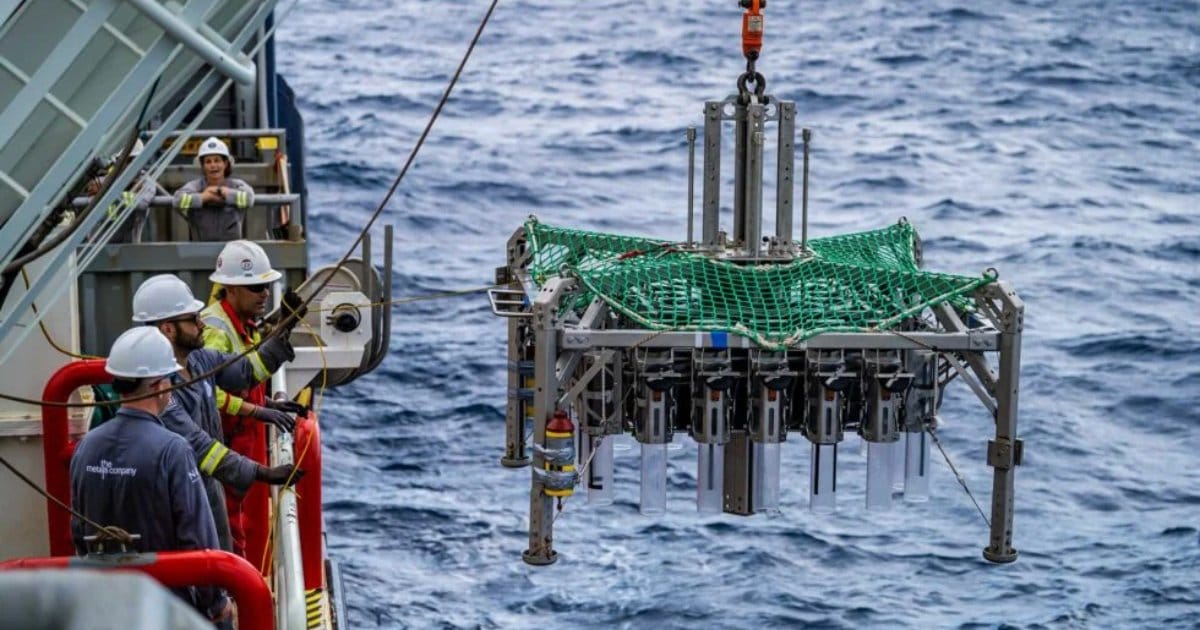
The Company and its partners have conducted over a decade of scientific research, environmental baseline and impact data collection, and offshore engineering, building one of the most comprehensive datasets ever assembled on polymetallic nodules and their surrounding ecosystems. To date, independent academics have published 41 peer-reviewed studies based on the Company’s dataset collected from Eastern CCZ. Earlier this year, TMC began sharing key findings from its Environmental Impact Assessment publicly as part of two new video series, highlighting how its dataset addresses environmental concerns and how innovation has reduced its environmental footprint. The exploratory activities outlined as part of TMC USA’s USA-B exploration license application are expected to generate significant new data in Central and Western CCZ and, with all academics involved free to publish, the Company anticipates that hundreds more papers will be published over the coming months and years.
NOAA has played a central role in advancing scientific understanding of deep seabed mining impacts since the 1970s, including conducting environmental research cruises in the CCZ, monitoring early nodule collection trials, and publishing a Programmatic Environmental Impact Statement covering the CCZ in 1981. In the 1980s and 1990s, NOAA conducted further research into benthic plumes through its Benthic Impact Experiments program, where the agency used a custom-built machine to simulate and study seafloor disturbance. The agency issued comprehensive DSHMRA implementing regulations in 1981 (for exploration licenses) and 1989 (for commercial recovery permits) and has maintained an active licensing program since that time, with multiple exploration licenses renewed on a five-year basis.