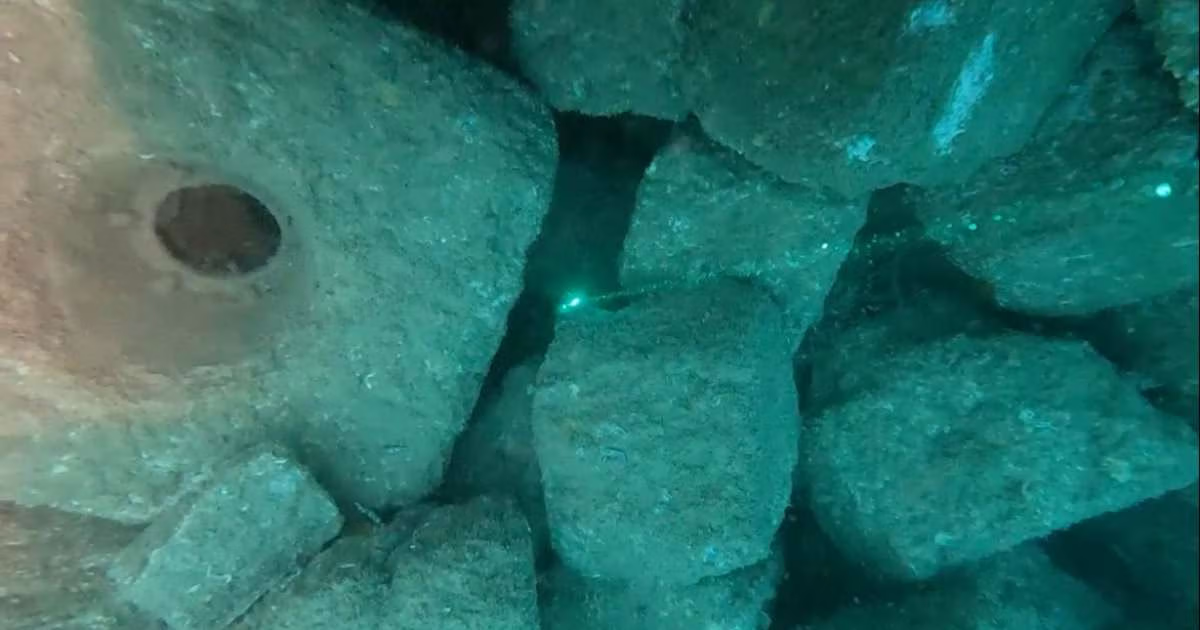
Approximately 75,000 Reef cubes® were installed around turbine J04 in October 2025 as part of the Reef Enhancement for Scour Protection (RESP) project, led by RWE and ARC marine. The installation was carried out by Rohde Nielsen using a standard industry fall-pipe vessel. The system was designed first and foremost to perform an engineering function: stabilizing the seabed around the turbine foundation and protecting it from further scour. At the same time, its Nature-Inclusive Design introduces structural complexity into the scour protection itself, offering marine life nooks and crannies on the surface which help them attach to the substrate, as well as passageways for shelter. The design demonstrates how ecological objectives can be considered alongside the core engineering requirements of offshore infrastructure.
Engineering Survey Confirms Stability
Since installation, the scour protection has experienced a full winter of offshore conditions, during which the UK was affected by six named storms. At Rampion, a peak significant wave height of 4.38 meters was recorded on January 9 during Storm Goretti. A full visual inspection of the condition and position of the Reef cubes® around the turbine foundation was carried out in March 2026 by an underwater remotely operated vessel (ROV). It showed that the distribution of Reef cubes® within the scour pad closely matched the original design and model testing, with no significant cube breakage observed following deployment and exposure to winter conditions. In addition, the variable material sizes are seen to be interlocking effectively, contributing to a robust and generally stable scour pad while also providing habitat complexity. From this first survey, the reef therefore appears to be providing the required protection of seabed sediment from scouring.
The results represent an important step in building the evidence required to validate Reef cubes® as a full-scale alternative to conventional rock scour protection for offshore wind. Installed using conventional offshore equipment, exposed to real operating conditions and continuing to fulfill its intended engineering function, this deployment provides evidence across three critical areas for industry adoption: constructability, stability, and performance.
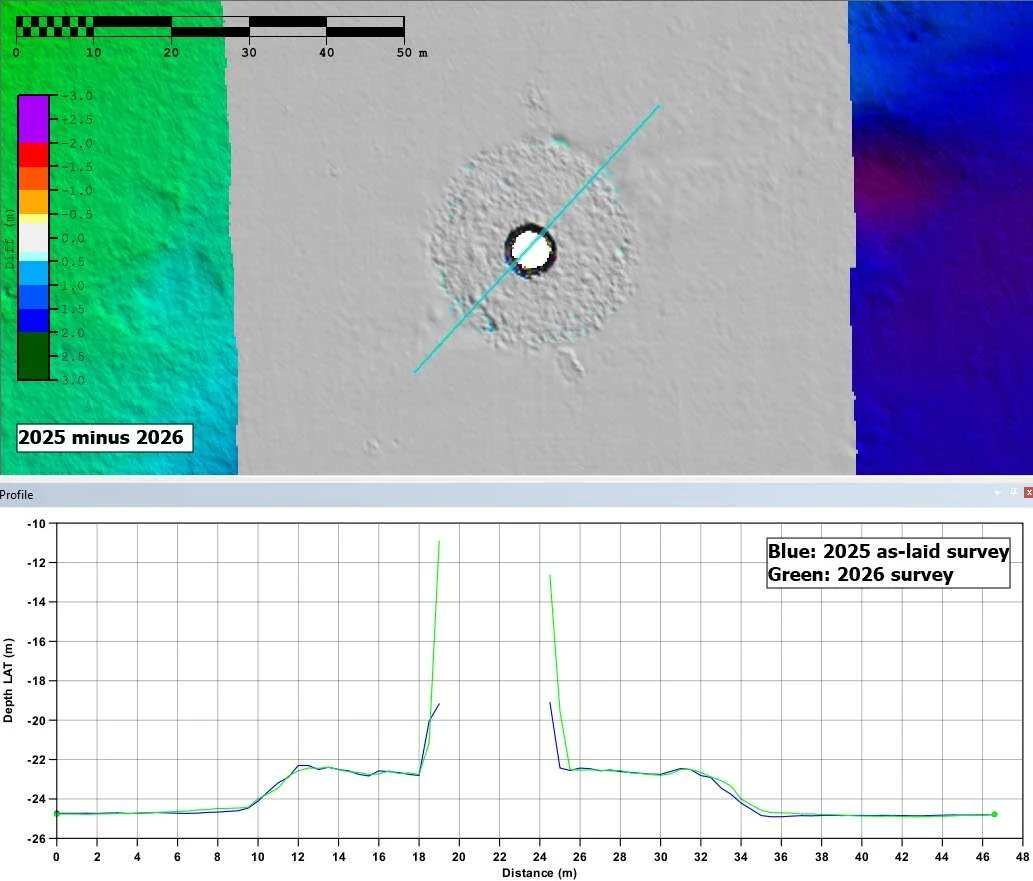
Helen Elphick, Technical Innovation Partner – Sustainability & Biodiversity, RWE, said: “Nature-Inclusive Design has significant potential within offshore wind, especially when the technology also performs an essential engineering function. These first results from the RESP pilot at Rampion are an important step in building the evidence that nature-inclusive technologies like Reef cubes® can provide the same level of stability and protection as the conventional alternatives. The survey data show that the RESP scour pad is maintaining its profile after exposure to some significant storms last winter, demonstrating the potential of this technology and the value of testing new approaches at full scale offshore.”
Tom Birbeck, Founder & CEO of ARC marine, said: “We are proud to see the scour pad we designed maintain its shape through some tough conditions. It’s testament to ARC marine’s and RWE’s project teams in doing everything we could to test and validate the site, learnings we can now replicate for future applications. If Reef cubes® are going to replace conventional rock, they have to perform the same, if not better. These results show they are doing that at full offshore scale, using the same kind of installation methods the industry already understands. The scale of the opportunity is enormous. Offshore wind foundations and subsea cables will require significant volumes of scour protection over the coming decades. If that infrastructure can be built locally, perform the same engineering function while also being intentionally designed for ecological outcomes, we can fundamentally improve the habitat on our seabed.”
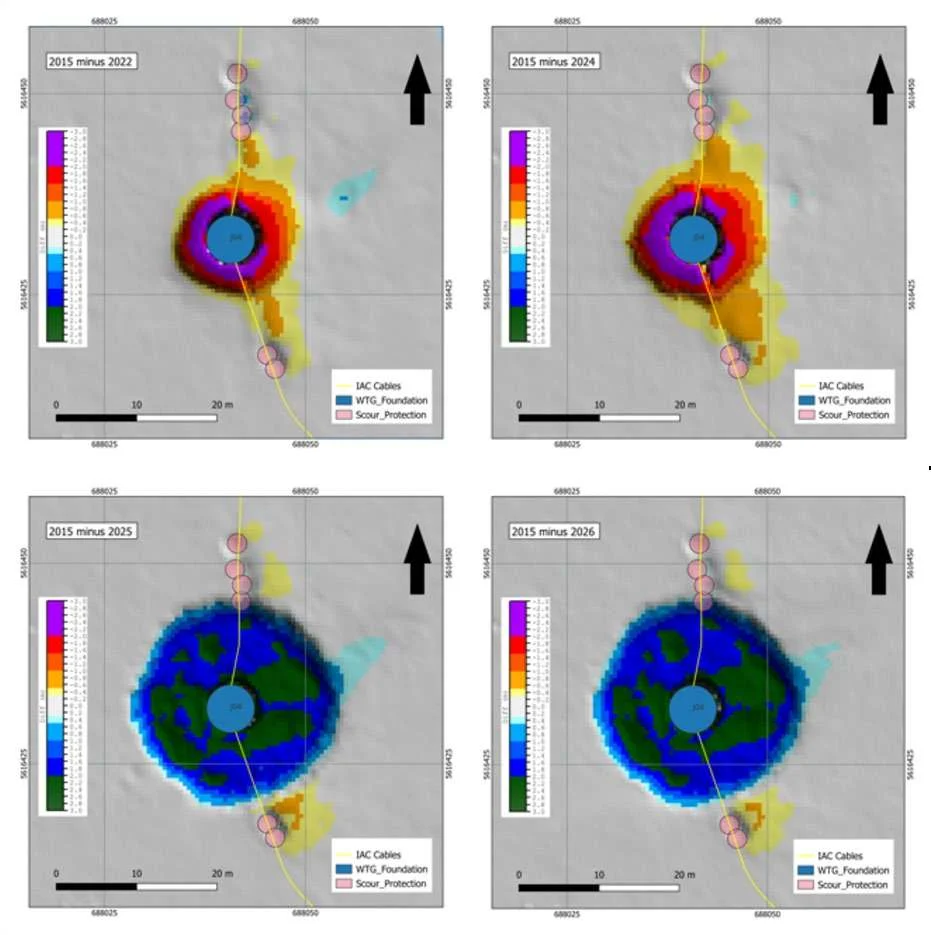
Monitoring of the RESP installation will continue to assess its long-term engineering and ecological performance. Further project findings will be communicated as the wider RESP program progresses.