The publications, Policy Coherence for Mangroves: Aligning Commitments across the Rio Conventions & Ramsar Convention on Wetlands and Mangroves and CBD COP17: Entry Points and Recommendations, set out how governments and partners can make better use of existing policy frameworks, strengthen monitoring and accountability, and mobilize investment to deliver lasting benefits for mangrove ecosystems.
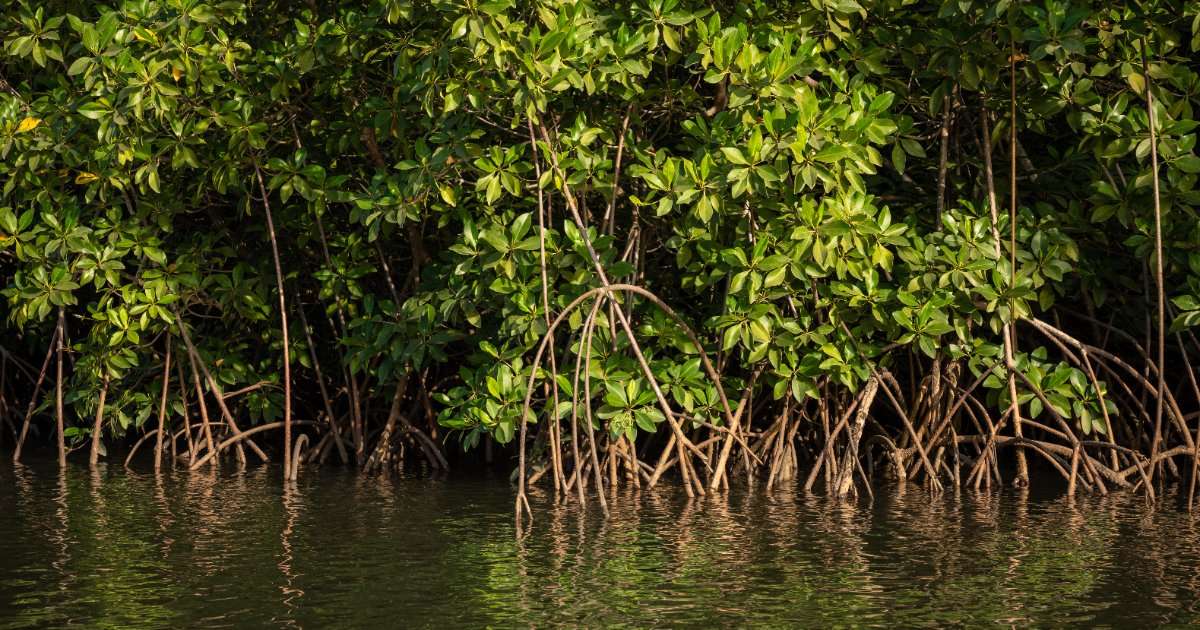
Mangroves are uniquely positioned to connect global biodiversity, climate, and wetland conservation agendas. They support biodiversity, store blue carbon, help protect coastal communities from climate impacts, and contribute to ecosystem resilience. Stronger policy coordination can help countries advance these interconnected objectives more efficiently while increasing attention and investment in mangrove conservation and restoration.
Turning CBD COP17 into an Opportunity for Action
The first brief, Mangroves and CBD COP17, identifies opportunities to advance mangrove conservation at the moment of the first global review of collective progress towards implementing the Kunming-Montreal Global Biodiversity Framework (KMGBF).
Taking place halfway towards the Framework’s 2030 targets, COP17 offers an important moment to assess progress, identify implementation gaps, and inform the next phase of action leading up to the next reporting cycle in 2029. Although mangroves contribute to several KMGBF goals and targets, the draft Global Report on Collective Progress highlights that inland waters and coastal ecosystems actions to protect and restore them are lagging behind.
The brief identifies several priorities for Parties and partners to be reflected in COP decisions and translated into domestic implementation:
- Strengthen national implementation: Embed mangrove commitments in durable national frameworks, supported by clear institutional mandates and multi-stakeholder coordination. National Mangrove and Blue Carbon Strategies, alongside ministerial guidelines on mangrove restoration, offer examples of approaches that can support implementation.
- Advance cross-convention cooperation: Use COP17 agenda items on cooperation with other international organizations and biodiversity and climate change to improve alignment across the KMGBF, United Nations Framework Convention on Climate Change (UNFCCC), and Ramsar Convention on Wetlands. Existing frameworks, including the sixth Joint Work Plan between the CBD and the Convention on Wetlands, provide a foundation for further synergies.
- Improve monitoring and accountability: Draw on updated GMA technical resources, the IUCN Red List of Mangrove Ecosystems global assessment, and Global Mangrove Watch data to strengthen evidence on mangrove status and trends, track implementation, and inform national reporting.
Connect commitments with finance: Align mangrove investment priorities with National Biodiversity Strategies and Action Plans (NBSAPs), estimate the costs of protection and restoration, and integrate these priorities into national biodiversity finance plans to help connect commitments with public, multilateral, bilateral, private, and blended finance.
Together, these priorities underline that achieving mangrove outcomes requires coordinated policies, credible evidence, institutional support, and sustained investment—not target-setting alone.
Building Coherence across International Conventions
The second brief, Policy Coherence for Mangroves, examines opportunities to align commitments under the three Rio Conventions—the UNFCCC, the CBD, and the United Nations Convention to Combat Desertification (UNCCD)—alongside the Ramsar Convention on Wetlands.
The year 2026 presents a significant opportunity for progress, with all three Rio Conventions holding their conferences of the parties and marking the first year of implementation of the Ramsar Convention’s Fifth Strategic Plan, adopted in July 2025. Meanwhile, the CBD is developing a multilevel roadmap on cross-convention coherence, with findings due to be reported to Parties at COP17.
Despite existing mandates, political commitments, and technical tools to support coordinated mangrove reporting, progress guided by policy coherence and synergies principles has proven a challenge. The brief highlights the need to use current progress and push for concrete action, where partnerships and coalitions like the Global Mangrove Alliance can support with practical guidance and enhancing capacity to implement commitments on the ground.
It also emphasizes that effective policy coherence depends on more than setting targets. Countries that embed mangrove commitments in legal frameworks, cross-ministerial mandates, and integrated national strategies are better positioned to align their plans and monitoring systems over time. Strong institutional foundations can help translate international commitments into sustained action.
Policy coherence is also closely linked to finance. Inconsistent national plans and monitoring data can weaken the investment case for mangroves and limit access to results-based and multi-benefit funding. Aligning planning and monitoring across frameworks is therefore an important part of mobilizing finance for mangrove protection and restoration.
From Global Commitments to Lasting Impact
The two publications offer complementary perspectives on the challenge and opportunity ahead. While the first identifies concrete entry points for advancing mangroves within the KMGBF and the COP17 process, the second one focuses on strengthening coherence across international conventions and national planning systems.
As Parties review collective biodiversity progress, stronger coordination across climate, biodiversity, and wetland agendas can help position mangroves as a practical nature-based solution that delivers multiple benefits for people and nature. Embedding commitments in national institutions, improving monitoring, and aligning finance will be essential to translating international ambition into meaningful implementation.
The GMA Policy Working Group encourages policymakers and partners engaging in CBD COP17 and related international processes to use these recommendations to support more coherent, evidence-based, and adequately financed action for mangroves.
Read the Policy Briefs
- Policy Coherence for Mangroves: Aligning Commitments across the Rio Conventions & Ramsar Convention on Wetlands
- Mangroves and CBD COP17: Entry Points and Recommendations
Both publications were developed by the Global Mangrove Alliance Policy Working Group, with their lead author being Emily Guinan (IUCN and GMA Policy Working Group), and their editors being Alice Taberner (IUCN) and Adriana Vidal (GMA Policy Working Group Lead, IUCN). Contributors to the Policy Coherence for Mangroves publication include Mark Beeston (Conservation International); Louisa Chinyavu (Wetlands International); Ansumana Darbo (Nnaa Saama Makolou- Project); Luz Gil (The Nature Conservancy); Jill Hamilton (Conservation International); Kiryssa Kasprzyk (Conservation International); Juan José Robalino Cabrera (Landesa); Susanna Tol (Wetlands International); and Anelise Zimmer (The Pew Charitable Trusts). Contributors to the Mangroves and CBD COP17 publication include Anete Berzina-Rodrigo (IUCN); Jill Hamilton (Conservation International); Kiryssa Kasprzyk (Conservation International); Carly Siege (Conservation International); Susanna Tol (Wetlands International); and Anelise Zimmer (The Pew Charitable Trusts).